 ADVERT
 ADVERT
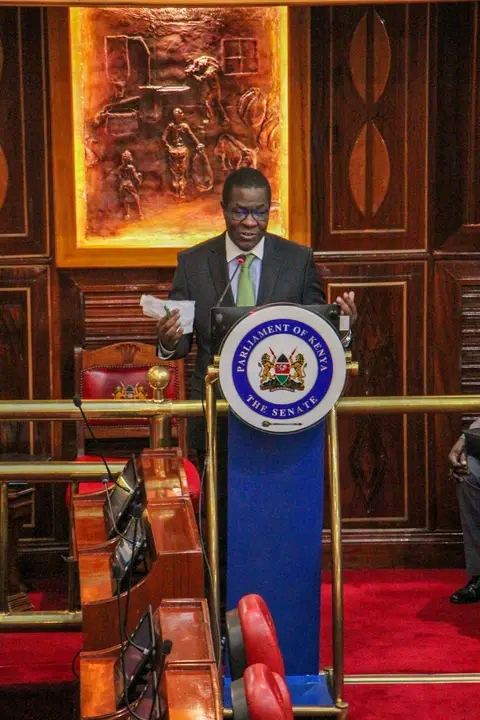
Cabinet secretary of Energy and Petroleum appeared before the plenary of the Senate of Kenya and presented submissions on the key national programmes under the ministry, an appearance that placed the energy sector squarely at the centre of public accountability and parliamentary scrutiny. The presentation covered progress across various regions, including Last Mile Connectivity, efforts to enhance power supply and grid stability, and the distribution and availability of petroleum products among other industry issues. It also gave the ministry an opportunity to respond to issues and questions raised by honourable senators during the sitting, reaffirming commitment to transparency, accountability, and efficient service delivery in the energy sector. This session highlighted the ministry’s work on initiatives like the Kenya Off Grid Solar Access Project (KOSAP), which complements grid expansion by targeting remote areas, and underscored the need for coordinated action between Kenya Power and other partners to deliver reliable service nationwide.
The appearance before the Senate carries weight because the energy and petroleum sector touches every corner of Kenyan life, from rural households relying on connections for basic needs to urban industries driving economic activity. When the ministry details achievements in Last Mile Connectivity, it addresses a programme designed to extend the national grid to underserved areas, ensuring that schools, health centres, and small businesses gain access to electricity. This is paired with updates on power supply enhancements, where investments in transmission lines and substations aim to reduce outages and support growing demand. The cabinet secretary’s responses to senators also touched on grid stability measures, including maintenance of existing infrastructure and integration of renewable sources like geothermal power from sites such as Olkaria. Such disclosures help the public grasp the link between policy decisions and everyday realities, while parliamentary questions push for clarity on timelines and resource allocation.
Last Mile Connectivity stands out as a cornerstone of the ministry’s agenda because equitable electricity access directly influences development at the community level. Households measure government commitment by whether lights stay on during evenings, businesses by uninterrupted operations, and public services by their ability to function without blackouts. The Senate presentation provided a platform to review how the ministry is working with county governments and development partners to accelerate connections, including through hybrid mini grids in areas where full grid extension is challenging. This approach recognizes that energy equity requires tailored solutions, and Parliament’s role is to ensure these solutions reach all regions without favouritism. By engaging senators on these points, the ministry demonstrated an understanding that connectivity is both a technical delivery and a promise of inclusion for previously marginalized communities.
Enhancing power supply and grid stability emerged as another critical focus, given how essential dependable electricity is to national progress. Frequent interruptions disrupt manufacturing, strain healthcare delivery, and hinder digital services, making stability a priority for economic planning. The ministry’s submissions likely covered ongoing upgrades to the transmission network, including high voltage lines that connect generation sources to load centres, and efforts to incorporate smart grid technologies for better monitoring. Responses to senators would have addressed coordination with the Energy and Petroleum Regulatory Authority EPRA, which oversees licensing and compliance to prevent system failures. These elements form the backbone of a resilient energy framework, and Senate oversight ensures that investments in generation capacity, such as expanded geothermal and hydro plants, translate into tangible improvements for consumers across the country.
Petroleum products distribution and availability drew particular attention, as fuel supply chains underpin transport, agriculture, and commerce. Disruptions in depots or pipelines quickly ripple through markets, affecting food prices and mobility. The cabinet secretary’s presentation explained how the ministry collaborates with oil marketing companies and regulators to maintain steady imports, storage, and retail networks. Questions from senators probably probed EPRA’s role in pricing mechanisms and quality standards, as well as strategies to mitigate supply risks through strategic reserves and diversified sourcing. This dialogue is vital in a sector where public sensitivity to availability runs high, and it reinforces the need for policies that prioritize consumer protection alongside industry viability.
 ADVERT
The ministry’s direct responses to honourable senators marked a highlight of the session, as true accountability demands public answers to pointed questions. Senate oversight allows representatives to voice constituent concerns, from rural electrification delays to urban fuel queues, compelling the ministry to clarify plans and timelines. This interaction exemplifies democratic checks and balances, where the executive faces legislative review on matters of national importance. By reaffirming transparency, the cabinet secretary positioned the energy sector as responsive to public institutions, fostering a culture where policy evolves through informed debate rather than unilateral decisions.
Public reception of such presentations reveals growing demand for officials to address both successes and shortcomings plainly. Citizens expect ministries to outline pending actions alongside achievements, particularly in energy where service gaps are immediately noticeable. The cabinet secretary’s engagement showed awareness of these expectations, linking national programmes to household impacts like powering homes or fuelling transport systems. Openness builds trust, especially when paired with follow up on senator queries, turning oversight into a tool for better governance.
National programmes in energy demand consistent management to overcome implementation hurdles and meet public needs. The Senate appearance signaled the ministry’s focus on outcomes over announcements, with emphasis on cross sector coordination involving counties, regulators, and private players. Parliamentary platforms like this should drive adjustments, ensuring programmes like KOSAP and grid reinforcements deliver equitably. This standard elevates service delivery from rhetoric to reality.
Energy policy discourse must centre on citizen benefit, avoiding complacency in uneven progress. The Senate session connected policy to accountability, reminding all involved that programmes serve the public. Oversight carries weight because it influences household stability and economic vitality, holding the ministry to high standards.
In conclusion, the cabinet secretary’s Senate appearance was a key moment of accountability, detailing advances in Last Mile Connectivity, power stability, petroleum distribution, KOSAP, geothermal integration, and EPRA oversight. It affirmed the sector’s dedication to transparency amid scrutiny. For Kenya’s growth, such engagements are indispensable, building confidence and prioritizing delivery. The challenge ahead is turning Senate commitments into nationwide results that Kenyans experience daily.
James’ Kilonzo Bwire is a Media and Communication practitioner.



