 ADVERT
 ADVERT
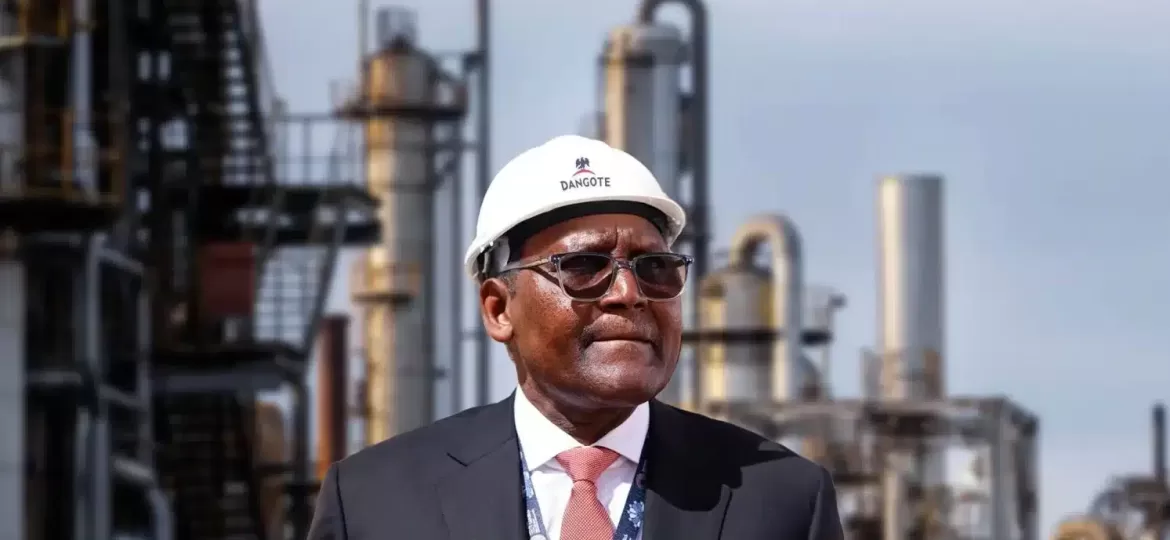
Africa’s richest man, Aliko Dangote, is closing in on Kenya as the site for his next mega-refinery, a project that could reshape East Africa’s energy independence.
The Nigerian billionaire is strongly leaning toward Mombasa for the proposed 650,000-barrel-per-day facility, citing the port’s superior depth and capacity to handle large crude carriers. Speaking in a recent interview, Dangote highlighted Mombasa’s logistical advantages over other regional options.
This marks a significant shift from earlier talks of a joint East African refinery in Tanzania’s Tanga. Kenya’s larger market, stronger infrastructure, and bigger domestic fuel demand appear to have tipped the balance in its favor.
The refinery, estimated at between $15 billion and $17 billion, would rank among the largest industrial investments in East African history. If built, it would dramatically cut the region’s reliance on imported refined petroleum products from the Middle East and Europe. Kenya, Uganda, South Sudan, and parts of the Democratic Republic of Congo currently import nearly all their fuel, exposing them to volatile global prices and supply risks.
Dangote, whose landmark refinery in Nigeria has already transformed that country’s fuel supply chain, believes a similar project can deliver energy security and economic gains across East Africa. He has pledged to deliver the facility within four to five years once government approvals and support are secured.
 ADVERT
Beyond refining, Dangote plans to use Kenya as a capital-raising hub. He intends to establish an investment vehicle in the country that will allow Kenyan and pan-African investors to participate in his projects, including a major listing linked to the refinery. This approach aims to keep more wealth and returns circulating within Africa.
With a net worth exceeding $30 billion, Dangote has built a diversified empire spanning cement, sugar, fertiliser, and now energy. His Nigerian success has positioned him as a symbol of bold African industrial ambition.
For Kenya, the project offers a major boost: thousands of jobs, reduced fuel import bills, renewed activity at the coast, and the chance to become East Africa’s energy and industrial powerhouse.



