 ADVERT
 ADVERT
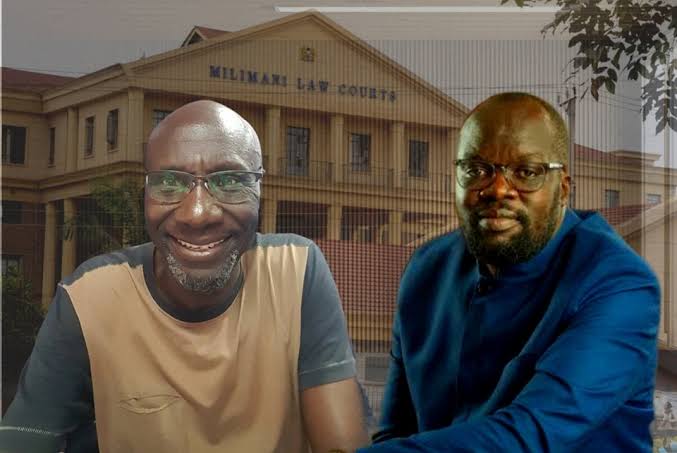
Veteran radio personality Fred Obachi Machoka has dragged Kileleshwa MCA Robert Onyango Alai to court in a high-stakes KSh 60 million defamation lawsuit following viral social media posts alleging the broadcaster is HIV positive.
The case, now before the High Court, has ignited fresh debate about online responsibility, political influence, and accountability for public figures as Kenya enters electioneering season.
Alai, a former top social media influencer turned politician, reportedly posted that Machoka was HIV positive, mentally unstable, and tribalist. He went further by issuing a public challenge: if proven wrong, he would pay Machoka KSh 1 million, surrender his property, voluntarily report to Kamiti Maximum Security Prison, and undergo a public circumcision.
Machoka, renowned for his long-running Roga Roga programme on Radio Citizen and Citizen TV, has strongly denied the allegations. Represented by prominent lawyer Danstan Omari, he argues the posts have severely damaged his reputation, health privacy, and professional standing built over decades.
Once celebrated as one of Kenya’s most influential online voices, Alai’s shift into active politics has drawn criticism for what many see as increasingly partisan and combative commentary. His large following continues to amplify his posts, but it has also exposed him to greater scrutiny.
 ADVERT
The controversy intensified after Alai was captured on CCTV in a heated confrontation with Embakasi East MP Babu Owino at a Nairobi restaurant, where a pistol was reportedly involved. The incident has raised further questions about his conduct as an elected leader.
In court filings, Alai has denied responsibility for the specific Facebook account, claiming it does not belong to him and asserting his full name is Robert Alai Onyango. The defense is expected to face significant examination as the case progresses.
With one of Kenya’s top criminal lawyers prosecuting the matter, the suit poses serious legal, financial, and political risks for Alai. Many observers are watching whether his political connections will influence the outcome or if the courts will apply the full weight of the law.
The irony has not been lost on the public. The same political class that enacted the 2018 Computer Misuse and Cybercrimes Act now finds itself navigating its consequences in cases involving reckless online statements.
Machoka is seeking not only substantial damages but also a public retraction and an injunction to prevent further defamatory publications.
As Kenya heads toward elections, this case serves as a stark reminder of the thin line between free speech and harmful misinformation. Public figures, regardless of their affiliations, are increasingly being held to account for statements that cross into personal attacks and health disclosures.
The nation will be watching closely: Will this become another instance where influence shields accountability, or will the law take its full course?




Respect to article author, some good selective information.