 ADVERT
 ADVERT
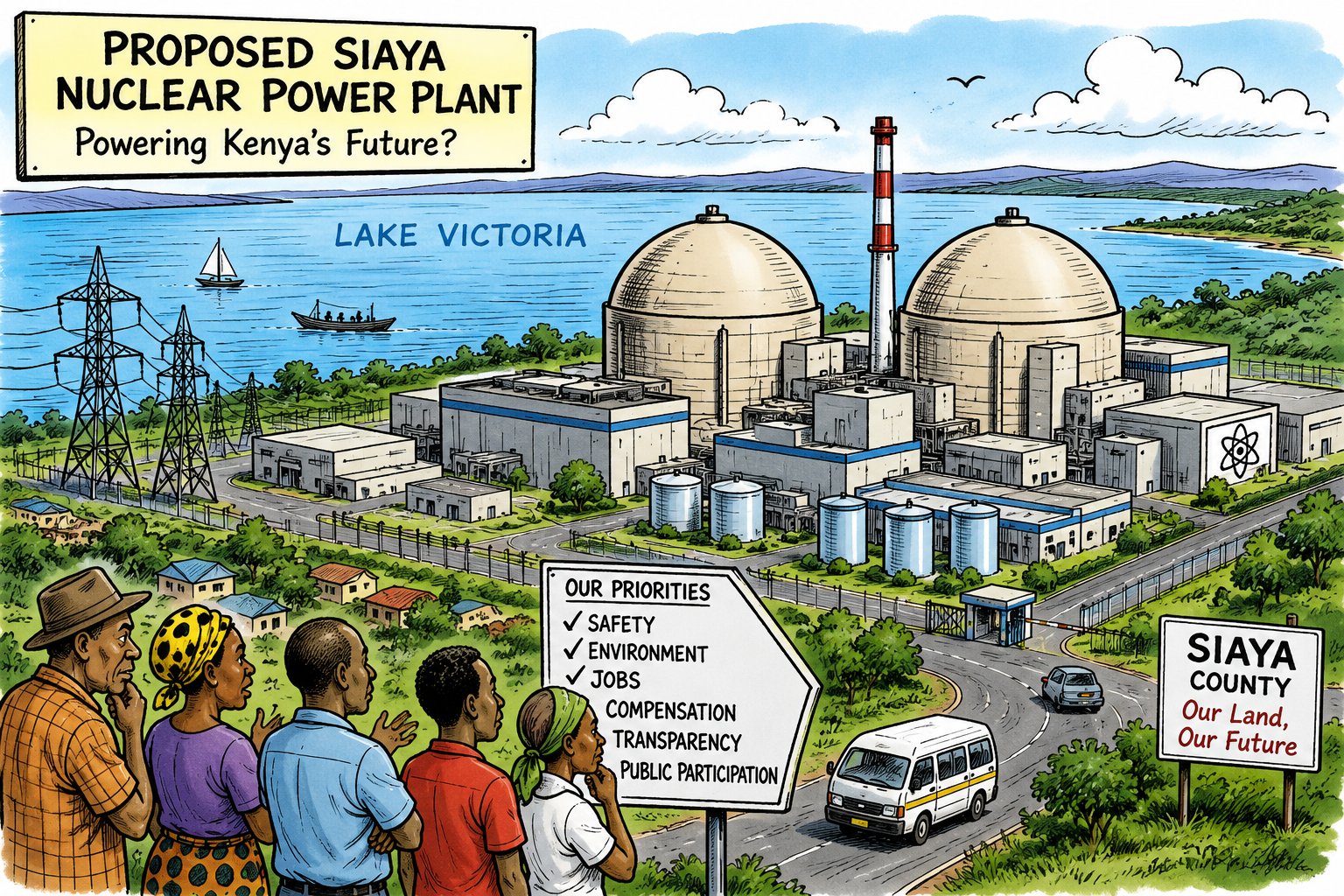
The ugly scenes witnessed during the latest public participation meeting on the proposed Sh1 trillion nuclear power plant in Siaya, culminating in violence and the reported shooting of a resident, should concern every Kenyan. Whatever one’s position on nuclear energy, disagreements over the country’s development agenda must never descend into chaos. Equally troubling is the growing tendency to reduce a complex national conversation into a contest between those branded as “anti-development” and those accused of imposing projects on unwilling communities.
Kenya stands at the crossroads of two equally important constitutional obligations. On one hand, the government has a duty to plan for future generations by investing in strategic infrastructure capable of sustaining economic growth, industrialisation and energy security. On the other, citizens have an equally protected right to participate meaningfully in decisions that affect their land, livelihoods, environment and future.
These principles are not contradictory. They are complementary.
The case for nuclear energy is neither irrational nor unprecedented. As Kenya’s economy expands, so too will its appetite for electricity. Manufacturing, digital infrastructure, artificial intelligence, electric mobility and modern agriculture will all require a stable and reliable supply of power that renewable sources alone may not consistently provide. While Kenya has made remarkable strides in geothermal, wind and solar energy, policymakers argue that nuclear power could provide dependable baseload electricity while helping the country meet its long-term climate commitments.
Many of the world’s most advanced economies continue to rely on nuclear energy as part of their electricity mix. Several African countries are also exploring the technology as they prepare for future energy demands. Kenya cannot be faulted for examining options that could secure its economic competitiveness over the next half-century.
 ADVERT
But acknowledging the government’s vision does not diminish the legitimacy of public concern.
Residents of Siaya are entitled to ask difficult questions. How will radioactive waste be managed? What guarantees exist for the protection of Lake Victoria, whose waters sustain millions across East Africa? What happens if accidents occur, however unlikely? Will families be displaced? If so, what compensation and resettlement framework will apply? How will fishing, farming and tourism be protected? What independent oversight mechanisms will ensure safety long after political administrations have changed?
These are not questions born of ignorance. They are questions any responsible community would ask before hosting one of the most sophisticated and sensitive infrastructure projects in the world.
Indeed, Kenya’s history provides ample reason for caution. Communities have repeatedly witnessed grand promises attached to mega projects only to experience delayed compensation, inadequate consultation and benefits that rarely match initial projections. Trust, once broken, cannot simply be demanded. It must be earned.
This is precisely why public participation exists.
Unfortunately, governments too often mistake consultation for communication. Public participation is not a constitutional box to be ticked after decisions have already been made. It is an opportunity to shape policy through honest engagement, where difficult questions are welcomed rather than viewed as obstacles to development.
If the State believes nuclear energy is in Kenya’s best interest, it must invest as much in civic education as it does in engineering studies. Nuclear science remains unfamiliar to many Kenyans, and fear naturally fills the vacuum left by inadequate information. Communities deserve access to independent experts, environmental scientists, medical professionals and international safety specialists—not merely government officials defending an official position.
Transparency, not persuasion, should be the guiding principle.
At the same time, those opposed to the project also bear responsibility. Opposition must be grounded in evidence rather than speculation. Nuclear technology evokes understandable emotions, but public policy should ultimately be informed by science, not social media rumours or political mobilisation. Every claim—whether made by supporters or critics—must withstand independent scrutiny.
Facts should triumph over fear.
Kenya should also remember that nearly every transformative infrastructure project has faced resistance at some stage. Hydroelectric dams, geothermal fields, wind farms, highways and ports all generated controversy before many became indispensable pillars of national development. That history does not justify forcing projects upon communities. Rather, it reminds us that successful development is built on consent, trust and transparency—not coercion.
The events in Siaya should therefore serve as a wake-up call rather than a setback. They expose not only the anxieties surrounding nuclear power but also the urgent need to improve how Kenya engages citizens on projects of national significance.
Ultimately, the Constitution did not create public participation as a veto against development. Nor did it empower governments to pursue development while treating public consultation as a mere formality.
The challenge before Kenya is not choosing between development and democracy. It is proving that a confident democracy can plan boldly, consult genuinely, listen patiently and still build the future its people deserve.
That is the standard Siaya deserves. It is also the standard Kenya must uphold.
Lawrence Jeffrey Ochieng
27th July, 2026
Siaya



