 ADVERT

Politics is rarely defined by what happens on the podium. More often, it is shaped by the conversations in hotel corridors, the whispers between rivals, the subtle changes in public mood and the emergence of leaders who suddenly become imaginable as presidents.
That appears to be the story unfolding within the Linda Mwananchi movement.
This weekend, the political undercurrents became impossible to ignore. As predicted by keen observers, Nairobi Senator Edwin Sifuna emerged as the name increasingly capturing attention as the movement’s preferred presidential prospect. Whether this momentum translates into an actual bid remains to be seen, but the political conversation has undeniably shifted.
In doing so, it has left another casualty.
 ADVERT
Siaya Governor James Orengo, who has increasingly projected himself as the ideological standard-bearer of the opposition, found himself eclipsed. His confrontation with the State—once expected to dominate political discourse—was relegated to the margins as delegates and supporters in Bungoma and Kitale gravitated toward an entirely different conversation: the search for Kenya’s next credible presidential contender.
That conversation was not about protest. It was about possibility.
Edwin Sifuna represents something few opposition figures currently possess—a presidential profile that feels plausible to a growing section of Kenyans. Young but experienced. Combative yet articulate. Fiercely partisan but capable of engaging political opponents without losing his identity. In a political landscape desperate for generational renewal, those qualities matter.
Political insiders have long whispered about Sifuna’s quiet networking across Kenya’s fractured political establishment. Reports of engagements with figures associated with the Wamunyoro axis, discreet consultations with former President Uhuru Kenyatta’s circle and openness to dialogue with emissaries from the government have only strengthened the perception that he is thinking far beyond his current office.
Whether those reports culminate in a presidential campaign is secondary.
The optics are already doing the work.
No serious political figure waits until election year to look presidential.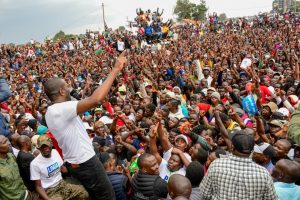
Sifuna undoubtedly faces formidable obstacles. President William Samoei Ruto commands the enormous advantages of incumbency, an expansive political machine and considerable financial resources. Challenging such an establishment would require far more than charisma and eloquence.
Yet presidential politics begins with something less tangible than money.
It begins with imagination.
Can citizens picture someone occupying State House?
Increasingly, many can picture Edwin Sifuna there.
That may prove to be the most consequential political development of the weekend.
Equally significant is what this moment says about Western Kenya’s evolving political identity. For decades, much of the region’s national political expression has revolved around broader coalition arrangements and the gravitational pull of Raila Odinga. Today, however, there are signs—still tentative but increasingly visible—that sections of the Mulembe nation are searching for a distinct political voice and a leadership project they can call their own.
That aspiration extends beyond personalities.
It speaks to dignity, relevance and political self-determination.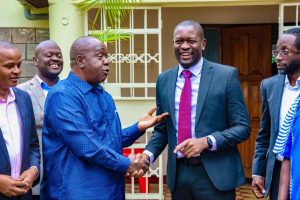
Interestingly, leaders such as Prime Cabinet Secretary Musalia Mudavadi and National Assembly Speaker Moses Wetang’ula have occupied some of the highest offices in the Republic, yet neither has publicly embraced the language of presidential ambition with sustained conviction. Whether by calculation or caution, they have largely ceded that imagination to others.
Sifuna appears willing to do the opposite.
He is stepping into the space where ambition meets expectation, where conviction outweighs caution and where political capital is built not only through numbers but through narrative.
There is, of course, no guarantee that this emerging momentum will survive Kenya’s notoriously fluid politics. Alliances shift overnight. Political fortunes rise and collapse with astonishing speed. Today’s frontrunner can become tomorrow’s footnote.
But every presidential journey begins with a single moment when the impossible starts sounding possible.
This weekend may well have been Edwin Sifuna’s.
If the political constellation ultimately aligns, Kenya could be witnessing not merely the rise of another opposition politician, but the emergence of a presidential contender capable of redefining both the opposition and the place of Western Kenya in the country’s future political architecture.



