 ADVERT
 ADVERT
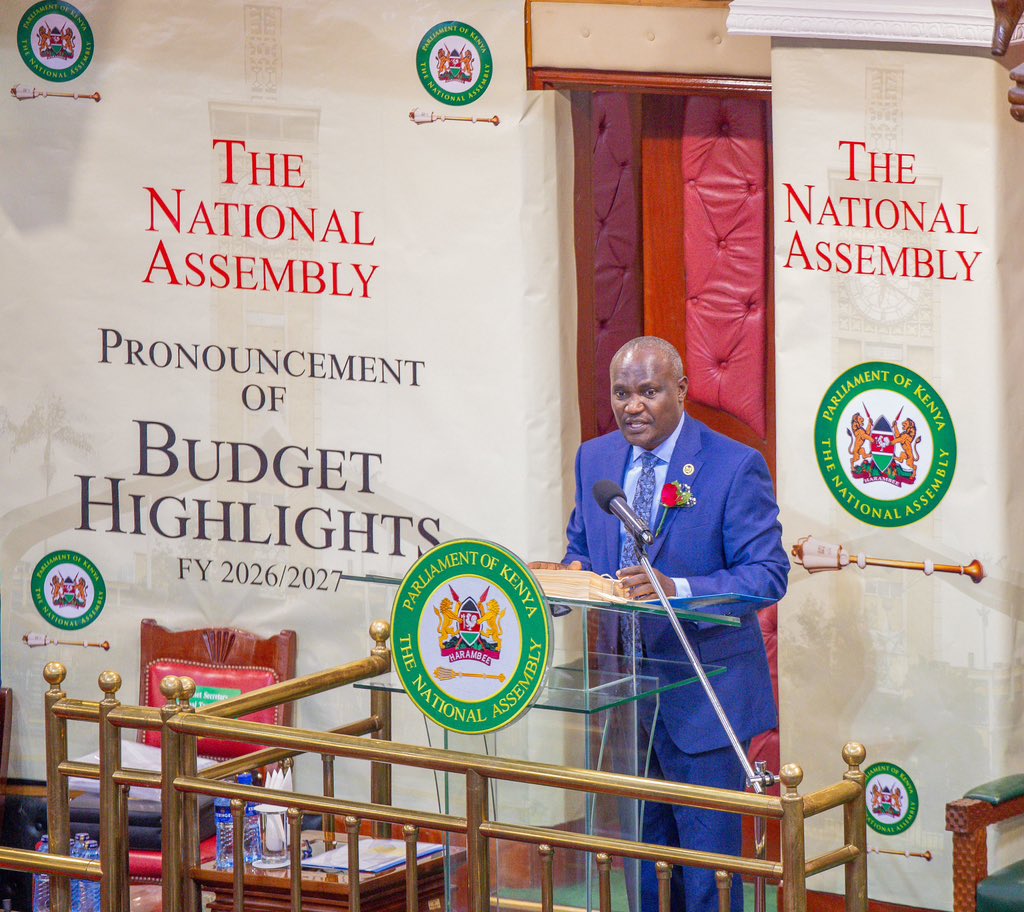
Treasury Cabinet Secretary John Mbadi has rolled out a bold, reform-heavy 2026/27 budget that signals a decisive pivot toward fiscal discipline, digital governance and private sector revival.
In a high-stakes economic blueprint shaped by rising living costs and mounting public pressure, Mbadi’s policy pronouncements cut straight to the core of government inefficiency—targeting corruption, delayed payments and weak financial oversight.
In what could mark a turning point in Kenya’s fight against graft, all public procurement will now be conducted exclusively through the Electronic Government Procurement System from July 1.
The move eliminates manual processes and closes long-exploited loopholes, ushering in real-time transparency and tighter control over public spending.
In a major boost to the private sector, the government has unveiled a structured plan to clear Sh155.3 billion in verified pending bills.
 ADVERT
The phased settlement—through budget allocations and securitization—is expected to ease cash flow pressures for contractors and SMEs, many of whom have been pushed to the brink by delayed government payments.
The Treasury has extended the deadline for banks to meet the Sh10 billion minimum core capital requirement to December 2032.
The extension is aimed at safeguarding financial stability while allowing lenders time to strengthen their balance sheets without constricting credit to businesses and households.
Farmers are set to benefit from proposed reforms to the Insurance Act that will establish agricultural insurance as a standalone class.
The shift is designed to cushion the sector against climate shocks and market volatility, reinforcing its central role in the economy.
Mbadi has also moved to deepen fiscal control by expanding the Treasury Single Account to counties, centralizing government cash management and tightening oversight.
Coupled with planned amendments to the Public Finance Management framework, the reforms aim to seal audit gaps and curb misuse of public funds.
The budget accelerates Kenya’s digital transformation agenda, with the adoption of electronic signatures, seals and time-stamping across government systems.
The transition promises faster service delivery, reduced bureaucracy and improved efficiency across public institutions.
In a notable social policy shift, the government has allocated Sh3.9 billion for stipends to village elders—formally recognizing their role in grassroots governance.
At the same time, Sh2 billion has been set aside for the NextGen.Ke programme to equip young graduates with skills and place them in paid internships, addressing the country’s persistent youth unemployment challenge.
Mbadi’s budget lands at a critical juncture, as Kenya grapples with fiscal strain, global economic uncertainty and growing demands for accountability.
While the proposals are ambitious, their success will hinge on execution—particularly the enforcement of digital systems and sustained discipline in public finance.
From digitized procurement to clearing billions in debt and investing in youth, Mbadi’s budget lays out a clear message: reform is no longer optional.
Whether it delivers tangible relief to Kenyans will depend not on policy intent, but on implementation.



