 ADVERT
 ADVERT
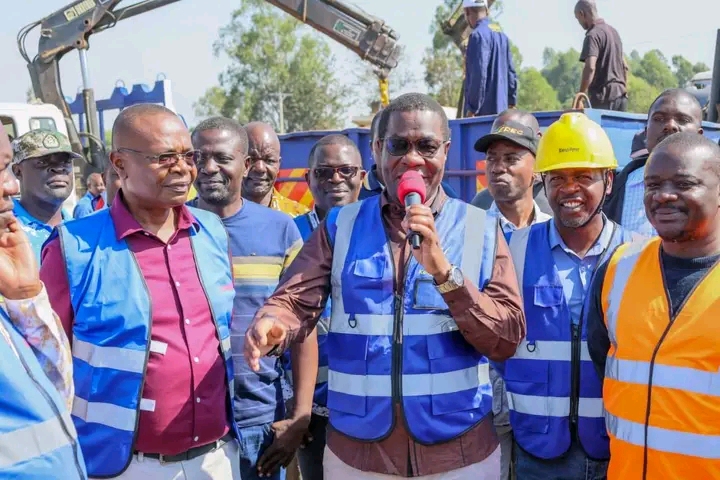
The handover of a 1,000 kVA power transformer to the Busia County Aggregated Industrial Park is more than an electricity infrastructure milestone. It is a practical demonstration that Kenya’s industrialisation ambitions must be backed by the physical infrastructure required to make production possible.
Led by Cabinet Secretary for Energy and Petroleum Opiyo Wandayi, the delivery places reliable electricity at the centre of Busia’s push for manufacturing, agro-processing, value addition and job creation. The presence of Busia Governor Paul Otuoma and Gem MP Elisha Odhiambo further underlines an increasingly important reality: successful industrial development requires national and county governments to move in the same direction.
For an industrial park, electricity is not an optional utility. It is a productive input.
Factories cannot mill, package, refrigerate, assemble or operate sophisticated machinery reliably without adequate and stable power. When electricity is insufficient or unreliable, businesses are forced to absorb higher costs through backup generators, production interruptions and equipment downtime. Those costs ultimately affect competitiveness, investment decisions and the number of jobs an enterprise can sustain.
The transformer delivered to the Busia industrial park therefore represents a strategic investment in the productive capacity of the county.
 ADVERT
Located in Nasewa, Matayos South Ward, the industrial park is part of the broader national effort to decentralise industrial activity and move value addition closer to where agricultural commodities and other raw materials are produced. Instead of sending raw products elsewhere for processing, counties can increasingly develop the capacity to sort, grade, process, package and market them locally.
That model is central to the economic logic of County Aggregated Industrial Parks.
But aggregation alone does not create industrialisation. A functional industrial park needs roads, water, telecommunications, finance, skills, markets and an efficient regulatory environment. Above all, it needs dependable electricity.
This is where the Busia transformer assumes significance.
By strengthening power capacity at the park, the government is helping create the conditions under which enterprises can move beyond construction-stage promises into actual production. Food processors, agro-manufacturers, packaging companies, cold-chain operators and light manufacturers all require electricity capable of supporting consistent operations.
The intervention also gives practical meaning to the Bottom-Up Economic Transformation Agenda, whose success will ultimately be judged not by the number of policy documents produced but by whether ordinary citizens can participate in a more productive economy.
Industrialisation at the county level can create a powerful economic chain. Farmers gain a market for their produce. Transporters gain business moving commodities. Processors create products with greater value. Young people acquire employment and technical skills. Small enterprises find new markets, while local governments benefit from a broader economic base.
That chain, however, depends on industrial facilities actually working.
For years, unreliable infrastructure has been one of the obstacles to attracting manufacturing investment outside Kenya’s established industrial centres. Investors are unlikely to commit substantial capital to locations where basic production requirements remain uncertain.
Reliable power can therefore become a competitive advantage for counties seeking to attract industry.
The Busia intervention should be viewed against that wider national challenge. If county industrial parks are to help redistribute economic opportunity, infrastructure must reach them before investors arrive—or at least in time for facilities to become operational without unnecessary delays.
This makes the sequencing of infrastructure particularly important.
A completed industrial building without adequate power can quickly become an expensive monument to poor planning. Conversely, synchronising electricity infrastructure with construction and tenant onboarding can shorten the journey from investment to production.
The transformer handover offers an opportunity to ensure that the park does not remain merely a physical development but evolves into a functioning economic hub.
It also demonstrates the importance of coordination between different levels of government. The national government can provide policy direction and major infrastructure investments, while county governments play a crucial role in local coordination, enterprise mobilisation, community engagement and oversight.
Governor Otuoma and Gem MP Elisha Odhiambo’s presence alongside CS Wandayi consequently carries significance beyond the ceremony itself. It places local political leadership within the accountability chain for ensuring that infrastructure delivered translates into tangible economic benefits.
The real test, however, begins after the handover.
The transformer must be integrated into the park’s distribution system, connections must be completed efficiently and adequate maintenance must be guaranteed. As more businesses occupy the park and their electricity requirements increase, additional capacity may eventually be necessary.
Industrial planning must therefore anticipate growth rather than merely meet today’s demand.
This is particularly important for Busia, whose agricultural economy offers considerable opportunities for value addition. Instead of exporting raw agricultural products and importing finished goods, local processing can enable more of the economic value to remain within the county.
That means electricity infrastructure should be understood not simply as part of the national grid but as an instrument of economic transformation.
A transformer can determine whether a processing line runs efficiently, whether refrigeration systems remain operational, whether machinery can function at the required capacity and whether an investor considers a location commercially viable.
In that sense, energy infrastructure can influence investment, employment and enterprise development just as directly as roads and industrial buildings.
But electricity alone will not make the Busia industrial park successful.
The government must complement infrastructure investment with affordable financing for local enterprises, technical and vocational training, access to markets, efficient licensing and deliberate efforts to connect farmers and small businesses to industrial park tenants.
The ultimate objective should be an ecosystem in which local raw materials feed local industries, local enterprises participate in supply chains and local workers secure sustainable employment.
That is where the promise of the Bottom-Up Economic Transformation Agenda becomes tangible.
The Busia project also carries lessons for other counties. If Kenya is serious about geographically broad-based industrialisation, energy infrastructure should be planned as an integral component of industrial parks rather than treated as an afterthought.
Future industrial parks should ideally have power demand assessed early, grid connections planned in advance and capacity designed with room for expansion. This would reduce the risk of completing industrial facilities only to discover that they cannot support commercial production.
The involvement of the Energy and Petroleum Ministry is therefore significant. It demonstrates a shift towards viewing energy planning through the lens of economic productivity—not merely electricity access.
Kenya needs both.
Households need electricity for better living standards, but businesses need reliable power to produce, employ and compete.
For counties pursuing industrialisation, the distinction is critical. The question is no longer simply whether electricity is available, but whether the quality, reliability and capacity of supply are sufficient to support serious economic activity.
The Busia transformer is a modest physical asset with potentially substantial economic implications. Its real value will be determined by what happens around it: factories that open, machines that run, agricultural products that are processed, businesses that grow and residents who secure livelihoods.
That is the standard against which infrastructure-led economic transformation should ultimately be measured.
For Busia, the challenge now is to convert electricity capacity into industrial capacity—and industrial capacity into jobs, enterprise and sustained local economic growth.
The transformer has been delivered. The bigger task is to ensure that the economic engine it is meant to power does not remain idle.


