 ADVERT
 ADVERT
The race to succeed Siaya Governor James Orengo is rapidly acquiring the ingredients of a political heavyweight contest, with four prominent names now openly positioning themselves for the county’s top seat.
But beneath the declarations, rallies and early alliances lies another question that could prove just as consequential: who commands the political networks capable of turning an attractive candidacy into an election-winning machine?
That is where Energy Cabinet Secretary James Opiyo Wandayi enters the conversation.
Wandayi’s association with Siaya County Assembly Speaker George Omondi Okode may not, by itself, deliver the governorship to the Speaker. But dismissing its significance would be equally mistaken.
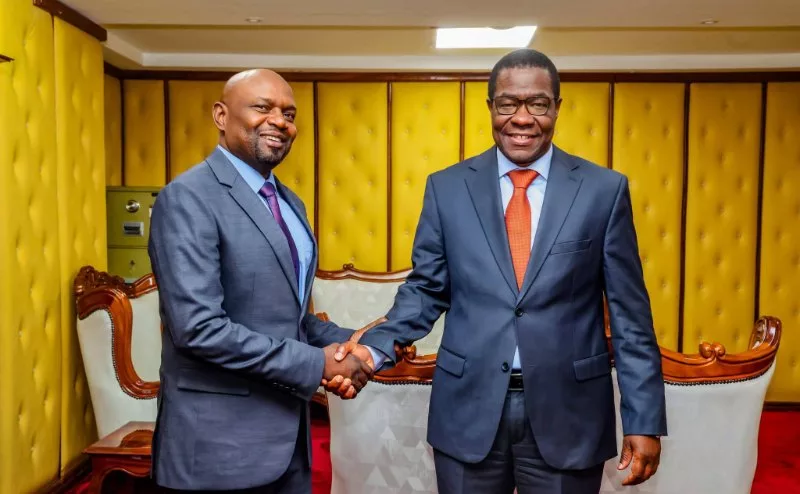
Recent reports indicate that Okode met Wandayi as part of a wider round of consultations involving national leaders, county politicians and ODM officials. Okode has said he is consulting broadly and listening to opinion leaders as he prepares to seek the ODM ticket.
 ADVERT
There is, however, an important distinction between political engagement and a formal endorsement.
No public declaration cited in the latest reports establishes that Wandayi has formally endorsed Okode for governor. Yet in politics, particularly in a county where party structures, personal networks and national alliances increasingly overlap, who is seen talking to whom can itself become politically consequential.
Wandayi is no ordinary political bystander.
The Energy CS has deep roots in Siaya politics and has recently signalled that he intends to play a more active role in determining the county’s political direction. In May, he said he would no longer remain on the sidelines of Siaya politics and warned that leaders had a responsibility to help the electorate make the right choice.
That was followed by increasingly pointed criticism of Orengo’s political direction, with Wandayi arguing that Siaya needed leadership focused on development rather than what he described as retrogressive politics.
Earlier this year, Wandayi also ruled out running for governor himself, saying his attention was on government service and supporting President William Ruto’s re-election campaign.
That makes his role in the 2027 Siaya gubernatorial contest particularly interesting.
If Wandayi is not seeking the seat, his political influence becomes potentially more important as a power broker, mobiliser and alliance-builder rather than as a candidate.
And this is precisely why any relationship between Wandayi and an aspirant such as Okode will attract attention.
But an endorsement is not a vote
The temptation in political commentary is to treat the backing of a powerful politician as if it were equivalent to transferring his supporters to another candidate.
Kenyan electoral history repeatedly demonstrates otherwise.
A senior politician can provide access, visibility, resources, networks and strategic legitimacy. But ultimately, gubernatorial elections are decided by voters across the county.
An endorsement can open doors. It cannot walk through them on behalf of the candidate.
For Okode, the real challenge will therefore be converting elite political relationships into a credible grassroots coalition capable of surviving an ODM nomination battle and, ultimately, a countywide election.
The Speaker already has one potentially valuable asset: institutional experience.
He has served as Speaker of the Siaya County Assembly since the county’s establishment and is presenting that experience as evidence of his ability to provide leadership at the county level. He has also embarked on consultations with political leaders and opinion shapers.
But experience at the Assembly is not automatically equivalent to an electoral base.
Okode must still answer the most important question confronting every gubernatorial aspirant: can he translate political networks into votes in all six constituencies?
The ODM battlefield is becoming crowded
The challenge is made more complicated by the crowded field.
Deputy Governor William Oduol has declared his intention to seek the ODM ticket. Former Rarieda MP Nicholas Gumbo has returned to ODM and declared his gubernatorial ambitions, while Ugenya MP David Ochieng is building his campaign around the Movement for Democracy and Growth.
This means Okode is not simply running for governor.
He is first running for political space.
If he chooses the ODM route, the nomination contest could become as important as the general election itself.
The party has historically enjoyed enormous political influence in Siaya, making its gubernatorial ticket one of the most valuable political assets in the county. But that same attractiveness guarantees competition.
Gumbo brings gubernatorial experience and an established political profile. Oduol brings the visibility of a sitting deputy governor and a narrative centred on governance and accountability. Okode brings Assembly leadership and an expanding network of consultations. Ochieng, meanwhile, has demonstrated that he can win elections outside ODM structures and has openly argued that he does not require the backing of political heavyweights to succeed.
That is a formidable field.
Why Wandayi still matters
This is where the Wandayi factor deserves closer examination.
A politician of Wandayi’s stature can potentially influence three things that every gubernatorial candidate needs: access, organisation and political signalling.
Access matters because elections are increasingly built through networks extending from grassroots opinion leaders to national political actors.
Organisation matters because campaigns require more than popularity. They require structures capable of identifying supporters, mobilising voters and maintaining momentum through the nomination and general-election stages.
And signalling matters because politics is partly about perception. When influential figures begin holding consultations with a particular aspirant, other politicians, community leaders and potential allies inevitably begin assessing what that relationship could mean.
But there is a danger in reading too much into the optics.
Wandayi has publicly positioned himself as a political actor in Siaya, not merely as a spectator. He has also been involved in meetings bringing together elected leaders and county representatives.
That means his interactions with aspirants should be viewed within a much wider political strategy rather than automatically interpreted as an endorsement.
The voters will have the final word
Perhaps the most important lesson for all the contenders is that Siaya is not a political possession of any individual leader.
Not Orengo.
Not Wandayi.
Not Oburu Oginga.
Not any MP, senator, governor or party official.
Political influence can shape the contest, but voters ultimately determine the outcome.
For Okode, therefore, an association with Wandayi could be valuable. It could strengthen his visibility, reassure some potential allies and place him within a broader political conversation.
But it will not remove the harder work of building a countywide campaign.
He will need to demonstrate that his candidacy extends beyond Rarieda, where both he and Gumbo originate. He will need to appeal convincingly to voters in Alego Usonga, Ugenya, Gem, Bondo and Ugenya’s neighbouring political constituencies. The geographic calculations alone make the race far more complicated than any single endorsement or alliance.
And this is why the Wandayi factor should neither be exaggerated nor dismissed.
It may not be the key to winning Siaya, but it certainly matters.
The real test will be whether Okode can turn political goodwill into a disciplined grassroots organisation, a compelling development message and, crucially, enough votes when the ballots are counted.
In the end, powerful endorsements can influence a race.
They cannot vote.
The people of Siaya can.



