 ADVERT
 ADVERT
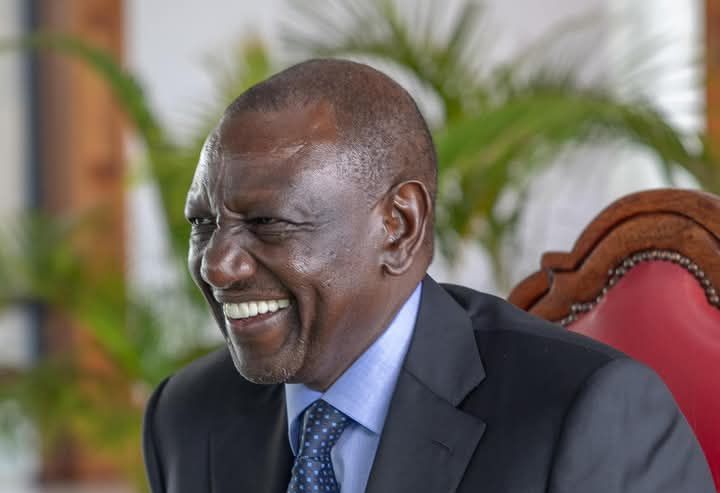
President William Ruto has opened an early lead in the 2027 presidential race, according to a new nationwide opinion poll that simultaneously exposes the uncertainty, fragmentation and considerable room for political realignment ahead of the General Election.
The inaugural Bobea Report poll places Ruto at 35.2 per cent, substantially ahead of Nairobi Senator Edwin Sifuna at 19.1 per cent, former Cabinet Secretary Fred Matiang’i at 14 per cent and Wiper Patriotic Front leader Kalonzo Musyoka at 9 per cent.
But beneath Ruto’s commanding numerical advantage lies a potentially consequential political story: 17.7 per cent of respondents remain undecided, while another five per cent say they would not vote.
That means nearly one in every four respondents has either not settled on a presidential candidate or currently intends to stay away from the ballot.
The findings therefore offer President Ruto an encouraging snapshot of his re-election prospects, but hardly amount to a verdict on 2027.
 ADVERT
Bobea Report conducted the survey between August 26 and September 2 through random sampling of respondents in markets, villages, estates and workplaces across the country. The poll carries a reported margin of error of plus or minus 3.1 percentage points at a 95 per cent confidence level.
Ruto’s lead, opposition’s unfinished business
The most striking feature of the poll is not simply Ruto’s lead but the failure of any single opposition politician to consolidate the anti-government vote.
Sifuna’s 19.1 per cent places him firmly in second position, while Matiang’i’s 14 per cent and Kalonzo’s nine per cent demonstrate that the opposition space remains divided among several personalities.
That fragmentation could be politically significant.
The combined support of Sifuna, Matiang’i and Kalonzo is considerably larger than that of any individual challenger, suggesting that the arithmetic of the 2027 contest could change dramatically if opposition forces eventually rally behind one presidential ticket.
Recent polling has already pointed to this dilemma. An Infotrak survey released in July placed Ruto at 32 per cent, with Kalonzo at 13 per cent and Sifuna and Matiang’i tied at 12 per cent. A separate TIFA survey had Ruto at 24 per cent, with Kalonzo, Matiang’i and Sifuna occupying the next positions in a fluid field.
The consistency across these surveys is therefore more significant than the differences in their individual numbers: Ruto is currently ahead, but the opposition remains capable of reshaping the race if it overcomes its fragmentation.
Development versus generational change
Bobea’s qualitative findings offer another interesting dimension to the numbers.
Ruto’s supporters primarily cited development as the reason for backing him, suggesting that the administration’s emphasis on infrastructure and government projects is finding resonance among some voters.
Sifuna’s supporters, on the other hand, were associated principally with a desire for generational change.
The distinction could become increasingly important as the election approaches.
For Ruto, the challenge will be translating the perception of development into broader satisfaction with the economy, public services and household welfare.
For Sifuna and other opposition figures, the challenge is converting the appetite for change into a coherent political programme capable of persuading voters beyond their existing support bases.
Matiang’i’s supporters cited his reputation as a tough, no-nonsense Cabinet Secretary, while Kalonzo’s supporters associated him with integrity and a perception of being non-corrupt.
Nairobi remains wide open
If the presidential figures give Ruto’s camp reason for optimism, the Nairobi results provide a sharp reminder of just how unpredictable the 2027 political landscape remains.
In the Nairobi gubernatorial race, Embakasi East MP Babu Owino leads with 26.7 per cent, followed by incumbent Governor Johnson Sakaja at 23.2 per cent and James Gakuya at 21.9 per cent.
With only 3.5 percentage points separating the leading two candidates and 18.5 per cent undecided, the race is effectively wide open.
The figures suggest that name recognition and incumbency alone may not be enough to guarantee victory in Nairobi, where voter preferences could shift substantially as campaigns intensify.
The city has historically produced politically volatile contests, and the latest figures reinforce the impression that Nairobi will once again be one of the country’s major electoral battlegrounds.
Wamatangi’s Kiambu advantage
Kiambu presents an altogether different picture.
Governor Kimani Wamatangi commands 59.7 per cent, far ahead of James Mwaura Kogi at four per cent, Alice Nganga at 2.2 per cent and James Nyoro at one per cent.
Bobea says Wamatangi is the only candidate in the survey to achieve majority-level support.
The size of that lead contrasts sharply with the closely fought Nairobi contest and demonstrates how dramatically voter preferences can differ from one county to another.
Whether that support survives the full campaign period, however, will depend on the political alliances, local issues and candidate mobilisation that emerge over the coming months.
Passaris leads women representative race
In the Nairobi women representative contest, incumbent Esther Passaris records 37.9 per cent, ahead of Millicent Omanga at 29.2 per cent.
Karen Nyamu follows at 11.3 per cent, while Crystal Asige has 9.3 per cent.
Passaris therefore begins the race with a sizeable advantage, although the presence of several high-profile contenders means the contest remains politically significant.
Dagoretti and Kibra expose the undecided vote
The parliamentary contests provide perhaps the clearest evidence of how unsettled parts of the electorate remain.
In Dagoretti North, Beatrice Elachi leads with 32.2 per cent, followed by Robert Alai at 27.9 per cent and Bright Shitemi at 24 per cent.
Dagoretti South is even more fluid.
Dennis Waweru has 28 per cent against incumbent John Kiarie’s 25.7 per cent, but an extraordinary 33.8 per cent of voters remain undecided.
That undecided bloc is larger than the support of either leading candidate and could fundamentally alter the race once campaigns gather momentum.
Kibra tells a similar story.
Raila Junior leads with 21.7 per cent, followed by McDonald Mariga at 15.3 per cent and Imran Okoth at 11.2 per cent.
But 36.5 per cent of respondents remain undecided—more than the combined support of the top two candidates.
Recent analysis of the Bobea figures consequently describes Dagoretti South and Kibra as among Nairobi’s most unpredictable parliamentary contests.
The real race may be for the undecided voter
The Bobea survey’s most consequential political message may ultimately have less to do with who is leading today than with the voters who have not yet made up their minds.
At the presidential level, 17.7 per cent is a substantial pool of voters.
At constituency level, the undecided share rises above 30 per cent in some of Nairobi’s most politically competitive seats.
Those voters will become the principal target of campaigns as politicians move from positioning themselves to actively persuading the electorate.
For Ruto, the immediate task will be to defend his lead and expand it beyond the current 35.2 per cent.
For the opposition, the numbers reinforce the urgency of coalition-building, candidate selection and a compelling alternative national agenda.
A lead is not a victory
The emerging polling picture should therefore be read with caution.
Ruto has consistently appeared at or near the top of recent national preference surveys, but no current poll can credibly be treated as a prediction of the August 2027 result.
The latest Bobea survey itself captures sentiment during a specific period—from August 26 to September 2—and political preferences can change rapidly as alliances are formed, candidates campaign and voters assess competing manifestos.
The differences between recent polling houses also demonstrate why individual surveys should not be viewed in isolation. Infotrak’s July survey put Ruto at 32 per cent, while TIFA’s earlier survey placed him at 24 per cent.
What is becoming increasingly difficult to dispute, however, is the broad political trend: Ruto currently enjoys the advantage, but the 2027 race remains open.
The President has a measurable lead. The opposition has multiple credible figures. And millions of voters have yet to make their final choice.
For now, the political scoreboard favours Ruto.
But the election will not be decided by September 2026 polling numbers.
It will ultimately be decided by the voters who can still be persuaded—and, perhaps most importantly, by whether the fragmented opposition can turn its combined numerical strength into a single, credible political alternative.


