 ADVERT
 ADVERT
There are moments in public life when a motor vehicle ceases to be merely a means of transport and becomes a political statement.
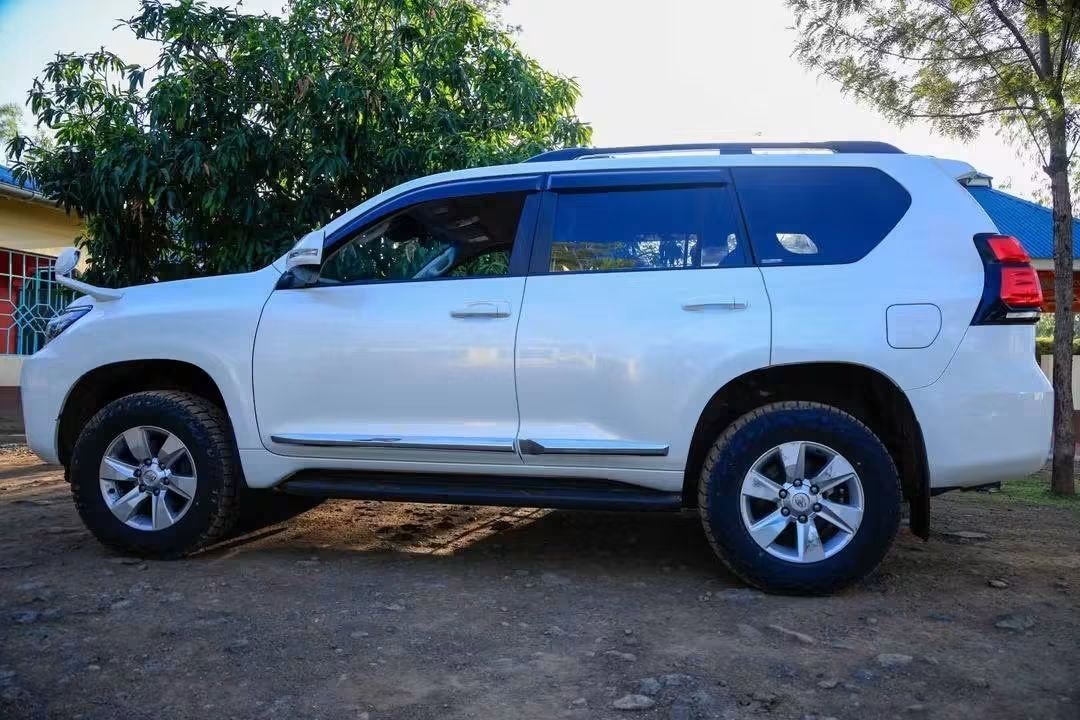
The brand-new vehicle gifted to Luo Council of Elders chairman Odungi Randa by President William Ruto is one such moment.
Randa reportedly asked the President for a vehicle to enable him to travel while undertaking his duties as chairman of the council, including engagements with Luo communities across Kenya and in neighbouring countries. President Ruto obliged.
Fair enough.
An elder travelling extensively requires reliable transport. There is nothing inherently controversial about that.
 ADVERT
But in the strange theatre of Kenyan politics, the story has acquired an amusing symbolism: a community elder asks the President for a car, receives one, and the vehicle suddenly assumes the importance of a national development project.
Welcome to the new frontier of community empowerment.
The irony is difficult to miss.
The Luo community has produced university professors, doctors, engineers, judges, entrepreneurs, scientists, academics, technocrats, musicians, journalists, pilots, innovators and political leaders of international stature.
Yet here we are, marvelling at a car.
One almost expects the next community development report to contain a new indicator:
Number of educated young people — satisfactory.
Number of businesses created — pending.
Number of research institutions established — pending.
Number of community-owned industries — pending.
Number of Prados received from presidents — excellent.
The joke practically writes itself.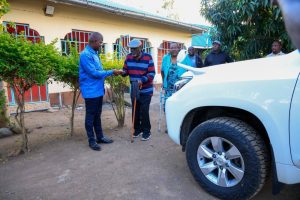
Nobody begrudges Randa the vehicle. Indeed, if the car genuinely enables the council to perform its cultural, social and mediation functions more effectively, it could be put to perfectly legitimate use.
But there is a difference between a useful vehicle and a development philosophy.
A car should facilitate leadership. It should not become the evidence of successful leadership.
That distinction matters because Kenya’s political culture has perfected the art of converting modest patronage into monumental achievement.
Give a community leader a vehicle and suddenly the photographs become historic.
Build a road and it becomes a political legacy.
Open a market and it becomes transformation.
Promise a project and it becomes development.
Receive a car and—apparently—it becomes mobility for an entire community.
Perhaps the Luo should be forgiven for wondering whether the ancestral wisdom of the elders has finally been upgraded to four-wheel drive.
The real question is not whether Randa deserves a vehicle. The more profound question is what should the chairman of a modern Luo Council of Elders be asking a President for?
A car?
Or a serious programme for youth employment, industrialisation, agricultural value addition, university research, cultural preservation, enterprise financing, health infrastructure and technology?
What about a presidential commitment to helping establish institutions that will still exist when today’s politicians have retired?
What about asking how the Luo community can transform its considerable human capital into productive economic capital?
What about demanding policies that make it easier for the young graduate who owns nothing more than a smartphone and a degree to build a company rather than spend five years looking for a job?
Those would be rather inconvenient questions.
A Prado is much easier.
It is visible. It photographs beautifully. It can be parked outside a function. It produces immediate political theatre.
A research institute cannot.
Neither can a successful generation of entrepreneurs.
And that is where the satire becomes serious.
A young person buying a car after years of hard work is an achievement. But when a community’s senior leadership celebrates access to a vehicle from the political establishment as though it were evidence of collective advancement, the symbolism deserves interrogation.
The Luo community should aspire to own the dealership, not merely receive the vehicle.
It should be producing the entrepreneurs who manufacture, finance, insure, service and employ people through the automotive industry—not merely celebrating who received the keys.
That is the difference between consumption and ownership.
It is also the difference between patronage and empowerment.
Randa’s request may have been perfectly practical. His supporters may see the vehicle as a useful instrument for community mobilisation. President Ruto may equally regard it as a gesture of goodwill towards a significant Kenyan community and its traditional leadership.
All of that can be true.
But satire is entitled to ask whether Kenya has become so accustomed to political patronage that we have lowered the definition of “development” to whatever can be handed over with a set of keys and a photograph.
There is something almost Shakespearean about the spectacle.
An elder approaches the President.
“Your Excellency, I need a car.”
The President provides one.
The community applauds.
Somewhere in the background, a young Luo graduate with a master’s degree and no job quietly wonders whether he should have asked for a Prado instead of submitting another application for employment.
Perhaps that is the real lesson.
The Luo Council of Elders should not measure its relevance by how generously presidents treat its chairman. Its relevance should be measured by the quality of wisdom it offers the community and the national leadership.
A council of elders should be capable of looking beyond the next election, the next political appointment and the next government vehicle.
It should be asking what kind of community the next generation will inherit.
Because a Prado will eventually depreciate.
A political alliance will eventually change.
A president will eventually leave office.
But institutions, education, productive enterprises, infrastructure and human capital can endure for generations.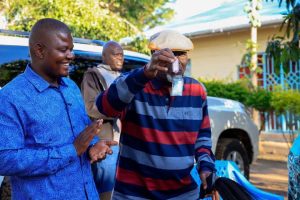
So let the chairman enjoy the car.
Let it travel the highways of Kenya and, if necessary, cross the borders into Uganda, Tanzania and South Sudan.
But let it carry a bigger cargo than an elder and his entourage.
Let it carry ideas.
Let it carry a development agenda.
Let it carry the aspirations of young people.
And, above all, let it carry the Luo community from the politics of “what can the President give us?” to the much more empowering question:
“What can we build for ourselves—and what should government do to help us build it?”
Because if a brand-new car is the greatest evidence of upward mobility available to a community of millions, then perhaps the elders do not merely need a new vehicle.
They need a new dashboard.



