 ADVERT
 ADVERT
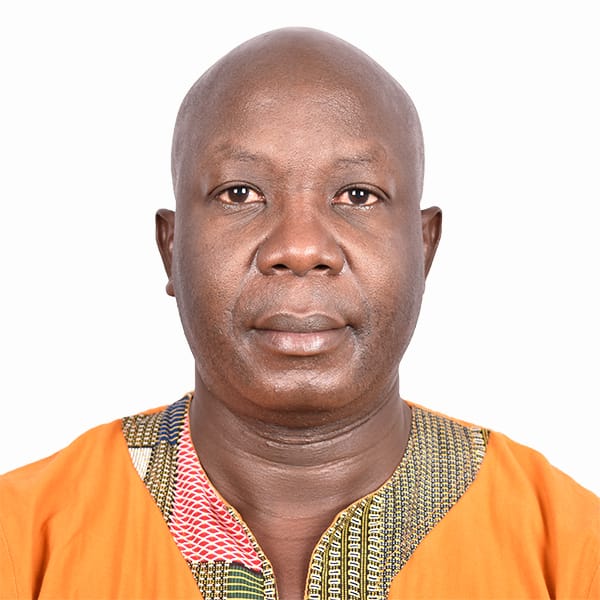
Dr David Oremo’s ACACIA community organisation has renewed calls for a comprehensive overhaul of the Siaya County Equitable Development Act, 2019, arguing that the law must be strengthened and its key provisions translated into clear, enforceable mechanisms for equitable distribution of development resources across the county.
Oremo says the County Assembly should urgently review the legislation while the County Executive, through the Finance and Economic Planning docket, moves to operationalise provisions that are central to the equitable distribution of development funds.
“There’s need for the Assembly to overhaul this Act accordingly. Secondly, there’s urgent need for the CECM Finance & Economic Planning to prepare and gazette regulations that gives effect to Section 6(5),” Dr Oremo said.
His intervention places renewed focus on a law enacted in 2019 specifically to promote equitable allocation of resources for development projects within Siaya’s wards, strengthen public participation and provide mechanisms for monitoring the use of development funds. The Act also establishes Ward Project Development Committees and Project Management Committees to enhance community participation and oversight.
At the centre of the debate is Section 6, which provides for equitable allocation of development funds. The law requires that 63 per cent of funds appropriated for development purposes be equitably shared across the county. It further requires the County Executive Committee Member responsible for Finance to develop an allocation formula, subject to approval by the County Assembly.
 ADVERT
Most importantly, Section 6(5) requires that the formula take into account the population and land area of each ward, while giving special consideration to arid and semi-arid areas.
That provision makes the allocation formula a critical instrument in determining how development resources are distributed across Siaya’s wards. A transparent formula would allow residents, legislators and other stakeholders to understand the basis upon which different wards receive development allocations.
The Act is, however, broader than the formula alone. It establishes a framework under which at least 35 per cent of development funds are shared equally among the wards, while two per cent is allocated towards projects serving the interests of youth, women and persons with disabilities. The remaining 63 per cent is subject to the equitable allocation mechanism under Section 6.
The legislation also requires the county government to promote public participation in identifying and prioritising ward projects. Residents are entitled to information on project funding, commencement and completion dates, as well as the value of completed projects.
Ward Development Committees are similarly mandated to coordinate county-funded development projects, receive public views, monitor projects and ensure that allocated funds are used for the intended purposes.
Oremo’s call for an overhaul therefore touches on a much larger question: whether the legal architecture created in 2019 remains sufficiently robust to guarantee predictable, transparent and accountable ward-level development financing.
There is already a documented legislative history behind the issue. In February 2023, the Siaya County Assembly listed amendments to the Equitable Development Act among matters pending before the House, with the stated objective of enhancing allocations towards ward-based projects.
The Act itself also assigns the County Assembly’s General Oversight Committee the responsibility of ensuring compliance, reviewing the formula for sharing development revenue among wards and assessing the development impact of the law, including reviewing the Act where necessary.
On regulations, Section 20 empowers the relevant Executive Committee Member, with the approval of the County Assembly, to make regulations generally for giving effect to the purposes of the Act. This provides the statutory route through which detailed implementation rules can be developed.
The significance of the debate goes beyond legal drafting. At ward level, equitable development ultimately translates into tangible questions about roads, water, health facilities, markets, education infrastructure and other public investments. The credibility of the system therefore depends not only on what the law promises, but also on whether residents can trace the path from legislation and budget allocations to actual projects on the ground.
For ACACIA, the demand for reform appears to be aimed at closing that gap by ensuring that the principles contained in the 2019 law are backed by a clearer implementation framework.
The proposed review would give the County Assembly an opportunity to examine whether the existing allocation architecture remains fit for purpose, while allowing the Executive to provide the regulations and operational clarity required to implement the law consistently.
Ultimately, the question confronting Siaya is straightforward: can the county transform the promise of equitable development from a statutory principle into a transparent, measurable and predictable system of resource allocation that residents across all wards can understand and scrutinise?
That is the policy and accountability question now placed squarely before the County Assembly and the county’s Finance and Economic Planning authorities.



