 ADVERT
 ADVERT
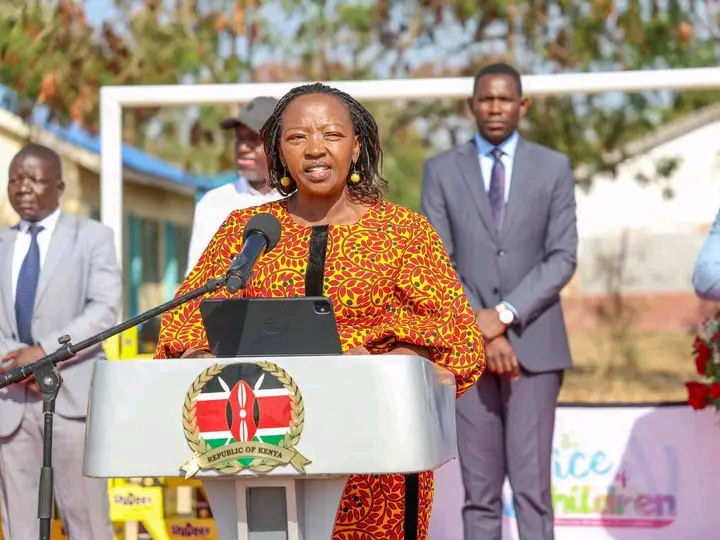
First Lady Rachel Ruto has taken her grassroots women empowerment campaign to Siaya County, urging women to turn collective savings, table banking and entrepreneurship into sustainable pathways to economic independence.
During her visit to the county on Tuesday, September 8, 2026, the First Lady engaged members of the Joyful Women Organisation (JOYWO) in Alego Usonga and at the Kenya Medical Training College (KMTC) in Siaya, where she challenged women to strengthen their savings culture, invest wisely and use collective financial power to build businesses and improve household livelihoods.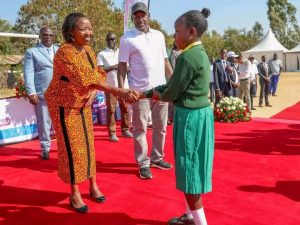
The Siaya engagement forms part of a wider national push by Mama Rachel to position grassroots women groups as engines of financial inclusion and local economic transformation. JOYWO describes its table-banking model as a group savings and lending system designed to help women access affordable credit, build financial discipline and invest in income-generating ventures. The organisation says it has a presence in 44 counties and more than 250,000 members.
Rachel’s message in Siaya went beyond savings, placing entrepreneurship and sustainable livelihoods at the centre of the empowerment agenda. She also called on men to support women’s groups, saying they could participate and contribute to JOYWO groups, although leadership remains reserved for women in keeping with the programme’s primary objective. Men can account for up to 30 per cent of group membership, according to reports from the Siaya meeting.
For Siaya women, the message comes at a time when the county is being positioned to benefit from investments in markets, the blue economy, electricity connectivity and fisheries infrastructure.
 ADVERT
Rachel highlighted planned modern markets and major investments in the county, including a Sh1 billion blue-economy project at Usenge, a Sh100 million fish landing site at Wichlum and expanded electricity connections expected to reach thousands of households.
The significance of such investments, however, lies not merely in the infrastructure itself but in whether local communities — and particularly women and young people — are able to convert the opportunities into businesses, employment and household incomes.
That is where the First Lady’s emphasis on savings, entrepreneurship and financial inclusion intersects with the Government’s broader development message.
The Siaya visit also took the First Lady beyond economic empowerment and into education and child welfare.
At Okela Primary and Okela Secondary schools in Rarieda, Rachel distributed shoes and dignity packs containing sanitary supplies to learners through her Voice of Children Initiative. She urged pupils to remain committed to education and not allow difficult circumstances to determine the limits of their ambitions.
The school outreach was undertaken alongside Medical Services Principal Secretary Dr Ouma Oluga, underscoring the intersection between education, health, dignity and the welfare of children. Dr Oluga has previously accompanied the First Lady in engagements under the Voice of Children Initiative, which focuses on challenges affecting children and adolescents.
For girls in particular, access to sanitary products can be a practical but important factor in maintaining regular school attendance, while basic items such as shoes can ease some of the everyday burdens confronting children from vulnerable households.
Rachel’s Siaya tour therefore carried two complementary messages: that women must be equipped to create economic opportunities for themselves, and that children must be supported to acquire the education and dignity necessary to benefit from those opportunities in the future.
The First Lady’s economic empowerment campaign has increasingly focused on demonstrating how organised women can transform modest savings into capital for agriculture, small businesses and other income-generating activities.
Recent JOYWO programmes in counties such as Kisii and Nyamira have similarly emphasised savings, entrepreneurship, agricultural value addition and collective economic action. In Nyamira, Rachel praised women for their savings performance and urged greater participation in the groups.
In Siaya, the challenge will be to translate the same model into tangible economic gains in a county whose economy is heavily linked to agriculture, fisheries, informal trade and small-scale enterprise.
The proposed investments in Usenge and Wichlum could provide a particularly significant opportunity if women are deliberately integrated into fisheries value chains, fish processing, transportation, marketing, hospitality and other businesses that emerge around modernised infrastructure.
Similarly, modern markets could become more than trading spaces if women entrepreneurs are connected to affordable credit, business training, digital payments, reliable electricity and dependable markets for their products. 
Rachel’s visit thus placed women’s empowerment at the intersection of finance, infrastructure, education and community development — a recognition that empowerment cannot be reduced to distributing money or goods, but must create systems through which communities can generate and sustain their own incomes.
As the First Lady continues her grassroots campaign, the test for Siaya will ultimately be whether the enthusiasm generated by the visit translates into stronger women’s groups, increased savings, growing enterprises and measurable improvements in household livelihoods.
For the women who gathered under the JOYWO banner, the message was straightforward: collective financial discipline can become a powerful foundation for economic independence, but only when savings are converted into productive investment and sustained enterprise.



