 ADVERT
 ADVERT
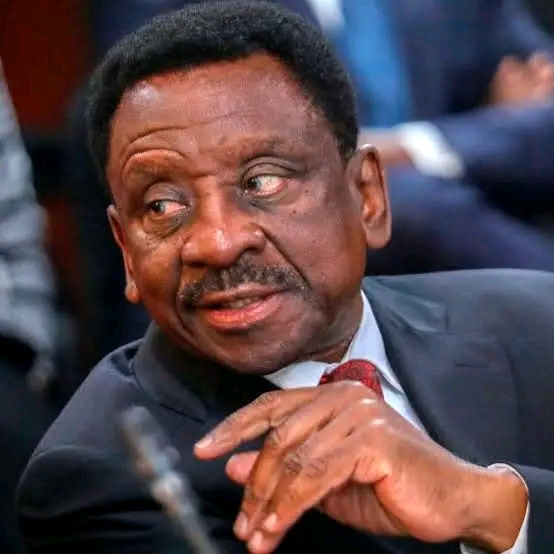
James Aggrey Bob Orengo may have entered one of the strangest phases of his long political career.
Whether the Siaya governor ultimately seeks a second term at the county level or continues his ascent onto the national political stage, one thing is increasingly difficult to dispute: Orengo has succeeded in making himself impossible to ignore.
That, in itself, is a remarkable political recovery.
For a politician whose standing in parts of Siaya appeared to have suffered considerably during the earlier stages of his governorship, Orengo has spent much of 2026 doing something veteran politicians understand instinctively — changing the battlefield.
Instead of allowing the 2027 conversation to remain entirely about his county administration, he has increasingly projected himself into the national opposition debate, positioning himself once again as a national political actor.
 ADVERT
The transformation is striking.
Orengo has spent decades as a lawyer, legislator, senator, Cabinet minister, opposition politician and, now, governor. His latest political manoeuvre has been to remind Kenya — and perhaps Siaya itself — that he is considerably larger than the office of governor.
The latest development provides perhaps the clearest evidence yet.
On September 21, reports emerged that Orengo had replaced retired President Uhuru Kenyatta as chairman of the Ukombozi Alliance coalition council following the rebranding of Azimio. A few days later, Wiper leader Kalonzo Musyoka was scheduled to visit Siaya as part of the coalition’s political mobilisation.
This is no longer simply county politics.
It is the Orengo paradox.
The more intensely he operates outside Siaya, the more relevant he appears to become inside Siaya.
And yet the strategy carries an obvious danger.
A governor who spends too much political energy fighting national battles can easily create the impression that he has abandoned the county battlefield. His opponents can portray national activism as evidence that his eyes are elsewhere.
That is precisely why the 2027 Siaya succession contest remains so fascinating.
At the beginning of the year, the emerging field appeared capable of producing a formidable anti-Orengo coalition. Deputy Governor William Oduol declared his intention to challenge his boss. Former Rarieda MP Nicholas Gumbo returned to ODM and declared his gubernatorial ambitions. Speaker George Okode subsequently joined the race, while Ugenya MP David Ochieng also positioned himself for the county’s top seat.
On paper, this was potentially a nightmare for an incumbent.
But Kenyan politics rarely behaves according to the neat arithmetic of political spreadsheets.
The more candidates enter a race, the more difficult it becomes to construct a single opposition vehicle.
What initially looked like the possible ingredients of a coalition against Orengo instead became a crowded field of individual ambitions.
And that may be where the governor’s political ingenuity becomes visible.
Orengo has not necessarily needed to defeat every challenger individually. The structure of the contest itself may prevent his opponents from becoming one challenger.
That is a very different proposition.
In the 2022 gubernatorial election, Orengo secured 220,349 votes against Nicholas Gumbo’s 147,558. The official results give Orengo roughly 59 per cent of the valid vote.
Those figures belong to another election and cannot simply be transplanted into 2027. But they establish something important: Orengo is not an accidental occupant of the Siaya governorship.
He has already demonstrated the ability to command a substantial countywide vote.
The question now is whether the opposition to him can consolidate.
That question becomes even more intriguing with the emergence of David Ochieng.
The Ugenya MP is no longer merely another name on the succession list. He has become one of the most consequential variables in the equation.
Ochieng has openly declared his gubernatorial ambitions and has positioned himself around the Broad-Based Government, while also arguing that Siaya requires a different style of leadership.
More significantly, ODM leader Oburu Oginga publicly invited Ochieng to return to ODM and promised him the party’s support for the governorship.
That public overture alone demonstrates how seriously the political establishment is taking Ochieng’s candidature.
But here lies another paradox.
If the eventual contest becomes heavily concentrated between two candidates from Ugenya, the traditional politics of geographical balancing inside Siaya becomes less straightforward.
The argument that one constituency should produce the governor while another produces the deputy may no longer be enough to determine voting behaviour. Other considerations — party machinery, alliances, resources, national networks, local performance, candidate organisation and the personalities of the contenders — could become increasingly important.
This is where speculation about money enters the conversation.
There are claims circulating in political circles about negotiations involving senior religious and political figures, including Bishop Emeritus Zacheus Okoth, and allegations that some aspirants may have been offered future national appointments in exchange for political realignment.
Those claims are politically explosive but remain unverified. They should therefore be treated as political talk, not established fact.
The same caution applies to claims that particular Cabinet or Principal Secretary positions have been dangled before specific gubernatorial aspirants.
Until documentary evidence or attributable statements emerge, such claims belong in the category of political intelligence — not political fact.
Yet their existence tells us something about the mood of the race.
The Siaya contest is already sufficiently fluid for rumours of negotiations to become politically consequential.
And then there is Opiyo Wandayi.
Wandayi has considerable political experience and influence in Siaya and remains a central figure in the county’s political arithmetic. But the public record currently provides no solid basis for stating that he has committed himself to David Ochieng’s gubernatorial campaign.
Indeed, Wandayi publicly ruled out seeking the Siaya governorship himself in February and said his focus was government service and supporting President William Ruto’s 2027 re-election campaign.
That distinction matters.
Political observers may interpret alliances differently, but interpretation should not be confused with evidence.
Still, if Ochieng were eventually to assemble significant national-government networks, financial resources and experienced political strategists around his campaign, the contest could assume an entirely different character.
And this is where the Orengo paradox becomes most interesting.
Orengo’s decision to play a national game may have been precisely what rescued him from being trapped in a purely local one.
By fighting on the national stage, he has regained visibility.
By engaging opposition leaders, he has reminded Siaya that its governor remains a player in the national political theatre.
By becoming chairman of the Ukombozi Alliance coalition council, he has acquired a political platform extending well beyond the county.
But the same strategy could eventually produce the opposite result.
The people of Siaya may ask a brutally simple question:
What has all this national politics done for us?
That is the question Orengo cannot answer through rhetoric alone.
He will ultimately have to confront the record of his administration — roads, healthcare, water, agriculture, employment, county finances, public services and institutional performance.
His national stature cannot permanently substitute for county-level delivery.
Nor can his opponents assume that dissatisfaction with the governor automatically translates into votes for any particular challenger.
That is the other lesson of the current race.
A crowded field is not necessarily a united opposition.
And a powerful incumbent is not necessarily an unbeatable incumbent.
The political arithmetic remains fluid.
Gumbo has experience and a history of challenging for the seat. Oduol brings the unusual advantage of being the incumbent governor’s deputy. Okode brings county assembly experience and an established political network. Ochieng brings an independent political identity and an increasingly visible national-government connection.
None of these factors, by themselves, determines the outcome.
And perhaps that is precisely why Orengo has been so comfortable dancing on the national stage.
He understands that politics is not merely about defeating opponents.
Sometimes it is about preventing them from becoming one opponent.
The danger, however, is that the dancer can become so absorbed in the music that he forgets where the audience is sitting.
Orengo’s political career has always been characterised by reinvention. He has survived ideological shifts, party realignments, national defeats and political storms that have consumed many of his contemporaries.
His latest reinvention — from county governor to national coalition player — may yet become another chapter in that extraordinary career.
But Siaya will eventually demand an answer.
Is Orengo still the governor campaigning for Siaya, or is he the national politician temporarily occupying the Siaya governorship?
That is the real paradox.
If he returns home and seeks another term, his national adventures may have strengthened his stature but also created a burden of expectation about what he delivered locally.
If he chooses a national position, his opponents will inherit the county battlefield he has spent months reshaping.
Either way, Orengo has already altered the 2027 equation.
The man who once appeared vulnerable inside his own county has successfully made himself the central character in almost every conversation about its political future.
That may be political genius.
It may also be political overreach.
The voters of Siaya will ultimately decide which one it was.
Editorial
25th September, 2026



