 ADVERT
 ADVERT
JOHANNESBURG/CAPE TOWN — South Africa is grappling with a fresh wave of deadly gun violence after two separate mass shootings killed at least 27 people and wounded more than 25 others within hours, triggering a nationwide manhunt for the perpetrators.
The attacks, which struck townships near Johannesburg and Cape Town in the early hours of Sunday, September 27, have renewed concerns over the country’s persistent gun violence, organised crime and the proliferation of illegal firearms.
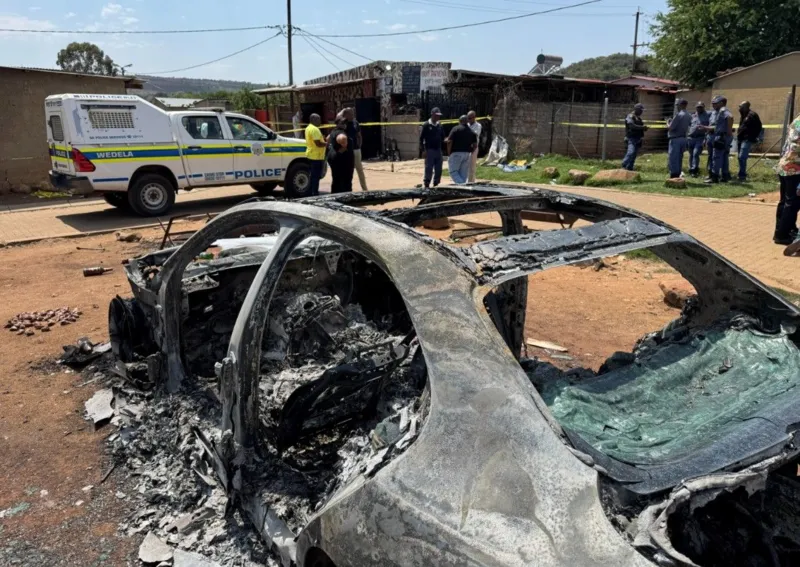
The first and deadliest attack occurred at a tavern in Wedela township, in Gauteng’s West Rand, about 80 kilometres southwest of Johannesburg. According to police, eight armed men arrived at the establishment at around 9.30pm on Saturday and opened fire on patrons gathered outside before moving inside and continuing the assault.
Seventeen people — 13 men and four women — were killed at the scene, while another 15 suffered gunshot wounds. Police said the attackers were armed with AK-47 rifles and pistols and searched some patrons before taking their mobile phones and fleeing in two vehicles. Two other vehicles were reportedly set alight during the attack.
South African authorities have launched a major manhunt for the eight suspects. No arrests had been reported at the time of the latest updates.
 ADVERT
Police have opened 17 murder cases, 15 attempted-murder cases and two cases relating to malicious damage to property. The motive remains under investigation, although authorities are examining possible links to organised criminal activity and illegal mining.
The second shooting came roughly four hours later in Lwandle township on the outskirts of Cape Town.
Gunmen reportedly opened fire at about 1.46am at an entertainment venue that also operates as a shisanyama, killing 10 people and injuring another 11. Five victims died at the scene, while five others later succumbed to their injuries in hospital. Police have launched a multidisciplinary investigation and increased deployments in the area, but no arrests had been made.
Police are also investigating a possible business rivalry as one line of inquiry into the Lwandle attack, although officials have stressed that investigations are continuing and no definitive motive has been established.
The latest bloodshed comes only days after another mass shooting near Durban left 11 people dead, including a pregnant woman. Three gunmen reportedly attacked a house party in KwaMakhutha township on September 22. Police have said rival criminal groupings could not be ruled out as a possible motive.
The succession of attacks has intensified scrutiny of South Africa’s long-running struggle with violent crime. The country records some of the highest homicide levels in the world, with official police statistics showing 5,427 homicides in the three months to the end of June — an average of almost 60 killings every day.
President Cyril Ramaphosa has described organised crime as a major threat to South Africa and has previously authorised the deployment of soldiers to support police operations in some of the country’s worst crime hotspots.
Reacting to the latest shootings, Ramaphosa said: “This cannot go on like this,” stressing the need for security forces to intensify efforts against violent criminality.
The BBC, in reporting carried by Kenyan and international media, highlighted the broader concern: South Africa’s gun violence is increasingly characterised by attacks involving multiple armed assailants rather than isolated lone-gunman incidents. Recent massacres have frequently been associated by investigators with gang disputes, illegal mining, drug markets and other forms of organised criminal activity.
For communities already accustomed to violent crime, however, the scale and frequency of the latest attacks have produced fresh shock.
The deaths in Wedela and Lwandle are not merely another entry in South Africa’s grim crime statistics. They represent families suddenly deprived of loved ones, survivors recovering from gunshot wounds and communities once again confronting the frightening reality of heavily armed criminals operating in densely populated neighbourhoods.
With suspects still at large and investigations continuing, authorities now face pressure to establish who ordered or carried out the attacks, determine whether the incidents are connected to organised criminal networks and, crucially, prevent another massacre from becoming the next headline in South Africa’s escalating gun-violence crisis.



