 ADVERT

 ADVERT
Kenya is moving to reshape its social protection architecture from a system largely focused on cushioning vulnerable households from hardship to one designed to build resilience, promote economic inclusion and respond faster to emerging shocks.
The Government has announced plans to establish and capitalise a Social Protection Fund while expanding the Inua Jamii programme to 2.5 million households, in a major push to widen the country’s social safety net.
Cabinet Secretary for Labour and Social Protection Alfred Mutua made the commitments during the official opening of the 4th Kenya Social Protection Conference 2026, which brought together national and county governments, development partners, researchers, civil society, practitioners and private-sector actors.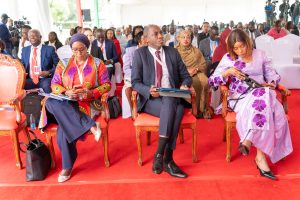
Held under the theme “Re-imagining Social Protection in an Evolving Socio-Economic Landscape and Climate Change,” the conference is examining how Kenya can build systems capable of protecting households not only from poverty and vulnerability, but also from economic disruption, disability, ageing and climate-related shocks.
Inua Jamii reaches 1.7 million beneficiaries
 ADVERT
The Government currently channels more than KSh3.5 billion every month to vulnerable Kenyans through various social protection programmes.
Inua Jamii coverage has risen from 1.2 million to 1.7 million beneficiaries, adding about 500,000 vulnerable Kenyans to the programme. The Government says it intends to progressively move towards the target of 2.5 million households, while protecting cash-transfer allocations until eligible beneficiaries are reached.
The programme has also undergone a significant payment-system transformation, moving from commercial bank payments to mobile money, particularly M-PESA.
The shift is intended to make access easier for older persons, persons with disabilities and other vulnerable beneficiaries by bringing payments closer to their communities and reducing some of the barriers associated with conventional banking.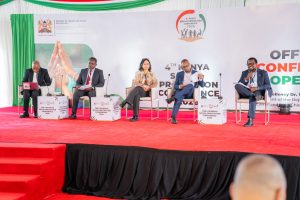
Disability inclusion moves higher up the agenda
The Government also highlighted increased investment in programmes supporting persons with disabilities.
Between the 2022/23 and 2025/26 financial years, KSh7.947 billion was allocated to programmes implemented through the National Council for Persons with Disabilities, of which KSh7.277 billion was disbursed and utilised, according to figures presented at the conference.
More than 330,000 persons with disabilities were newly registered during the period, while beneficiaries under the Cash Transfer Programme for Persons with Severe Disabilities increased to 63,960, compared with 30,000 previously.
The investments have been directed towards social protection, education, assistive devices, economic empowerment, employment and specialised support services.
From handouts to livelihoods
A central theme emerging from the conference is the need to redefine social protection as more than periodic financial assistance.
The Kenya Social and Economic Inclusion Project (KSEIP) was cited as an important vehicle for connecting vulnerable households to opportunities that can strengthen their economic independence.
The project supports interventions covering early-childhood nutrition, adolescent vulnerabilities, economic inclusion and improvements to social protection registries and systems designed to enable quicker responses to shocks.
The Government also pointed to progress in child nutrition, with national stunting among children under five declining from 26 per cent in 2014 to 18.4 per cent.
Under the emerging economic-inclusion approach, vulnerable households are being supported to participate more actively as entrepreneurs, farmers, workers and suppliers rather than remaining permanently dependent on social assistance.
National school meals programme planned for 2027
Another major proposal announced at the conference is the progressive establishment of a National School Meals Programme covering learners in lower primary, upper primary and junior secondary schools across Kenya’s 47 counties.
The Ministries of Education and Labour and Social Protection, working with the National Treasury and other stakeholders, are expected to develop the policy, financing, governance and implementation framework.
A phased national rollout is expected to begin in the first school term of 2027.
The programme is envisaged as more than a feeding initiative. Its design is expected to link education, nutrition, social protection, agriculture, local economic development and employment, potentially creating a wider market for local food producers while supporting school attendance and child welfare.
Building a shock-responsive safety net
Kenya’s social protection agenda is also evolving alongside a broader policy and legislative framework.
Key developments cited at the conference include the Social Protection Policy 2023, Persons with Disabilities National Policy 2024, Social Protection Act 2025, Persons with Disabilities Act 2025 and Social Protection Regulations 2026.
The challenge now is translating those frameworks into effective delivery at household level.
Conference discussions are therefore focusing on adaptive and shock-responsive social protection, wider coverage, digital transformation and data, sustainable financing, livelihood development and stronger coordination between institutions.
Mutua stressed the need for a system that is predictable, sustainable and capable of protecting vulnerable families against poverty, disability, old age and increasingly frequent climate-related shocks.
The Government is consequently positioning social protection as part of a broader development strategy—one that combines immediate assistance with pathways into economic participation.
For Kenya, the emerging test will be whether expanded programmes, stronger legislation and new financing mechanisms can translate into reliable support for vulnerable households while simultaneously helping families build the resilience needed to eventually depend less on social assistance.


