 ADVERT
 ADVERT
The County Government of Siaya is moving to Institutionalize public participation through a comprehensive draft policy designed to shift citizen engagement from routine public meetings to a more structured system in which residents can meaningfully influence development priorities, decisions, budgets and implementation.
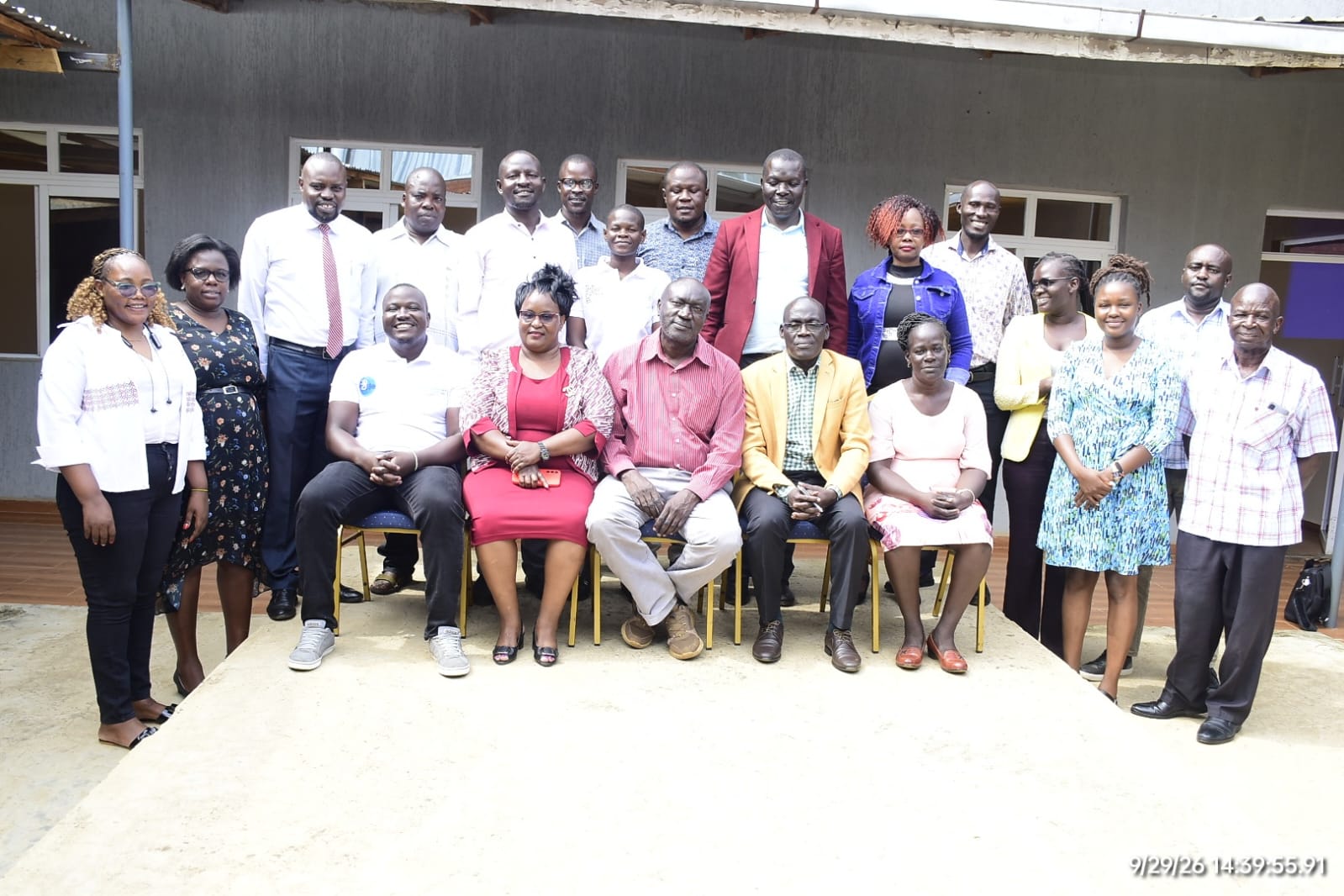
The proposed Siaya County Public Participation Policy, 2026 is in its final stages of development, with the county government working alongside Transparency International Kenya (TI-Kenya) and other stakeholders to establish a common framework for public engagement across the county.
The initiative is being driven through the Department of Finance and Economic Planning and the Directorate responsible for Public Participation, Petitions and Civic Engagement. The process brings together county officials, civil society representatives, administrators and technical experts in an attempt to create a durable framework for citizen-centred governance.
The move comes as Siaya continues to conduct public participation on matters ranging from development planning and budgeting to policy formulation. In February 2026, for example, the county invited residents, civil society organisations, faith-based organisations, youth, women, persons with disabilities and private-sector actors to participate in preparation of the 2026 County Fiscal Strategy Paper.
The proposed policy seeks to go beyond the conventional model in which citizens are invited to meetings, submit views and subsequently wait for government decisions.
 ADVERT
Instead, it proposes a system where stakeholders are provided with timely information, given opportunities to influence decisions and receive feedback on how their contributions affected final outcomes.
From attendance to influence
At the heart of the draft is the principle that public participation should be a continuous governance process rather than an event.
The policy defines public participation around the ability of stakeholders to influence and share responsibility in development initiatives, decisions and allocation of resources affecting their lives.
That approach is firmly anchored in Kenya’s constitutional architecture. Article 10 identifies participation of the people, inclusiveness, transparency and accountability among the national values and principles of governance, while Article 174(c) provides for the enhancement of people’s participation in the exercise of the powers of the State and in making decisions affecting them. Courts have similarly recognised public participation as an important feature of Kenya’s devolved system of government.
The constitutional framework is complemented by Article 33, which protects freedom of expression including the freedom to seek, receive and impart information or ideas, and Article 35, which guarantees citizens access to information held by the State.
The draft policy also draws from international instruments including the Universal Declaration of Human Rights, the International Covenant on Civil and Political Rights and the UN Convention on the Rights of Persons with Disabilities.
A framework for all seven sub-counties
One of the most significant proposals is the creation of common minimum standards for public participation across Siaya’s seven sub-counties and 30 wards.
The proposed framework would cascade participation structures from the county level to sub-county, ward and village levels, providing a more systematic architecture for engaging residents.
The policy proposes a County Public Participation Committee bringing together representatives from county departments, civil society organisations, faith-based organisations, persons with disabilities and citizen representatives.
The committee would be chaired by the relevant County Executive Committee Member or Chief Officer, with the Director of Public Participation serving as secretary.
Similar coordination structures would be established at ward and village levels.
The proposed institutional architecture is intended to prevent public participation from becoming the responsibility of one department while ensuring that every county department integrates citizen engagement into planning, budgeting and implementation.
Information at the centre of participation
A major component of the draft is access to timely, relevant and understandable information.
The proposed policy calls for public information to be presented in simple language and without unnecessary technical jargon, allowing citizens to understand the issues on which they are being consulted.
This is significant because effective participation depends on citizens knowing what is being proposed before they can meaningfully comment on it. Kenya’s legal framework already recognises access to information as fundamental to meaningful participation and accountable governance.
The draft therefore proposes clearer requirements for prior notices, disclosure of relevant information, feedback mechanisms and reporting.
It also seeks to strengthen communication through conventional and digital platforms, creating room for online participation alongside physical public forums.
Data protection enters public participation
In a notable addition, the proposed policy incorporates data protection and management into the public participation framework.
It provides for principles including lawfulness, fairness and transparency, purpose limitation, data minimisation, accuracy, security, confidentiality and accountability.
The framework would cover personal information collected during public forums, consent records, attendance registers, petitions, minutes, reports, photographs, audio-visual material, invitations and notices, as well as records generated through digital participation platforms.
Such records would be classified according to their level of confidentiality, while procedures would govern retention, disclosure, sharing, security and disposal.
The proposal reflects the growing reality that public participation is increasingly moving beyond physical barazas into digital spaces where citizen data can be generated and stored at scale.
Inclusion of marginalised groups
The draft also places emphasis on groups that can easily be excluded from conventional public meetings.
Children, youth, women, minorities, marginalised communities and persons with disabilities are specifically identified for greater inclusion.
Gender and youth mainstreaming are expected to form part of the policy’s implementation framework, while participation mechanisms are to be adapted to different community circumstances.
The policy further proposes capacity-building programmes aimed at both citizens and public institutions so that participation is not simply a formal requirement but a process through which residents can understand government plans, scrutinise them and contribute informed views.
Tackling the weaknesses
The architects of the proposed policy have identified several obstacles that have historically weakened public participation.
These include inadequate funding, governance and administrative bottlenecks, weak communication, inadequate logistical arrangements, citizen apathy, limited compliance with participation requirements and the absence of a standard county-wide policy framework.
Siaya’s own recent experience illustrates why the issue matters. In May 2026, the county hosted sensitisation on revised national county public participation guidelines, with discussions highlighting timely communication and feedback as critical components of effective engagement.
The proposed policy seeks to respond by establishing clearer institutional responsibilities, dedicated structures, monitoring and evaluation mechanisms, standardised reporting tools and sustainable financing arrangements.
It also proposes strengthening the Directorate of Public Participation, Petitions and Civic Engagement and providing it with the institutional capacity necessary to coordinate participation across the county.
Public participation and county budgets
The proposed framework will have particular significance in planning and public finance.
The Public Finance Management Act establishes the County Budget and Economic Forum as a mechanism for consultation on county plans, the County Fiscal Strategy Paper, the Budget Review and Outlook Paper, budgeting, the economy and financial management.
For Siaya residents, a more structured participation system could therefore affect how communities engage with priorities before resources are allocated and how they follow up on projects after budgets are approved.
The draft proposes integrating public participation into planning, budgeting and implementation rather than treating it as a stand-alone administrative exercise.
Transparency International partnership
The drafting process has involved Transparency International Kenya, with the organisation’s Western Kenya representatives participating alongside county officials and civil society actors.
The county side has been represented by governance and public participation officials, while TI-Kenya’s engagement includes representatives associated with its Western Kenya programme and the Tupigane na Ufisadi initiative.
Technical input has also been incorporated from a team associated with Jaramogi Oginga Odinga University, led by Dr Bob Ndaga, alongside representatives from sub-county administrations, ward administrators and municipal management.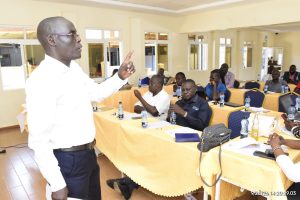
The partnership comes against a broader push in Siaya to strengthen transparency and citizen oversight. In April 2026, the County Assembly worked with TI-Kenya, the European Union, Tupigane na Ufisadi and the Commission on Administrative Justice on implementation of the Access to Information Act, highlighting the connection between information access, public participation and accountability.
What happens next?
Once the technical team concludes the draft, it is expected to proceed through the county’s legislative and policy-making structures for consideration, adoption and eventual formalisation.
If approved through the required processes, the framework would provide Siaya with a county-wide reference point for how public participation should be organised, funded, documented, monitored and evaluated.
Its proposed review mechanism would also allow the policy to evolve as technology, governance structures and community needs change.
The significance of the initiative ultimately lies not in the number of public meetings held, but in whether citizens can see a demonstrable connection between their views and government decisions.
For devolution to deliver its full promise, public participation must move beyond counting attendance sheets. Citizens need information before decisions are made, genuine opportunities to influence those decisions and clear explanations afterwards about what was accepted, rejected and why.
That is the test the proposed Siaya County Public Participation Policy, 2026 will ultimately face: whether it can transform public participation from a procedural requirement into a functioning system of citizen influence, accountability and shared ownership of county development.


