 ADVERT
 ADVERT
Kenya’s nuclear power ambition is entering a phase in which the most important question is no longer simply whether the country can build a nuclear power plant, but whether it can build the Kenyan human capital required to make that plant a lasting national asset.
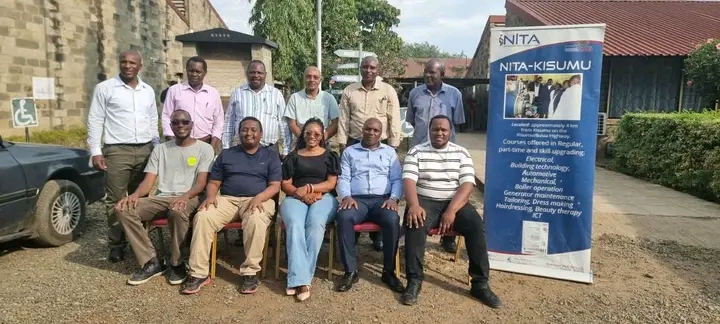
That is why the engagement between the National Industrial Training Authority (NITA) and the Nuclear Power and Energy Agency (NuPEA) at NITA Kisumu deserves considerably more attention than an ordinary institutional meeting.
It represents an important convergence between Kenya’s nuclear ambitions and its technical and vocational training system—and potentially the beginning of a deliberate strategy to ensure that the country’s nuclear future is powered not only by technology, but also by Kenyan skills.
A nuclear power plant is far more than a sophisticated facility surrounded by concrete, steel and complex machinery. It is a decades-long industrial undertaking requiring thousands of people with different levels of technical expertise during construction, commissioning, operation, maintenance, inspection, regulation and eventual decommissioning.
Engineers will be essential. So will technicians, electricians, welders, fabricators, pipe fitters, plumbers, mechanical specialists, instrumentation technicians, safety professionals, inspectors, operators and trainers.
 ADVERT
The central challenge, therefore, is straightforward: Kenya must start preparing the workforce before the project begins demanding it.
From Nuclear Ambition to Practical Skills
NuPEA carries responsibility for coordinating Kenya’s nuclear power programme and developing the human-resource capacity necessary for its implementation. NITA, meanwhile, sits at the heart of the country’s industrial training, trade testing and technical skills development architecture.
Bringing these two mandates together creates an opportunity to convert a national policy ambition into a practical workforce strategy.
The critical questions become much more concrete.
Which trades will be required? What competencies will they need? Which training institutions can provide them? What equipment will those institutions require? How should existing courses be modified? How will trainers themselves be prepared? And how can Kenyan workers progressively qualify for increasingly specialised roles?
These are the questions that will determine whether local content in Kenya’s nuclear programme becomes a substantive reality or remains a policy aspiration.
Why NITA Kisumu Matters
The focus on NITA Kisumu is particularly significant because of the institution’s strategic position in the wider Lake Victoria region and the proposed nuclear development in Siaya.
If nuclear power development proceeds in the region, its economic footprint will extend well beyond the plant site.
Construction companies will require suppliers. Contractors will require skilled labour. Fabrication workshops will require qualified personnel. Electrical and mechanical firms will require technicians. Inspection and testing services will create additional opportunities. Hotels, transport operators, retailers and other businesses will also feel the economic effects of a major industrial project.
The question is whether local communities will possess the skills necessary to participate in that economy.
Strengthening NITA Kisumu therefore has the potential to turn the region into a meaningful skills reservoir for one of Kenya’s most technologically ambitious undertakings.
It also presents an opportunity to reduce the concentration of advanced technical opportunities in Nairobi and other major urban centres.
A young person from Siaya, Kisumu, Busia or neighbouring counties should not necessarily have to leave the region to acquire the skills required to participate in a major industrial project unfolding within the same geographical area.
The Importance of Ordinary Trades in an Extraordinary Industry
There is sometimes a tendency to associate nuclear energy exclusively with nuclear physicists, engineers and highly specialised scientists.
That would be a mistake.
Every sophisticated industrial facility ultimately depends on people who can weld correctly, install electrical systems precisely, fabricate components accurately, maintain machinery safely and execute technical procedures without cutting corners.
This explains the importance of areas such as welding and fabrication, electrical installation, plumbing and pipe fitting.
These are conventional industrial trades, but nuclear applications demand an exceptional level of precision, quality assurance, documentation and procedural discipline.
The objective should therefore not be to create a completely separate workforce from scratch.
Kenya already possesses a foundation of technical skills.
The task is to upgrade, specialise and certify that foundation for the higher standards required by nuclear technology.
Building on Existing Competence
The attention given to boiler-operation training at NITA Kisumu offers an instructive example.
Kenya does not need to begin its industrial skills journey from zero. Existing knowledge in thermodynamics, pressure systems, instrumentation, controlled operations and mechanical maintenance provides an important foundation.
What must be added is the nuclear-specific layer.
That includes radiation awareness, stringent quality-assurance systems, meticulous documentation, regulatory compliance and an uncompromising safety culture.
The principle is simple: build upon what Kenya already knows while preparing workers for what nuclear technology demands.
This approach would be more practical, sustainable and cost-effective than treating nuclear skills development as an entirely isolated discipline.
Curriculum Will Be the Real Test
The quality of the curriculum will ultimately determine the value of the partnership.
Generic industrial training alone will not be sufficient. Courses must reflect the actual technical and regulatory requirements of the nuclear programme.
Training should combine theoretical knowledge with practical experience, simulation, industrial attachment, assessment and continuous professional development.
The curriculum must also evolve.
The skills required during construction will not necessarily be identical to those required during commissioning or long-term operation. Training institutions must therefore be able to adjust as the programme progresses.
Most importantly, trainers themselves must be trained.
It is difficult to create a highly specialised workforce if the institutions responsible for teaching that workforce do not have instructors with current knowledge, appropriate equipment and exposure to relevant industrial standards.
Local Content Must Mean Capability
Local content is often discussed in terms of employment and procurement.
For a nuclear programme, however, its deeper meaning should be capability creation.
Hiring Kenyans for selected jobs is important, but it is only one component of localisation.
The more enduring objective should be to develop Kenyan companies, professionals, technicians and institutions capable of undertaking increasingly sophisticated portions of the nuclear value chain.
That means training.
It means technology transfer.
It means industrial partnerships.
It means research.
It means strengthening local suppliers.
And it means ensuring that international expertise brought into the programme contributes to a permanent increase in Kenyan knowledge rather than creating another cycle of technological dependency.
The first generation of nuclear projects may necessarily require substantial international participation. That should not be viewed as a weakness. The critical question is what Kenya learns and retains from that participation.
Safety Must Be Part of the Culture
No discussion of nuclear workforce development can be complete without safety.
A nuclear facility operates under a level of scrutiny and procedural discipline that demands more than technical competence.
Workers must understand the importance of documentation, verification, reporting, quality control and strict adherence to procedures.
They must be comfortable stopping work when something is wrong.
They must understand that production targets cannot override safety requirements.
These attitudes cannot simply be introduced when an employee walks through the gates of a nuclear facility.
They must be developed much earlier—in classrooms, workshops and training institutions.
This is perhaps one of the most valuable contributions NITA can make to the nuclear programme: embedding a culture of precision and responsibility into the workforce before workers ever encounter a nuclear installation.
A Nuclear Project Should Leave Behind More Than Electricity
The long-term value of nuclear development should not be measured only by the electricity eventually generated.
A successful programme should leave behind institutions, companies, professionals, trainers, researchers and technicians capable of supporting increasingly sophisticated industries.
The plant may have a defined operational life.
The human capital created around it can last for generations.
That is why workforce planning must extend beyond the immediate construction phase.
Kenya will require succession planning, continuing education, curriculum reviews, trainer development and pathways through which artisans can progress into advanced technical and professional fields.
The objective should be a complete skills ecosystem rather than a temporary employment programme.
An Opportunity for Western Kenya
For Western Kenya and the Lake Region, the opportunity is potentially even broader.
A strengthened NITA Kisumu could become a regional centre for advanced industrial skills, serving not only nuclear energy but manufacturing, conventional power generation, infrastructure, transport, water development and other technically demanding sectors.
That would give the nuclear programme a multiplier effect.
Even before a nuclear plant begins generating electricity, the training ecosystem supporting it could already be generating employment, enterprise, knowledge and investment.
This is how major infrastructure projects can become catalysts for regional industrialisation rather than isolated installations.
The Real Measure of Nuclear Readiness
Kenya’s nuclear ambition will ultimately be tested on several fronts: technology, financing, regulation, safety, public confidence and institutional capacity.
But human capital will run through all of them.
A sophisticated facility cannot operate safely without competent people.
A regulatory system cannot function effectively without properly trained professionals.
Local suppliers cannot compete without technical capacity.
And local communities cannot fully benefit from a major industrial investment if they lack the skills required to participate in it.
The NITA–NuPEA engagement at Kisumu should therefore be viewed as the beginning of a much larger conversation.
That conversation must move quickly from meetings to measurable action: mapping occupations, defining competencies, developing curricula, upgrading workshops, equipping training institutions, training trainers, establishing industry attachments and creating clear pathways from basic trades to advanced specialisations.
The opportunity is too important to approach piecemeal.
Kenya Must Build the People Before the Plant
Kenya’s nuclear programme will inevitably involve sophisticated technology and international expertise.
But its enduring national value will depend on how much Kenyan capability is created around that technology.
The ambition should be bigger than building a nuclear power plant.
It should be about building a Kenyan nuclear workforce, a Kenyan industrial supply chain and a Kenyan knowledge base capable of supporting the technology for decades.
If NITA and NuPEA can successfully connect technical training with the actual requirements of the nuclear programme, the benefits could extend far beyond the production of electricity.
They could help create a generation of highly skilled Kenyan workers, strengthen regional industrial capacity and demonstrate that Kenya can participate meaningfully in some of the most technologically demanding projects on the continent.
A nuclear plant can generate electricity for decades.
A properly trained Kenyan workforce can generate knowledge, enterprise and technological capability for generations.
That is the deeper significance of the NITA–NuPEA partnership.


