 ADVERT
 ADVERT
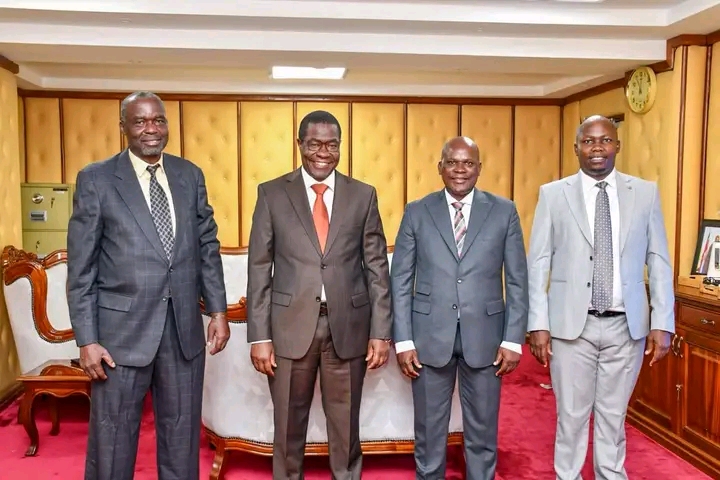
The meeting between Cabinet Secretary for Energy and Petroleum Opiyo Wandayi and a delegation of Siaya County leaders led by Deputy Governor William Oduol and Engineer Nicholas Gumbo together with Vincent Junior Jasukuma of Ugenya provides an important moment to examine the relationship between leadership public service and development. The meeting focused on reviewing the status of development projects and identifying priority areas that require support from the National Government. Its importance lies not only in the issues discussed but also in the message that leaders from different political backgrounds can come together to pursue a common goal. Development should be understood as a public duty owed to every citizen not as a favour granted to selected communities or a reward for political loyalty.
Siaya County has real and pressing development needs. Many households still require reliable electricity connections many roads need improvement or maintenance several communities face difficulties accessing clean water and health facilities require stronger support to serve residents effectively. These needs affect daily life in direct ways. They influence whether a child can study comfortably at night whether a patient can receive timely treatment whether a farmer can take produce to market and whether a small business can operate efficiently. For this reason development planning must begin with the lived experiences of the people and must aim to remove the practical barriers that limit opportunity and wellbeing.
Electricity connectivity deserves special attention because it supports nearly every sector of society. In homes electricity improves lighting communication food preservation and access to information. In schools it enables better learning conditions and supports digital education. In health facilities it allows the safe storage of medicines the operation of medical equipment and the delivery of emergency services. In businesses it supports welding milling refrigeration tailoring ICT services and other income generating activities. The expansion of rural electrification in Siaya is therefore not only about connecting wires to houses. It is about expanding opportunity improving public services and strengthening the local economy. The government has identified rural electricity expansion as a priority in the county and this commitment should be implemented in a manner that is timely transparent and visible to residents.
The value of electricity is greatest when connections reach the people who need them most. It is not enough for power lines to pass near a village if households schools health centres and trading centres remain unconnected. Leaders should ensure that electrification programmes prioritise underserved areas and that connection processes are affordable clear and efficient. Residents should also receive accurate information about project timelines connection requirements and the institutions responsible for implementation. When people understand what is being done and when it is expected to be completed they are better able to participate in monitoring progress and holding responsible offices accountable.
Road infrastructure is another central pillar of development. Roads connect people to markets schools hospitals workplaces administrative offices and social services. They also determine how easily goods services and emergency assistance can move within and beyond the county. A poor road can prevent a farmer from selling produce at a fair price delay a patient seeking urgent medical care increase transport costs for traders and isolate entire communities during rainy seasons. Road development in Siaya should therefore be planned according to actual need with attention to rural access roads market routes roads serving health facilities and roads connecting schools and administrative centres. The reported attention to road projects should be treated as a public commitment that requires proper design adequate funding quality construction and long term maintenance.
 ADVERT
Road projects should not end at construction. A newly built road can quickly deteriorate if drainage is poor if maintenance is neglected or if heavy use is not properly managed. County and national institutions should work together to identify roads that require urgent repair plan maintenance schedules and ensure that contractors deliver quality work. Communities should also be involved in identifying priority routes because they understand which roads are most frequently used and which areas are most affected by poor connectivity. A road programme that responds to community priorities is more likely to improve livelihoods and support economic activity.
Water access is equally fundamental. Clean and reliable water supports health hygiene agriculture education and household welfare. When families do not have water close to their homes they spend more time and energy collecting it often at the expense of school attendance productive work and rest. Lack of clean water also increases the risk of waterborne diseases and places additional pressure on health facilities. Schools need dependable water for sanitation and food preparation while health facilities require it for hygiene treatment and patient care. Any serious development agenda for Siaya must therefore treat water as a basic service rather than a secondary concern.
Water projects should be designed for sustainability. It is not enough to drill a borehole construct a water point or launch a pipeline project if there is no plan for maintenance management and expansion. Communities should be trained and supported to manage water facilities while relevant institutions should respond promptly when pumps break down pipes are damaged or supply becomes unreliable. Public participation is especially important in water planning because residents know where water scarcity is most severe and which existing systems need rehabilitation. When communities are involved from the beginning projects are more likely to be relevant protected and maintained.
Healthcare is a matter of life dignity and social justice. A strong health system requires accessible facilities qualified personnel essential medicines reliable electricity clean water proper equipment and good transport links. Improving health services in Siaya means ensuring that residents can receive care without travelling excessive distances or facing long delays. It also means strengthening referral systems so that patients with serious conditions can be moved safely and quickly to higher level facilities. Investments in health infrastructure should therefore be accompanied by attention to staffing supplies maintenance and service quality.
The meeting between national and county leaders is important because effective development depends on cooperation. The National Government provides major funding policy direction technical institutions and large scale infrastructure programmes. County governments are closer to communities and have a better understanding of local priorities service gaps and implementation challenges. Members of Parliament Members of County Assembly community leaders and residents also have important roles in identifying needs and monitoring delivery. When these actors cooperate projects are more likely to be relevant properly coordinated and completed. When they compete or work in isolation communities may experience delays duplication poor planning and unfulfilled promises.
Political differences are part of democratic life. People will always disagree about policies elections leadership choices and the best direction for the country. These differences should be respected because they are part of healthy public debate. However political disagreement should not prevent leaders from supporting projects that benefit all residents. A leader does not need to belong to the same political party as another leader in order to support an electricity connection a road project a water programme or a health facility. Public resources belong to the people and their use should be guided by need fairness and the public interest.
Equitable development requires that no community be neglected because of its political alignment. Every ward village and household in Siaya deserves fair consideration in national and county planning. Leaders should avoid creating the impression that development is available only to those who support a particular political side. Such an approach divides communities weakens trust in government and undermines the principle of equal citizenship. A government that serves all people strengthens national unity and builds confidence in public institutions. Development should bring people together because it responds to shared needs and creates shared benefits.
President William Ruto’s administration has emphasised unity of purpose equitable development and inclusive service delivery. These principles are important but they must be demonstrated through action. Inclusive development means consulting communities before projects are designed listening to their concerns during implementation and ensuring that benefits reach women youth persons with disabilities elderly people and rural households. It also means ensuring that public investment does not concentrate only in easily accessible areas or politically favoured locations. The true measure of inclusive development is whether the most underserved communities experience real improvement in their access to services and opportunities.
The people of Siaya deserve more than announcements. They deserve completed electricity connections usable roads reliable water systems well equipped health facilities and economic opportunities that allow them to improve their lives. They also deserve honest communication from leaders. When a project is delayed the public should be told why. When funds are allocated residents should know the purpose of the allocation and the institution responsible for implementation. When a project is completed the community should be able to use it and benefit from it. Accountability is not hostility toward leadership. It is a necessary part of responsible governance.
Leaders must avoid using development as a tool for political mobilisation. Public meetings are valuable because they allow leaders to explain government programmes listen to citizens and receive feedback. However such meetings should not create the impression that political support is the condition for receiving public services. The purpose of public office is to serve all citizens including those who did not vote for the leaders in power. When development is used to reward loyalty or punish opposition it weakens democracy and deepens division. The best leaders are those who deliver services fairly and allow results to speak for themselves.
The call to put aside political divisions and unite around development is timely. Kenya faces challenges that require collective effort including unemployment poverty inadequate infrastructure climate related pressures and unequal access to public services. These challenges cannot be solved through blame division or short term political calculations. They require planning cooperation adequate resources and sustained implementation. Leaders from different political backgrounds must be willing to consult one another identify shared priorities and pursue practical solutions. The meeting between the Cabinet Secretary and Siaya leaders shows that such cooperation is possible when leaders place the interests of citizens above personal or partisan interests.
For Siaya County the immediate task is to turn consultation into implementation. Consultation is valuable but it becomes meaningful only when it leads to clear decisions defined responsibilities and measurable outcomes. Electricity projects should be completed and connected to households schools health centres markets and businesses. Roads should be constructed repaired and maintained to connect productive areas with essential services. Water systems should be reliable accessible and properly managed. Health facilities should be equipped staffed and supported to provide quality care. These outcomes should be assessed not by speeches or public announcements but by the daily experiences of residents.
Citizens also have an important role in ensuring that development succeeds. They should attend public forums ask questions provide information about local needs and follow the progress of projects in their areas. They should protect public infrastructure report vandalism or misuse of resources and demand answers when commitments are not fulfilled. Development is not something leaders deliver alone while citizens remain passive. An informed and engaged public strengthens accountability improves planning and helps ensure that public resources are used for their intended purpose.
The broader lesson from the meeting is that development is a shared responsibility. The National Government county leadership Parliament community institutions private sector actors and residents must all contribute to the progress of Siaya. No single leader or institution can deliver development alone. Progress requires coordination honesty discipline and a common commitment to the public good. When leaders work together around service delivery they create conditions in which resources are used effectively and communities receive the services they need.
Ultimately the value of any government programme is found in its impact on people’s lives. A household with electricity a patient who receives timely treatment a child who learns in a well supported school a farmer who reaches a market easily and a family with clean water are the real measures of progress. Siaya’s development should therefore be judged by these practical results. The commitment expressed by the Cabinet Secretary and Siaya leaders must now be demonstrated through delivery fairness and accountability. If leaders sustain unity of purpose and place citizens at the centre of decision making Siaya County can achieve meaningful inclusive and lasting development. The people deserve a government that turns commitments into tangible results and ensures that no community is left behind.
Photo: Cabinet secretary for energy and Petroleum Opiyo Wandayi , Kenya sugar board chairman Engineer Nicolas Gumbo,Siaya deputy governor William Oduol Ugenya parliamentary seat Aspirant Vincent Junior.