 ADVERT
 ADVERT
In Siaya County, political loyalty has long followed a script—one written in orange. For over a decade, the Orange Democratic Movement (ODM) Party has not just dominated elections; it has defined them. Careers have risen and fallen on its ticket. Aspirations have lived or died at its nominations.
Yet standing just outside that machinery is a man who has repeatedly defied it.
David Ochieng.
Twice elected as Ugenya MP in the heart of ODM territory, the leader of the Movement for Democracy and Growth (MDG) Party is no longer a peripheral irritant. He is now positioning himself for the ultimate political prize: the Siaya governorship.
But his journey to this point has been anything but conventional.
 ADVERT
For years, Ochieng carried a tag that can be politically toxic in Luo Nyanza: a state project.
In a region historically aligned with opposition politics, any perceived proximity to the national government often invites suspicion, resistance, and outright rejection. Early in his career, Ochieng appeared to embody that contradiction—a politician seen as operating outside the ODM orbit.
Yet elections have a way of stripping narratives down to their bare truth.
Against the odds, Ochieng won. Then he won again.
Not through party wave, but through something far more difficult to sustain: personal credibility at the grassroots. His victories in Ugenya signalled a subtle but important shift—that voters, even in ODM strongholds, could occasionally prioritize delivery over party orthodoxy.
Over time, the “state project” label has not entirely disappeared—but it has been overtaken by a more compelling identity: a self-made political survivor who wins where he is not supposed to.
If Ochieng’s candidacy is built on disruption, his path to victory depends heavily on disarray within ODM.
Siaya is heading into 2027 with a crowded and combustible field. Former Rarieda MP Nicholas Gumbo has re-entered the ODM fold. Deputy Governor William Oduol is positioning himself as a reformist challenger amid internal county tensions. County Assembly Speaker George Okode commands institutional backing and grassroots structures.
Hovering above them all is the unresolved question of Governor James Orengo’s next move.
Should Orengo opt not to defend his seat, the race transforms overnight. Incumbency advantage evaporates. ODM’s centre of gravity weakens. What remains is a fierce, multi-front succession battle with no obvious unifier.
In such a scenario, Ochieng stands to gain.
A divided ODM could fracture along regional, personal and ideological lines. Bitter primaries may produce fallout, defections, or voter fatigue. The once-reliable “six-piece” voting pattern has already vanished from the political lexicon of Siaya.
But here lies the hard truth:
Even a fractured ODM is still ODM.
History suggests that ODM’s internal fights rarely translate into permanent electoral damage. After bruising nominations, the party often regroups—its base returning to the fold in the general election, driven by identity, history, and political culture.
For Ochieng, this presents a paradox.
ODM divisions may open the door—but they do not guarantee he can walk through it.
Even in a worst-case scenario for the party—multiple strong candidates, bitter fallout, and suppressed enthusiasm—the eventual ODM Party flagbearer would still carry the weight of brand loyalty across Siaya’s sub-counties.
Ochieng, by contrast, must build that support from scratch beyond Ugenya.
Beyond party arithmetic lies a more delicate challenge: perception.

Questions—fair or otherwise—around clan identity and belonging have quietly followed Ochieng’s political rise. In a county where community identity and political allegiance are deeply intertwined, such narratives can shape voter psychology in ways that data cannot fully capture.
It is not necessarily about facts. It is about feeling.
And in rural electoral politics, feeling often wins.
This creates an invisible ceiling for Ochieng: while he may command fierce loyalty in his home base, expanding that trust uniformly across Siaya remains an uphill task.
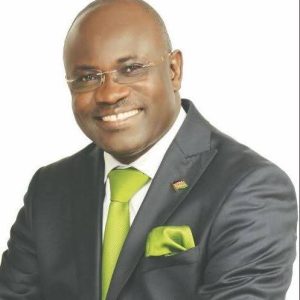
The 2027 contest is increasingly taking shape as a clash of two distinct political models.
Ochieng represents the ground campaign—retail politics, personal networks, and targeted mobilisation.
ODM represents the political machine—party structure, historical loyalty, and coordinated influence.
One is agile and disruptive. The other is entrenched and resilient.
The question is whether the former can outmanoeuvre the latter at scale.
David Ochieng has already achieved what few thought possible. He has carved out electoral victories in ODM territory and built a political brand that stands independently of the party’s dominance.
He has outgrown the “state project” label. He has proven he can win where others cannot.
But the governorship is a different battlefield.
Even if Orengo steps aside. Even if ODM heavyweights split the vote. Even if internal fractures widen—
none of it guarantees Ochieng an outright win.
At best, it creates a narrow, volatile pathway—one that requires near-perfect conditions: sustained ODM division, reduced voter turnout among party loyalists, and a successful expansion of his base beyond Ugenya.
Anything short of that, and the weight of ODM’s machinery is likely to hold.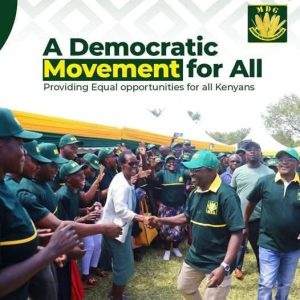
Ultimately, Ochieng’s candidacy is testing something bigger than his own ambition.
It is testing whether Siaya can vote outside its traditional political script.
For now, that script still favours ODM.
But for the first time in years, there is a credible attempt to rewrite it.
And whether he wins or loses, David Ochieng has already done one thing that matters in politics:
He has made the outcome less predictable.


