 ADVERT
 ADVERT
Chebunyo projects show how electricity, enterprise and healthcare can become one engine of rural transformation
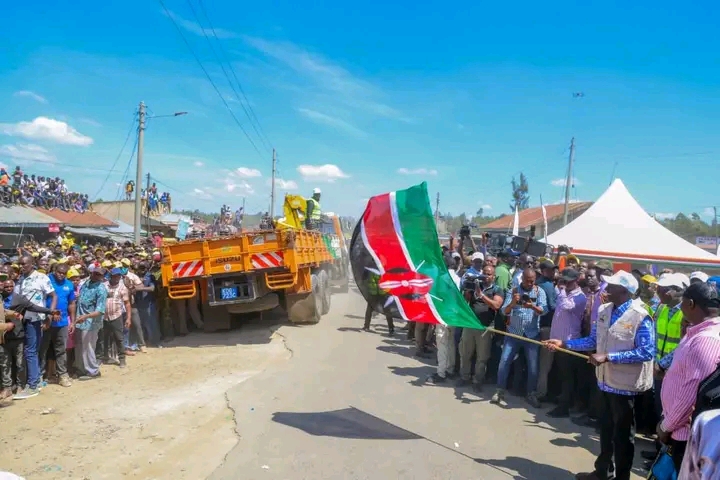
The launch of the Last Mile Connectivity Projects in Chebunyo, the unveiling of the Chebunyo Modern Market, and the laying of the foundation stone for a 250-bed Mama Na Mtoto Level 4 Hospital represent far more than a sequence of ceremonial events.
Together, they offer a compelling picture of how development should be organised: powering homes, strengthening enterprise and improving essential public services as interconnected pillars of shared prosperity.
The presence of President William Ruto alongside Cabinet Secretary for Energy and Petroleum Opiyo Wandayi underlines the growing recognition that electricity is not merely a utility. It is foundational infrastructure for economic opportunity, quality public services and improved living standards.
The Chebunyo projects demonstrate a simple but powerful development equation: when homes are connected, businesses can grow; when markets are modernised, livelihoods can expand; and when hospitals have reliable electricity and modern infrastructure, communities can access safer and better healthcare.
 ADVERT
That is the real meaning of last-mile connectivity.
Electricity reaching a rural household can transform the rhythm of family life. Children can study after sunset, households can use digital technology, food can be preserved, and families can gradually move away from expensive and inefficient sources of energy.
For small traders and entrepreneurs, reliable electricity can mean refrigeration, processing, longer operating hours and access to technologies that were previously beyond reach.
And for a modern health facility, dependable electricity is indispensable. It supports medical equipment, vaccine and medicine cold chains, maternity services, lighting, water systems and round-the-clock healthcare.
In other words, a power connection is not simply a cable reaching a homestead. It is a gateway to opportunity.
Beyond Megawatts to Meaningful Impact
The broader lesson from Chebunyo is that the success of energy policy should not be measured only by the number of poles erected, transformers installed or households connected.
The more important question is: What does that electricity make possible?
Infrastructure becomes meaningful when it translates into better education, stronger businesses, safer childbirth, improved healthcare and greater participation in the modern economy.
This is why the integration of the electricity project with the modern market and Mama Na Mtoto Level 4 Hospital is particularly significant.
Rather than treating energy, healthcare and commerce as isolated government programmes, the Chebunyo model points towards a more integrated approach in which public investments reinforce one another.
A modern market without reliable electricity has limited potential. A hospital without dependable power cannot fully exploit modern medical technology. A connected community without productive economic opportunities may struggle to convert electricity access into sustained improvements in household incomes.
But put the three together and the equation changes dramatically.
Power enables enterprise. Enterprise creates incomes. Better incomes improve household welfare. Modern health facilities protect human capital. And stronger communities create the foundation for sustainable development.
The Case for Integrated Development
For too long, public development has sometimes been approached through institutional silos, with energy, health, trade, education and infrastructure agencies pursuing individual targets without sufficient regard for how their investments interact.
Chebunyo provides a useful alternative.
Integrated planning can ensure that a new power connection supports a market, that a modern health facility is properly powered, and that surrounding communities have the infrastructure necessary to benefit from both.
Such coordination can reduce duplication, improve the value of public expenditure and create a multiplier effect in which one investment increases the returns from another.
It is a model worth considering beyond Chebunyo.
Across Kenya, there are communities where electricity, roads, markets, water infrastructure, schools and health facilities need to be developed together rather than piecemeal. The challenge for policymakers is to identify these connections and plan public investment accordingly.
Putting the Citizen at the Centre
There is also an important civic dimension to the Chebunyo investment.
When government infrastructure reaches communities that have historically experienced gaps in public services, it reinforces the principle that national development must be equitable and inclusive.
This is not charity.
It is part of the state’s fundamental responsibility to create conditions in which citizens, regardless of where they live, can pursue dignity, security and economic opportunity.
But government must also recognise that announcing a project is not the same as delivering development.
The ultimate test will be whether the electricity supply is reliable, whether the market is functional, whether the hospital is completed and adequately equipped, and whether ordinary citizens can actually feel the difference in their daily lives.
Public trust grows when projects move beyond groundbreaking ceremonies to completion, functionality and measurable impact.
The Real Dividend of Last-Mile Connectivity
There is sometimes a temptation to assess infrastructure primarily through immediate financial returns.
That would be a mistake.
Electrifying a remote household may not produce an instant commercial return. Building a rural hospital may not generate conventional profits. Upgrading a market may not immediately appear on a national balance sheet.
Yet the long-term dividends can be enormous.
Healthy mothers and children strengthen human capital. Better healthcare reduces economic losses associated with preventable illness. Electrified schools improve learning conditions. Modern markets create space for entrepreneurship and value addition. Digital connectivity expands access to information and new economic opportunities.
These are the less visible but more enduring returns on public investment.
They are the foundations upon which inclusive economic growth is built.
Chebunyo as a Development Template
The significance of Chebunyo, therefore, extends beyond the projects themselves.
It presents a useful template for thinking about rural development in modern Kenya—one in which electricity is not treated as an end in itself but as an enabler of learning, enterprise, healthcare and social mobility.
The phrase “powering homes, supporting enterprise, strengthening services and driving development” captures that philosophy neatly.
The real measure of success will not be the number of ceremonies held or kilometres of power lines constructed.
It will be found in the child who studies under reliable electric light, the trader whose business grows because refrigeration is available, the farmer who adds value to produce, and the mother who receives safe and timely care in a modern hospital.
That is where infrastructure acquires meaning.
And if the Chebunyo approach can be replicated systematically across underserved communities, Kenya’s energy transition will become more than a story about electricity access.
It will become a story about opportunity, dignity and shared prosperity.


