 ADVERT
 ADVERT
The development of the Kobodo ESP Market in Ndhiwa Constituency, Homa Bay County, marks a pivotal turn in the journey toward economic empowerment of rural traders and inclusive growth under Kenya’s Bottom-Up Economic Transformation Agenda (BETA). This market is not simply a commercial facility; it embodies the transformational vision of government policy shifting focus toward grassroots economic development as a means to achieve equitable prosperity. The project commenced in June 2024 and is now 91% complete, with an expected official commissioning in July 2025, signaling a new chapter for local traders who constitute the economic backbone of rural communities.
The design of Kobodo ESP Market reflects deep understanding of the multifaceted challenges faced by small-scale traders in rural Kenya. A two-storey modern complex, it comprises 207 well-fabricated stalls distributed between the ground and upper floors. Its purpose-built amenities, which include ablution blocks, social halls, mothers’ rooms, ICT halls, kitchens, waste cubicles, and septic facilities, provide critical infrastructure aimed at promoting hygiene, social inclusion, and productivity. These components are vital in fostering an enabling environment that accommodates women traders, mothers, and other marginalized groups, who often bear the brunt of poor market facilities in rural settings. The inclusion of an ICT hall is particularly forward-thinking, recognizing the importance of digital connectivity for market vendors to expand business opportunities, access information, and engage with broader markets beyond their immediate locality.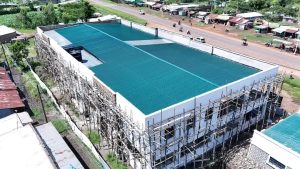
Beyond the physical infrastructure, the market’s construction has initiated significant local economic benefits. Engaging between 30 and 40 workers mostly drawn from local residents, the project has served as a catalyst for employment generation and skills transfer in the community. This labor engagement is a vital demonstration that infrastructural projects under BETA extend their impact far beyond infrastructure to touch social and economic dimensions of community life. The opportunity to acquire construction skills and earn an income uplifts families and sets the foundation for sustained economic growth through enhanced human capital.
Moreover, the Kobodo ESP Market is part of a larger framework of ESP Markets being developed across Kenya, under the stewardship of the State Department of Housing and Urban Development. These projects are executed with transparent tendering processes and stringent quality controls to ensure that infrastructural investments deliver real value to communities. Such a coordinated effort underscores the government’s commitment to replicating successful models of market development to stimulate rural economies on a wide scale.
The impacts of this initiative are layered and deeply strategic. By providing safer, more hygienic, and more functional trading spaces, the market not only protects the health and dignity of traders but also attracts customers, boosting trade volumes and incomes. The market’s social facilities create focal points for community interaction, fostering cohesion and collective action among traders. At the same time, technological enhancements open doors to modern business practices, empowering traders to innovate and compete in increasingly digitalized markets.
 ADVERT
In the broader socio-economic context, Kobodo ESP Market addresses critical national challenges such as unemployment, poverty, and rural-urban migration by creating vibrant economic hubs within rural settings. It helps balance regional disparities by bringing development closer to marginalized communities, ensuring that rural Kenya benefits from the country’s economic growth. This is a tangible step in operationalizing BETA’s ideology that sustainable development must start from the bottom-up to be truly transformative.
In conclusion, the Kobodo ESP Market is much more than a building; it is a beacon of hope, a driver of economic empowerment, and a catalyst for sustainable development in Ndhiwa. Its successful completion and operation will validate the government’s vision of inclusive growth powered by infrastructure designed for the people and by the people. This market sets a precedent and offers a replicable blueprint for other counties desiring equitable and dignified empowerment of their rural traders. Through such projects, the path toward vibrant, self-sustaining rural economies and improved livelihoods becomes a realized promise rather than a distant aspiration.
James Kilonzo Bwire is a Media and communication practitioner.


