 ADVERT
 ADVERT
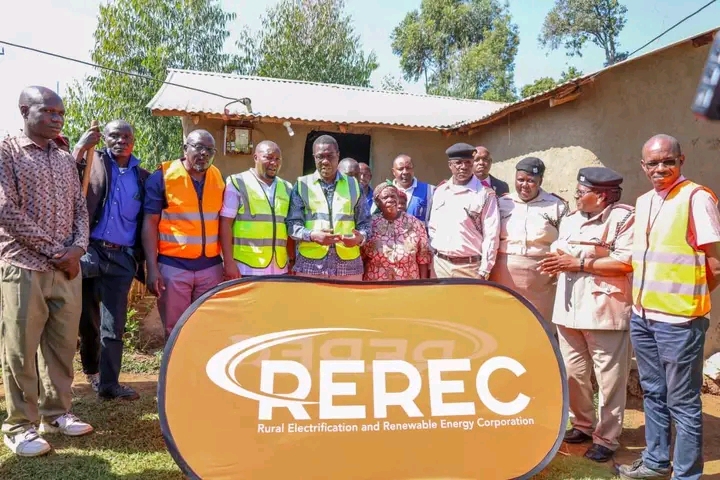
The commissioning of three Last Mile Connectivity Programme projects in Likuyani Constituency, Kakamega County, by the Cabinet Secretary for Energy and Petroleum, Opiyo Wandayi, alongside the area Member of Parliament, Innocent Mugabe, is more than a local infrastructure event; it is a clear demonstration of the importance of electricity access in Kenya’s development agenda. The projects at Sikulu Village in Kongoni Ward, Makanyanga Nyortis and Chebukaka in Nzoia Ward represent a broader commitment to extending reliable electricity to communities that require it for social and economic development. The importance of such investments goes beyond connecting households to the national grid. Reliable electricity is an essential public service that supports education, healthcare, businesses, communication, security and other activities that contribute directly to the wellbeing of communities. The decision to accelerate electricity connectivity therefore reflects the understanding that access to reliable power is closely connected to the ability of citizens to participate fully in the country’s social and economic development.
Electricity access has become increasingly important in determining the quality and efficiency of public services. Schools require reliable power to support learning, administration, information and communication technology and other educational activities. Health facilities also depend on electricity for lighting, medical equipment, storage of medicines and vaccines, communication and the provision of services that require dependable power. When electricity reaches these institutions, it improves their ability to operate effectively and serve the public. The same applies to businesses and other enterprises, which require reliable power to operate equipment, preserve products, communicate with customers and extend their working hours. For households, electricity provides better conditions for studying, communication and the use of essential appliances. It is therefore important to view last-mile connectivity as an investment in the broader capacity of communities rather than simply an infrastructure project.
The role of government in expanding electricity access remains essential because many communities cannot independently finance the infrastructure required to connect them to the national grid. The Last Mile Connectivity Programme addresses this challenge by directing public investment towards areas where electricity infrastructure is still required. The involvement of institutions such as the Rural Electrification and Renewable Energy Corporation and Kenya Power provides an important institutional framework for implementing these projects. Their responsibilities should not end with the installation and commissioning of infrastructure. There must be continued attention to maintenance, reliability, customer service and the timely resolution of technical challenges. Electricity infrastructure only becomes meaningful when communities can depend on it consistently. The sustainability of these investments must therefore remain a central consideration in the implementation of the programme.
The commissioning of the projects in Likuyani also raises an important question about equitable development. National development should ensure that access to essential services is not determined by whether a person lives in an urban centre or a rural community. For many years, infrastructure development has not always progressed at the same pace across different parts of the country. Last-mile electrification provides an opportunity to address such disparities by ensuring that communities outside major urban centres are included in national development programmes. Universal access to reliable electricity should be understood as an issue of fairness and equal opportunity. Every community requires the infrastructure necessary to support education, healthcare, economic activity and public services. Extending electricity to underserved areas is therefore an important component of creating a more balanced approach to national development.
The economic importance of electricity connectivity also deserves serious attention. Reliable power creates an environment in which individuals and businesses can undertake productive activities more efficiently. Small enterprises can use electrical equipment, improve their services and adopt technologies that would otherwise be difficult to operate. Shops, workshops, food-processing enterprises, salons, cyber services and other businesses can benefit from dependable electricity. Farmers and agricultural enterprises can also use electricity in activities related to processing, storage, irrigation and other stages of production. The availability of power can therefore support diversification of local economies and create conditions for people to develop enterprises within their communities. This reduces the limitations that businesses face when they depend entirely on daylight or alternative and often more expensive sources of energy.
 ADVERT
The connection between electricity and education is equally important. Students require adequate lighting and access to modern learning resources to study effectively. Schools with reliable electricity can make greater use of computers, digital learning materials and other technologies that support teaching and learning. Electricity also improves the general operating environment of educational institutions by supporting administration, communication and access to information. However, electricity alone cannot solve all the challenges facing education. It must be accompanied by qualified teachers, appropriate learning materials, adequate infrastructure and effective education policies. The value of electrification is therefore greatest when it forms part of a wider effort to improve the quality and accessibility of education.
Healthcare is another area where reliable electricity has a direct and significant role. Health facilities require dependable power to support lighting, medical equipment, refrigeration and communication. Electricity can improve the working environment for health professionals and help facilities provide services more effectively. It also supports the use of technology in healthcare, including communication with other facilities and access to digital information. For rural communities, having functional health facilities with reliable electricity can contribute to better access to essential services without requiring residents to travel long distances for every need. This demonstrates why energy policy should continue to be considered alongside other public service priorities.
The social implications of electricity connectivity are also significant. Reliable electricity can improve security by supporting lighting in public areas and enabling communication. It can improve access to information through television, radio, mobile devices and internet-enabled technologies. It can also provide households with greater flexibility in managing daily activities. For women and young people, access to electricity can create additional opportunities for education, entrepreneurship and skills development. Community facilities can also benefit from improved lighting and access to electrical equipment. These benefits demonstrate that electricity connectivity has consequences that extend beyond the immediate purpose of powering homes.
At the same time, the government and implementing agencies must ensure that electricity expansion is accompanied by effective public engagement. Communities need clear information about connection procedures, electricity safety, tariffs, customer rights and responsibilities. Residents should also have accessible channels through which they can report faults and receive assistance. Public participation is important because communities are not merely recipients of infrastructure; they are also stakeholders in its protection and sustainability. Effective engagement can strengthen public confidence in government programmes and encourage communities to take greater responsibility for protecting electrical infrastructure from vandalism and other forms of damage.
There is also a need for stronger coordination between national and county governments. Although energy policy and electricity infrastructure are largely national responsibilities, county governments play an important role in local development planning and the provision of public services. Coordination can help ensure that electricity projects complement investments in roads, water, health facilities, markets, schools and other infrastructure. Such an approach can make development planning more effective because electricity connectivity becomes part of a broader strategy rather than an isolated intervention. The national government, county governments, local leaders and implementing agencies should therefore maintain constructive cooperation in identifying areas that require attention and ensuring that completed projects deliver sustainable benefits.
The role of political leadership in supporting development programmes should also be considered within the broader framework of accountability. The commissioning of projects by national leaders provides an opportunity to communicate government priorities and demonstrate progress in implementation. However, public confidence is ultimately determined by the quality and sustainability of services after commissioning. Communities expect infrastructure to remain functional and public resources to be used responsibly. Leaders and implementing agencies must therefore remain accountable to citizens by ensuring transparency, responding to concerns and addressing challenges that may arise after projects are completed. Development should be measured by the quality of services delivered to citizens rather than by ceremonies associated with project launches and commissioning.
The commitment by the Ministry of Energy and Petroleum to accelerate electricity connectivity nationwide is therefore an important policy direction. Universal access to reliable electricity requires continued investment, effective planning and strong institutional coordination. It also requires attention to the affordability and reliability of electricity so that newly connected households and businesses can make meaningful use of the service. Expanding infrastructure without ensuring dependable service and effective maintenance would limit the value of the investment. The national energy agenda should therefore focus on both access and quality of service.
The Last Mile Connectivity Programme should consequently be viewed as part of a broader national development strategy. Its success should not only be assessed by the number of connections established but also by the extent to which electricity improves the ability of households, institutions and businesses to pursue their activities. The programme has the potential to support education, healthcare, enterprise, security and access to information when implemented effectively and sustained over time. This requires government to maintain its commitment beyond project commissioning and to ensure that communities receive the technical and institutional support necessary to benefit from the infrastructure.
The projects commissioned in Likuyani Constituency demonstrate the importance of bringing national development programmes closer to communities. The presence of electricity in homes, schools, health facilities, businesses and public institutions can create conditions for greater social and economic participation. The responsibility now lies with the relevant institutions and stakeholders to ensure that these investments remain functional, accessible and beneficial to the communities they are intended to serve. As Kenya continues to pursue universal access to reliable power, last-mile connectivity should remain a central part of the national development conversation. A sustained commitment to electricity access, responsible implementation, effective maintenance and public accountability will be essential in ensuring that the country’s energy investments contribute meaningfully to improved livelihoods and inclusive development.
James Kilonzo Bwire is a Media and Communication Practitioner


