 ADVERT
 ADVERT
By Dr. Abiero Awuora
Kenya is hurtling towards the 2027 General Election, and the political class is already warming up its machinery.
Promises will soon flood the country. Political alliances will be baptised as “historic”. Politicians will rediscover forgotten villages, churches and funerals. Ethnic arithmetic will return to the political marketplace. Money will change hands. And, as usual, Kenyans will be asked to choose leaders from a political menu in which integrity is often the least advertised ingredient.
But there is one institution that cannot afford to sit on the sidelines and watch this familiar drama unfold.
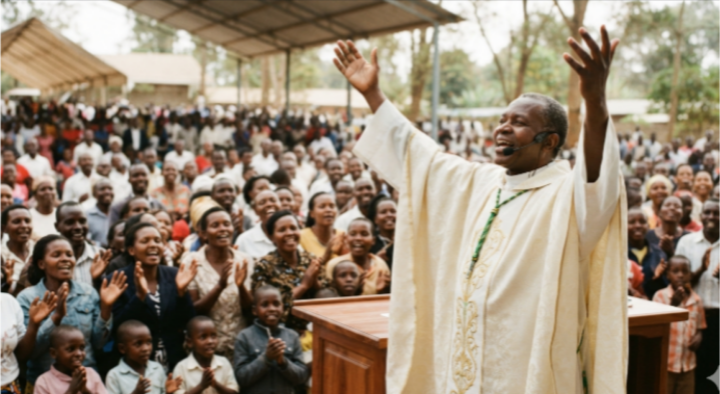
The Church must wake up.
 ADVERT
And by waking up, I do not mean organising another series of prayer rallies for peaceful elections. I mean confronting Kenya’s political and moral crisis head-on.
The Church must rediscover its prophetic voice.
The biggest problem is not a shortage of politicians
Kenya has politicians in abundance.
We have legislators, governors, senators, MCAs, presidential aspirants, activists, party officials and political brokers competing for public office.
What we do not have in sufficient supply is leadership with character.
The country has resources. It has an impressive Constitution. It has Vision 2030. It has institutions, laws, commissions, regulators and elaborate policy frameworks.
Yet corruption remains deeply entrenched. Public debt continues to weigh heavily on the economy. Youth unemployment remains a ticking time bomb. Healthcare financing and access remain contentious. Infrastructure projects stall. Public resources are lost through waste and alleged corruption. Ethnic mobilisation remains a powerful political weapon. Political violence has not disappeared. Gender-based violence persists. Food insecurity remains a painful reality for many families.
The list is long.
The uncomfortable question is this:
Why does a country with so many laws continue to struggle with problems that those very laws were designed to solve?
The answer may lie deeper than legislation.
It lies in character.
You cannot legislate morality into existence
Kenya has enacted laws on procurement, public finance, ethics, corruption, political parties, sexual offences and countless other areas.
Institutions have been established to police public conduct.
But laws cannot manufacture integrity in a person who has already decided that public office is a gateway to personal enrichment.
Neither can a constitutional provision magically transform a dishonest politician into an honest one.
Article 10 of the Constitution sets out national values and principles of governance, including integrity, accountability, transparency, participation of the people and patriotism.
The language is beautiful.
The implementation is often ugly.
This is where the Church comes in.
The Church deals with the one institution that no Parliament can regulate effectively—the human conscience.
As Jeremiah reminds us in Chapter 17, the human heart can be deceitful and desperately wicked.
If corruption begins in the heart before it reaches the Treasury, then fighting corruption cannot be exclusively an administrative exercise.
Kenya needs a moral revolution as much as it needs institutional reform.
Where was the Church when politics became a marketplace?
For too long, sections of the Kenyan Church have appeared comfortable with political patronage.
Politicians arrive with cameras.
They make generous contributions.
They are given microphones.
They are prayed for.
They are applauded.
Then they leave.
The congregation is sometimes left with the impression that political influence is measured by the size of one’s donation rather than the quality of one’s character.
That culture must end.
The Church cannot preach against corruption on Sunday and provide a prestigious platform to politicians whose records demand uncomfortable questions on Monday.
It cannot condemn tribalism in the pulpit while quietly mobilising around ethnic political interests.
It cannot preach equality while selectively defending human rights depending on who occupies State House.
The prophetic voice loses credibility when it becomes partisan.
2022 should be a lesson—not a wound
The 2022 election exposed the complicated relationship between Christianity and Kenyan politics.
Sections of the Church openly supported William Ruto and the Kenya Kwanza movement. Some went further, interpreting his political ascendancy through the language of divine choice.
There is nothing inherently wrong with Christians participating in politics. Christianity does not require believers to abandon their civic responsibilities at the church door.
Nor should those who supported Ruto simply be condemned for exercising political convictions.
But there is a dangerous line between political conviction and political sanctification.
No politician should become so sacred that questioning him is treated as questioning God.
The Church must never surrender its independence to the State House.
Today it may be Ruto.
Tomorrow it may be someone else.
The principle must remain the same.
The Church must speak truth to power—even when power pays the bills.
Kenya’s history proves that the Church can be courageous
This is not an impossible demand.
Kenya has a proud history of clergy who refused to remain silent when the country was sliding into authoritarianism.
The names of Rev. Timothy Njoya, Archbishop David Gitari, Archbishop Henry Okullu, Bishop Alexander Muge and other religious leaders remain associated with the struggle for democratic freedoms and constitutional reform.
They understood something that today’s Church must rediscover:
Sometimes the pulpit must become a platform for defending the powerless.
The circumstances have changed.
Kenya today is not simply fighting authoritarianism. It is fighting corruption, impunity, ethnic politics, institutional decay, economic inequality, political misinformation and a growing culture in which public office can be treated as a private investment opportunity.
The battle has changed.
The need for courageous moral leadership has not.
The Church should stop choosing politicians and start interrogating them
The Church does not need to produce presidential candidates.
It needs to produce informed voters.
Imagine if churches across Kenya invited every major political candidate and subjected them to the same questions.
Not:
“How much will you donate to our church?”
But:
What is your record on integrity?
How will you fight corruption?
What will you do about youth unemployment?
How will you finance healthcare?
What is your position on ethnic discrimination?
How will you protect public resources?
Will you respect independent institutions when their decisions go against you?
What will you do differently from those who came before you?
Where is the money for your promises going to come from?
Those are the questions Kenya needs.
The Church must also interrogate the voter
Politicians are not the only problem.
A corrupt political system survives because somebody is willing to vote for corruption.
A tribal politician survives because somebody rewards tribal mobilisation with votes.
A violent politician survives because somebody celebrates violence when it benefits his side.
A politician who distributes money survives because voters sometimes treat election handouts as an entitlement.
The Church must therefore have the courage to tell its congregations an uncomfortable truth:
A Ksh1,000 handout today can cost you thousands of times more tomorrow.
The money a politician gives you at a rally may come from the same public resources that should have built your road, equipped your hospital, improved your school or created opportunities for your children.
Voters must learn to see beyond election-day generosity.
Do not become an opposition Church either
But there is another trap.
The Church must not transform itself into an opposition movement.
Its job is not to oppose everything government does.
If a government builds a road, improves a hospital, expands water access, creates jobs or implements a policy that genuinely benefits citizens, the Church should say so.
If government gets something wrong, the Church should say that too.
That is not politics. That is accountability.
A credible Church must be capable of applauding good governance without becoming its public-relations department—and criticising bad governance without becoming a political party.
The 2027 election is bigger than Ruto, Raila’s legacy or whoever emerges next
Kenya’s political conversation is already gravitating towards personalities.
Who will run?
Who will support whom?
Which community has the numbers?
Who controls which county?
Which political alliance will dominate?
Those questions matter.
But they are not the most important questions.
The fundamental question is:
What kind of leaders are Kenyans prepared to elect?
Because changing the occupant of an office without changing the culture of governance simply changes the face of the problem.
Kenya does not need another election merely to replace one political establishment with another.
It needs an election that produces a higher standard of leadership.
This is the Church’s moment
The Church has millions of followers.
It has schools, hospitals, universities, media platforms, youth groups, women’s organisations and an extensive national network.
Few institutions possess comparable reach.
That influence should not be wasted on political endorsements and election-season photo opportunities.
It should be invested in civic education, voter awareness, ethical leadership, constitutionalism, peace-building and accountability.
The Church should teach Kenyans to judge leaders by their record, competence and character—not by tribe, denomination, political slogan or campaign generosity.
It should challenge politicians who promote hatred.
It should condemn corruption regardless of political affiliation.
It should reject political violence.
It should defend victims of injustice.
It should challenge discrimination.
It should demand transparency.
And when necessary, it should stand between the powerful and the powerless.
The gates of hell are not the only gates the Church must confront
Christ’s declaration that the gates of hell would not prevail against His Church was not an invitation to religious complacency.
It was a declaration of mission.
If ekklesia means the called-out or sent-out ones, then the Church must ask itself: sent out to do what?
To build bigger sanctuaries?
To accumulate political connections?
To compete for government appointments?
Or to transform society?
Kenya’s crisis demands an answer.
The Church must not wait until 2027 to discover politics.
It must engage now.
Not as a political party.
Not as an appendage of government.
Not as a cheerleader for the opposition.
But as the moral conscience of the nation.
The Church must wake up—and when it does, it must wake up the Kenyan voter too.
Because the battle for Kenya’s future will not ultimately be won at State House, Parliament or the ballot box.
It will be won or lost in the conscience of the Kenyan people.
And that is precisely where the Church should begin its work.



