 ADVERT
 ADVERT
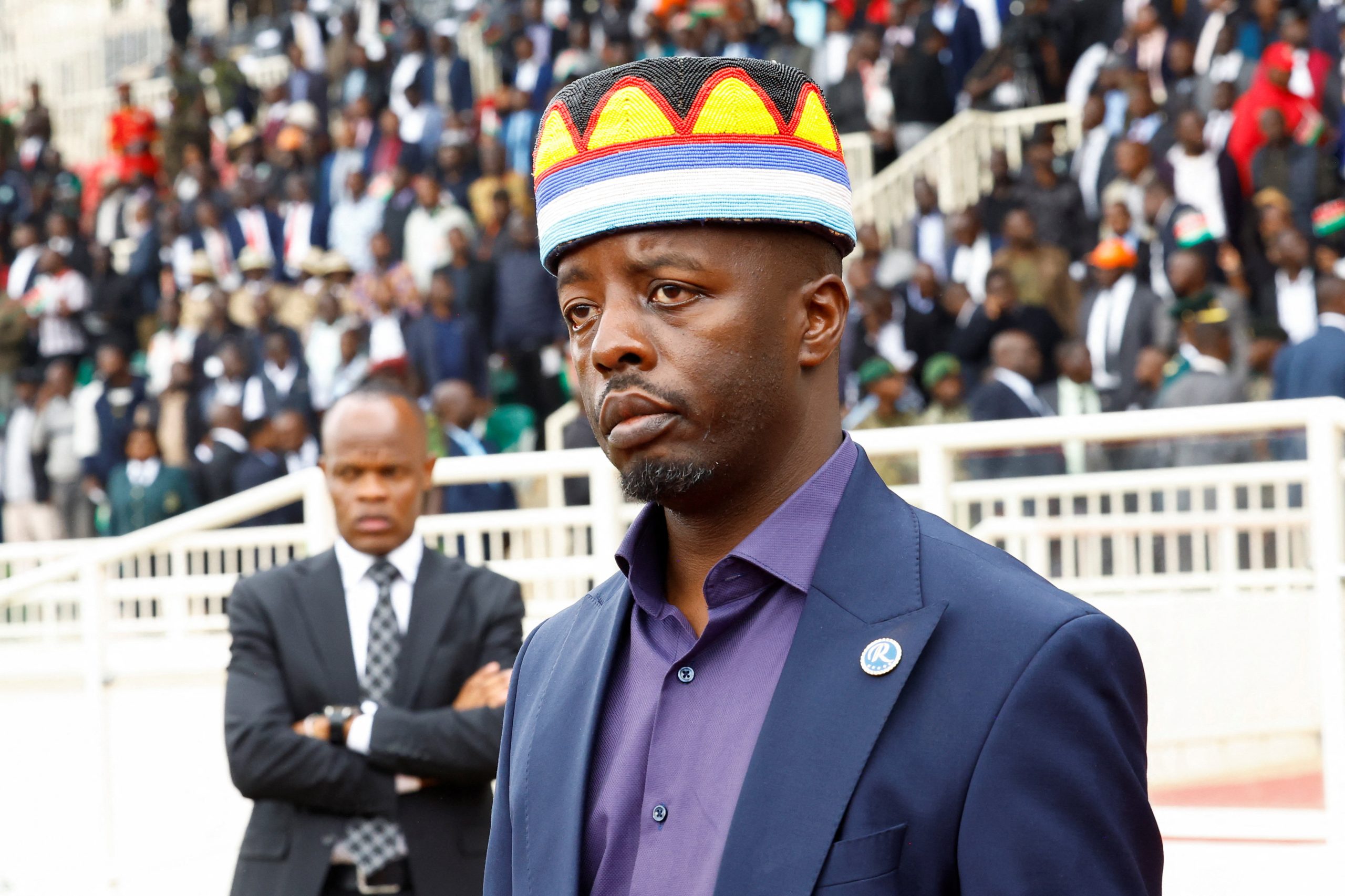
When the organisation faltered, protocol collapsed and politics threatened to overshadow grief, Raila Odinga Junior offered a reminder that the most enduring tribute to Baba is humility, not spectacle.
The first anniversary of Raila Amolo Odinga’s death was supposed to be a solemn homecoming—a moment for a nation to pause, mourn, reflect and recommit itself to the ideals of a man whose political journey helped shape modern Kenya.
Instead, the October 15, 2026, memorial at Migwena Cultural and Sports Ground in Bondo left behind uncomfortable questions about leadership, family responsibility, political ambition and the increasingly blurred line between commemorating a national icon and exploiting his legacy.
Amid the confusion, competing political interests and what attendees described as shortcomings in event management, one figure stood out for the right reasons: Raila Odinga Junior.
He did not need a grand political declaration, a dramatic intervention or an elaborate display of authority. His speech, marked by humility and concern for those who had travelled to honour his father, offered precisely what the occasion demanded: empathy.
 ADVERT
In a gathering where the spirit of mourning appeared at times to be struggling against the machinery of political spectacle, Junior reminded the audience that grief does not require theatrics. It requires humanity.
That contrast may ultimately become one of the most enduring lessons of Raila’s first anniversary.
A national memorial undone by organisational confusion
There was considerable symbolism in bringing thousands of mourners to Bondo to remember a man whose political influence stretched far beyond Luo Nyanza. The programme was expected to unite family, friends, political allies, ideological opponents and ordinary Kenyans whose lives had intersected with Raila’s extraordinary public journey.
Public reporting confirms that thousands attended the ceremony, which brought together prominent political figures, members of the Odinga family and supporters from across the country. The occasion was intended to honour Raila’s life and legacy, not to stage a contest for political relevance.
Yet the experience on the ground, according to accounts from attendees, fell short of that ambition.
The management of the programme, particularly the handling of speakers and protocol, became a source of frustration. Rarieda MP Otiende Amollo, who served as master of ceremonies, reportedly struggled to maintain a consistent sequence of speakers, with some announcements allegedly reversed after consultations.
For a memorial of such national significance, that was more than a minor procedural embarrassment. It raised questions about the preparedness of the organising team and whether competing interests had been allowed to interfere with the programme.
A well-managed memorial should not leave guests guessing who will speak next, whether scheduled speakers will be heard or whether the people who travelled long distances to pay their respects will be treated with basic dignity.
The symbolism of a memorial lies partly in its ability to make everyone feel that the person being remembered mattered more than the personalities assembled in his honour.
When protocol becomes a source of humiliation, the message is lost.
When VIP protocol becomes an embarrassment
Reports of confusion over seating arrangements further reinforced the impression of a function that had not adequately anticipated its own guest list.
One particularly awkward account concerned Nairobi Senator Edwin Sifuna, who was reportedly left without an allocated seat and eventually sat down after Embakasi East MP Babu Owino surrendered his place.
If accurately described, the incident was a striking failure of protocol. Sifuna was among the prominent political figures who attended the memorial, alongside other national leaders.
The problem was not that a senator deserved greater dignity than an ordinary mourner. It was that an event of this magnitude should have treated every guest, from national leaders to elderly villagers, with proper consideration.
A memorial is not a political rally where confusion can be dismissed as the inevitable consequence of an enthusiastic crowd. It is a carefully choreographed public act of remembrance.
The inability to provide orderly seating and manage the movement of guests inevitably invites a larger question: who was responsible for ensuring that the ceremony reflected the stature of the man being honoured?
A memorial is not a private political theatre
Perhaps the most troubling criticism concerned the reported exclusion of scheduled speakers, including members of the extended Odinga family.
The gathering was closely associated with the Odinga family’s K’Owak clan traditions and the remembrance of its most illustrious son. Yet accounts from the event suggested that some people who had expected to speak were denied an opportunity to do so.
The reported sidelining of close family members, including Jaoko Oburu, if confirmed, would be especially difficult to justify.
A family memorial should not become a stage on which access to the microphone is determined by shifting political calculations. Nor should the desire to control the programme overwhelm the collective responsibility to honour the departed.
Raila’s legacy was too large to be reduced to the preferences of a handful of gatekeepers.
The tragedy of poor event management is not merely that it creates embarrassing moments. It can rob people of the opportunity to express grief, share memories and participate meaningfully in the preservation of a loved one’s legacy.
For a man who spent decades presenting himself as a champion of ordinary citizens, the most appropriate tribute would have been one in which ordinary mourners felt seen, heard and respected.
When grief collides with political ambition
The memorial also exposed the difficult relationship between the Odinga family’s private grief and its unavoidable public political identity.
Raila was not merely a husband and father. He was a national political figure whose name carries enormous emotional and electoral significance. Consequently, every family appearance is liable to be interpreted through the lens of succession, party politics and the struggle to inherit his political capital.
That reality makes restraint even more important.
Ida Odinga’s reported remark that she had given Raila to the public alive and received him back in a coffin was widely liable to provoke different reactions. For some, it captured the devastating personal cost of sharing a loved one with an entire nation. For others, its bluntness risked sounding like a rebuke to the very people who had come to mourn.
Whatever the intended meaning, the occasion demanded extraordinary sensitivity. Public grief can be raw and unpredictable, but a memorial attended by thousands of emotionally invested supporters requires words that unite rather than inadvertently alienate.
The same caution applies to Winnie Odinga.
Reports and accounts suggesting that she used the occasion to signal an ambition for the Nairobi senatorial seat, if accurate, would represent a serious misjudgment of timing. Her political ambitions, whatever they may be, deserve to be debated on their merits and at the appropriate moment.
A father’s first anniversary is not the ideal platform on which to compete for the public’s attention.
Winnie is entitled to a political future of her own. But the strongest inheritance of Raila’s legacy would be an understanding that public service requires an instinct for the right moment, as well as the courage to speak.
There is a difference between being politically ambitious and being politically sensitive. Great leaders understand both.
Oburu’s birthday and the burden of symbolism
The coincidence of dates added another layer of symbolism to an already emotionally charged day.
Raila died on October 15, 2025. His elder brother, Oburu Oginga, turned 83 on October 15, 2026, the same day the family and supporters gathered to mark Raila’s first death anniversary.
The Standard reported that Oburu marked his birthday at Nairobi Hospital, where photographs showed him cutting a cake with family members and hospital staff. His absence from the Bondo memorial also attracted attention amid public questions about his health.
There was nothing inherently inappropriate about a family marking a birthday on a difficult anniversary. Life continues even as families grieve, and the date carried deeply personal meaning for Oburu.
However, the coincidence created a delicate public-relations challenge. The juxtaposition of a memorial for a departed brother and photographs of an elderly statesman celebrating his birthday invited intense public scrutiny.
The resulting discussion illustrated how difficult it has become for the Odinga family to separate personal circumstances from public expectations.
It would be unfair to infer anyone’s intentions merely from the coincidence. But it is equally clear that the family’s public communication needed to anticipate the sensitivities surrounding a day that had become both a birthday and a national day of remembrance.
When a family carries a legacy as consequential as Raila’s, even ordinary personal moments can acquire extraordinary political meaning.
Thousands came to mourn. Did the organisers care for them?
The most serious indictment of the memorial may not have concerned politicians, microphones or reserved seats. It concerned the ordinary people who travelled to Bondo.
Supporters reportedly arrived from different parts of Nyanza and beyond, eager to honour a leader they regarded as their own. Some accounts described confusion over meals and inadequate arrangements for the crowds, with people seeking inexpensive food outlets and kiosks around Bondo town.
If the reports are accurate, this was a failure that went beyond inconvenience.
Organisers inviting large crowds to a public event have a responsibility to consider sanitation, water, crowd control, emergency access and basic welfare. A crowd is not merely a backdrop against which political leaders can demonstrate popularity. It is a gathering of human beings who have invested time, money and emotion in the occasion.
Many supporters who travelled to Bondo did so at personal cost. They deserved better than to be treated as numbers in a political spectacle.
Reports of stone-throwing around the main dais added to concerns about order and crowd management. Such incidents demand scrutiny because a memorial intended to celebrate peace and unity should not become a setting for hostility and disorder.
The organisers owe the public a sober assessment of what went wrong and what should be improved before future commemorations.
The dignity of the dead is inseparable from the dignity extended to the living.
Raila Junior: The quiet power of getting the moment right
It was against this backdrop that Raila Junior’s speech assumed particular significance.
According to accounts of the ceremony, his address struck a noticeably different tone: measured, humble and attentive to the mourners rather than consumed by political positioning.
That is the kind of contribution a memorial needs.
Junior did not have to compete with the stature of his father. He needed only to recognise the emotional burden carried by those who had gathered to remember him.
His apparent understanding of that responsibility was a reminder that leadership does not always announce itself through volume, flamboyance or elaborate gestures. Sometimes it emerges through restraint.
The suggestion that his speech was not the product of someone else’s political scripting cannot be established from its tone alone. What matters more is the message itself and whether it reflected a genuine appreciation of the people who had come to mourn.
In a family whose public life has been intertwined with Kenya’s political drama for generations, humility can be more powerful than a carefully choreographed show of authority.
Raila Junior’s moment was not necessarily a declaration of political succession. It was, at its best, a demonstration of emotional intelligence.
And that may be a more valuable starting point for any discussion about legacy.
The real test of the Odinga legacy
Raila Amolo Odinga’s place in Kenyan history cannot be determined by the success or failure of a single memorial.
His legacy encompasses the struggle for multiparty democracy, constitutional reform, political mobilisation, national negotiations and a lifetime spent at the centre of the country’s most consequential political contests. His supporters and critics may disagree about his record, but few can reasonably deny his impact on Kenya’s political development.
That is precisely why his first anniversary deserved better.
The public does not expect a family to grieve perfectly. Nor should every organisational shortcoming be interpreted as evidence of deliberate sabotage. Large public gatherings are inherently difficult to manage, and competing demands can overwhelm even experienced organisers.
But those explanations cannot excuse avoidable failures.
If there were competing interests, the organisers must demonstrate that the programme was protected from factional interference. If protocol failed, responsibility must be established. If scheduled speakers were denied a platform, the circumstances should be clarified. If ordinary mourners lacked adequate welfare arrangements, future events must be organised differently.
And if political ambitions threatened to overwhelm remembrance, the family and its allies must learn to distinguish between preserving a legacy and exploiting its emotional power.
The greatest danger facing the Odinga name is not that political rivals will challenge it. Raila spent his career in the political arena and understood that contestation is inevitable.
The greater danger is that those closest to his legacy may mistake public affection for an unlimited licence to command attention.
A national icon belongs to history as much as he belongs to his family. His memory must be handled with care, humility and a sense of responsibility to the millions who identified with his journey.
The verdict: Less spectacle, more substance
The first anniversary of Raila Odinga’s death should have been an opportunity to demonstrate that his values could survive his absence.
Instead, the reported confusion over protocol, the frustrations surrounding the speaking programme, questions about the treatment of mourners and the intrusion of political calculations threatened to overshadow the purpose of the occasion.
Against that backdrop, Raila Junior’s contribution offered a welcome counterpoint.
His message, as described by attendees, suggested that he understood a fundamental truth: the people who came to remember his father were not props in a family drama or spectators at a succession contest. They were mourners deserving compassion.
That is the standard the Odinga family should embrace going forward.
The test of inheritance is not who commands the loudest applause, controls the microphone or attracts the most cameras. It is who best understands the obligations that accompany a great name.
Raila’s political legacy will continue to be debated, contested and interpreted for generations. But the moral lesson of his first anniversary is already clear.
When the spectacle fades, character remains. When protocol collapses, humility stands out. And when political ambition threatens to drown out grief, the person who remembers the mourners may be the one who best honours the departed.
In Bondo, amid a memorial that left difficult questions in its wake, Raila Junior offered a glimpse of that possibility.
The Odinga family would do well to take the lesson seriously.