 ADVERT
 ADVERT
Kenya’s political class appears to have entered the early stages of the 2027 election campaign with remarkable enthusiasm — and remarkably little agreement on what exactly it wants to offer the country.
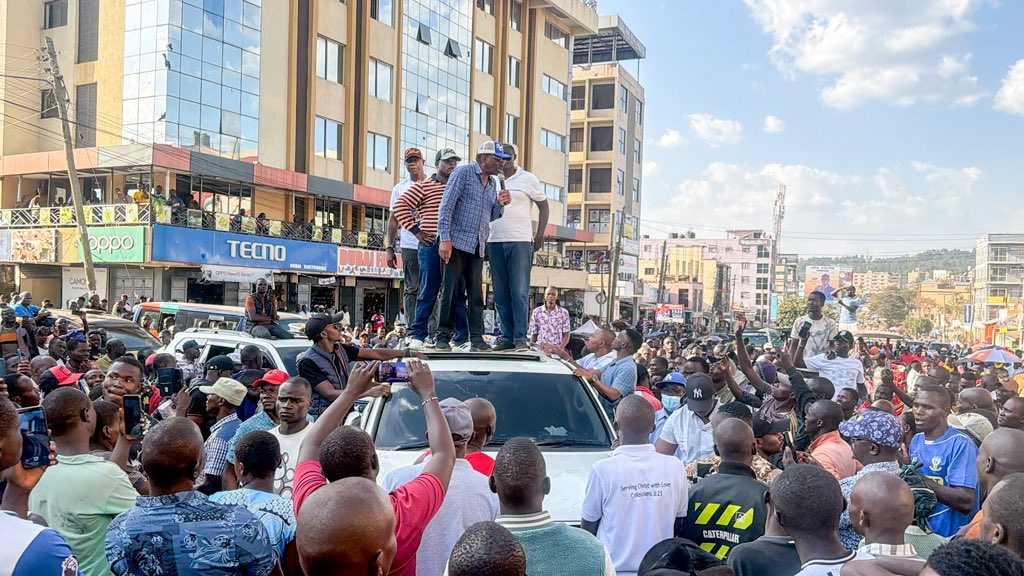
Over the weekend, opposition leaders fanned out across the country, holding rallies, attacking President William Ruto’s administration and promising Kenyans an alternative political future. From Migori to Taita Taveta and beyond, the familiar language of liberation, oppression, betrayal and rescue dominated the political theatre.
But beneath the microphones, convoys and swelling crowds lies a more uncomfortable question: are Kenyans beginning to tire of politics that is perpetually about personalities, grievances and power — but increasingly less about practical solutions?
That question has acquired a new urgency following Siaya Governor James Aggrey Bob Orengo’s declaration that he will seek the presidency in 2027.
Orengo made his intentions explicit in Homa Bay on Friday, declaring himself a “serious presidential candidate” as he addressed mourners and political supporters. His announcement thrust an already crowded opposition field into sharper focus and inevitably raises questions about who exactly is supposed to lead the emerging Linda Mwananchi movement and, ultimately, the wider opposition.
 ADVERT
The timing could hardly be more politically consequential.
For months, Linda Mwananchi has presented itself as part of an effort to create a new political alternative and consolidate opposition forces against President Ruto. Nairobi Senator Edwin Sifuna has been one of its most prominent faces, while other national figures have been positioning themselves for the wider opposition contest.
Now Orengo has thrown his hat into the ring.
That is entirely legitimate. Every Kenyan who meets the constitutional requirements has the democratic right to seek the presidency.
But it also means the opposition cannot continue speaking vaguely about unity while leaving Kenyans to guess who among its numerous principals ultimately wants to occupy State House.
The contradiction deserves scrutiny.
If every major opposition personality believes he or she can be the presidential candidate, then the much-advertised unity may prove to be little more than an electoral convenience — until the moment the most important question of all is asked: who gets the ticket?
And that question is particularly significant in Nyanza.
Orengo is not a political newcomer. He is a veteran of Kenya’s opposition politics, a former presidential candidate, former Cabinet minister, former senator and currently the Governor of Siaya. He has spent decades in the political trenches and is now attempting another run at the presidency. His experience gives him every right to make the argument for his candidacy.
But experience alone does not settle the question.
Neither does youth.
Neither does eloquence.
Neither does the ability to draw crowds.
Kenya’s opposition must ultimately demonstrate that it has a coherent national programme capable of persuading voters beyond traditional political and ethnic strongholds.
That is where the weekend’s politics becomes particularly revealing.
In Migori, Governor Orengo and his Linda Mwananchi colleagues were caught up in chaotic scenes after tear gas was discharged during a rally. A vehicle associated with the convoy was subsequently torched in Awendo. The movement condemned the incident as an attack and vowed not to be intimidated.
The violence is unacceptable.
Political disagreement is legitimate; burning vehicles, throwing stones, attacking political opponents or disrupting rallies is not.
Those responsible should be identified through proper investigations and prosecuted, regardless of their political affiliation.
But Kenya must equally resist the increasingly familiar habit of converting every act of political violence into an instant conspiracy.
If the perpetrators are government agents or political hirelings, expose them.
If they are opposition supporters, arrest them.
If they are criminals exploiting political gatherings, prosecute them.
And if they are ordinary citizens expressing anger and frustration, Kenya’s political class must have the humility to ask why.
Because there is another uncomfortable possibility that politicians rarely want to entertain: perhaps some Kenyans are simply tired.
Tired of rallies.
Tired of political chest-thumping.
Tired of being told that salvation is always one election away.
Tired of politicians appearing every five years to describe themselves as the only people capable of rescuing the country.
This does not justify violence. Nothing does.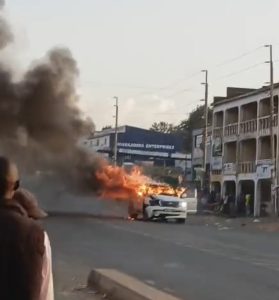
But it should remind political leaders that a hostile crowd is not always evidence of a State conspiracy. Sometimes it may be a symptom of political fatigue, local rivalries, or frustration that has nothing to do with the grand national narratives being proclaimed from podiums.
The opposition should therefore take a hard look at the message beneath the noise.
In Taita Taveta over the weekend, Wiper Patriotic Front leader Kalonzo Musyoka, DAP-K leader Eugene Wamalwa and Democratic Party leader Justin Muturi mounted a vigorous attack on the Ruto administration. They criticised the Government over electoral questions, land issues and governance, while calling on Kenyans to vote out President Ruto in 2027.
Those are legitimate subjects for political debate.
But political debate becomes meaningful only when accusations are accompanied by evidence, alternatives and workable solutions.
Being against Ruto is not, by itself, a governing programme.
And this is precisely where the opposition risks losing the plot.
The country needs an opposition that interrogates government performance with facts, exposes corruption where it exists, challenges bad policy and proposes credible alternatives.
Instead, too much of the emerging discourse is still dominated by political slogans.
The Ruto administration has genuine vulnerabilities. Kenyans have legitimate concerns about the cost of living, taxation, debt, unemployment, healthcare, governance and the delivery of public services.
The opposition is right to raise these issues.
But it must also answer a more difficult question: what would it do differently?
How would it reduce the cost of living?
How would it finance its promises?
How would it create jobs?
How would it reform healthcare without bankrupting the Treasury?
How would it address public debt?
How would it improve agricultural productivity?
How would it fight corruption without turning the anti-corruption agenda into another weapon for settling political scores?
And most importantly, how would it build a government that works?
These questions cannot be answered by simply declaring Ruto a one-term president.
The declaration of Orengo’s presidential bid makes this challenge even more pressing.
The Linda Mwananchi movement has spent considerable political capital presenting itself as a new force capable of shaking up Kenya’s political establishment. Orengo’s emergence as an openly declared presidential contender could energise the movement, particularly in Nyanza, where his long political history and association with the opposition tradition give him substantial political weight.
But it could just as easily expose the fault lines within the movement.
What happens to the other presidential ambitions?
What happens to Sifuna’s increasingly prominent national profile?
What happens to Kalonzo Musyoka’s longstanding presidential ambitions?
What happens to other opposition figures who believe they can lead the country?
And what happens when the moment comes to sacrifice individual ambition for a single ticket?
These are not peripheral questions.
They are the central questions.
For a movement preaching political emancipation, Kenyans are entitled to ask whether the emancipation is about changing the country or merely changing the people occupying political offices.
That distinction matters enormously.
The emerging opposition must also be careful not to assume that Luo Nyanza is permanently owned by any political formation.
For years, Nyanza has complained of neglect and political marginalisation. That history should never be dismissed.
But neither should the region’s voters be treated as political property.
The region is changing. Government projects and investments are taking place across Nyanza, just as development challenges remain unresolved. The Government should be judged honestly on both sides of that equation.
The opposition cannot credibly argue that nothing is happening simply because it wants to defeat Ruto.
Nor can the Government claim that every project automatically translates into prosperity.
The truth is more complicated — and voters are sophisticated enough to understand it.
This is why the politics of 2027 should move beyond the simplistic binary of Ruto versus everyone else.
Kenya deserves to know what comes after Ruto — not merely who wants to replace him.
And Orengo’s declaration makes that distinction even more urgent.
If he believes he is the best person to lead Kenya, he should make the case.
He should tell the country what his presidency would look like.
He should explain his economic philosophy.
He should present his plans for healthcare, education, agriculture, infrastructure and youth employment.
He should explain how he would deal with corruption, debt and the cost of government.
He should demonstrate why his long experience in Kenyan politics has prepared him not merely to oppose but to govern.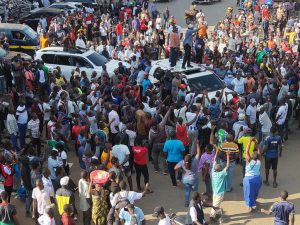
The same standard must apply to Sifuna, Kalonzo, Gachagua, Matiang’i, Karua, Maraga and every other politician seeking to inherit the mantle of opposition leadership.
None should receive a free pass.
The Government must also accept the same scrutiny.
President Ruto cannot dismiss every opposition criticism as propaganda, every protest as an attempted coup or every dissatisfied citizen as a political pawn.
But neither should the opposition automatically portray every government action as evidence of dictatorship.
Facts must replace insinuation.
Policy must replace slogans.
Solutions must replace perpetual outrage.
And politics must return to its proper purpose: improving the lives of citizens.
The burning of a vehicle in Awendo should therefore not become another excuse for political grandstanding. It should become a warning.
Kenya is approaching another fiercely contested election. Political temperatures will rise. Convoys will grow. Rhetoric will become harsher. Politicians will make increasingly ambitious promises.
The country must not allow political competition to become political combat.
And perhaps the most important lesson for the opposition — especially now that Orengo has openly entered the presidential race — is this:
Kenyans are not merely looking for someone to defeat William Ruto. They are looking for someone capable of governing Kenya better.
The electorate will eventually judge every politician not by the volume of the rally, the size of the convoy or the ferocity of the speech, but by credibility.
Orengo has made his choice clear: he wants the presidency.
That declaration is welcome as an exercise in democratic competition.
But now comes the harder part.
He — and every other aspiring opposition leader — must convince Kenyans that the quest is not simply about who gets to occupy State House.
It must be about what they intend to do once they get there.
Because the ultimate political rally is not held in a stadium or on a roadside.
It is held inside the ballot box.
And there, the Kenyan voter has the final word.
Editorial
Sunday 30th September, 2026
Lawrence Jeffrey
Siaya



