 ADVERT
 ADVERT
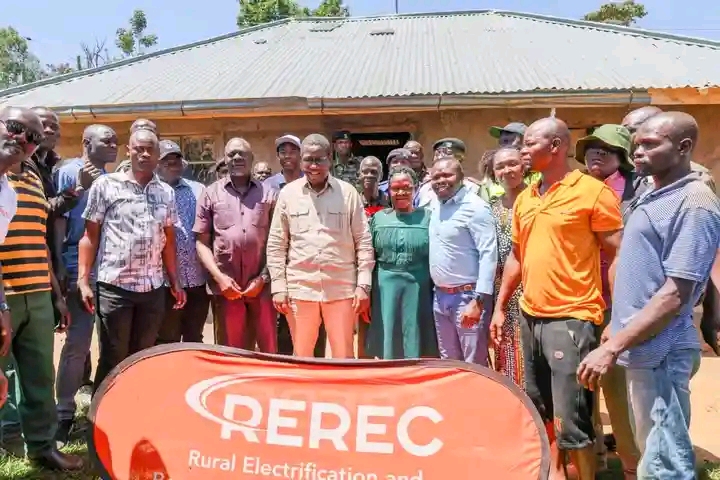
The commissioning of three Last Mile Connectivity Programme projects in Awendo Constituency by Cabinet Secretary for Energy and Petroleum Opiyo Wandayi is a decisive step in advancing a long overdue agenda, bringing affordable and reliable electricity to communities that have remained on the margins of national progress. The projects in Central Sakwa, North Sakwa, and South Sakwa wards make clear the government’s intention to close the physical and economic distance that has separated households, schools, health facilities, and small enterprises from the basic utility that enables modern life. This is not merely an exercise in laying cables and erecting poles. It is an assertion that access to energy is a public priority and a prerequisite for unlocking human potential and local economic development.
The importance of last mile connectivity rests on a simple but powerful premise, energy access is foundational to the functioning of other development priorities. When electricity reaches homes, learning environments become safer and more productive, health facilities can operate equipment and store medicines, and small businesses acquire the capacity to extend hours and improve services. By focusing on the final stretches, those neighborhoods and wards that utilities often bypass, the program addresses the structural inequities that perpetuate underdevelopment. It recognizes that national targets and lofty plans translate into real change only when the delivery mechanism reaches the people who need it most. The presence of electricity in a community signals a shift from potential to practical capacity. It marks the point where residents can engage in activities that generate income, where entrepreneurs can add value to agricultural produce, and where households can access information and services that support well being.
This initiative also reflects a deliberate policy orientation toward inclusion and local empowerment. Prioritizing last mile projects requires political will and administrative coordination. It requires policymakers to acknowledge that universal connectivity is not achieved by focusing exclusively on urban centers or large industrial customers. Instead, the path to universal access demands targeted interventions that reduce the costs and logistical barriers of extending the grid into dispersed or previously neglected settlements. The involvement of national and county leaders in the commissioning of these projects communicates that energy access is an integrated element of broader development planning. It shows an understanding that infrastructure decisions affect livelihoods directly and that government has a responsibility to bridge gaps that markets alone will not fill.
The choice to implement these projects through agencies with specific operational roles underscores the need for clarity in execution. When agencies tasked with electrification undertake last mile projects, they bring technical capacity, regulatory knowledge, and operational experience to bear. That specialization increases the likelihood that installations will be reliable, maintainable, and responsive to local conditions. Reliability matters profoundly. A connection that fails frequently or that is prohibitively expensive erodes the very benefits it was meant to deliver. Therefore, attention to implementation quality is as important as the decision to extend the grid. Maintenance, prompt customer service, and transparent billing practices will determine whether these new connections become durable enablers of growth or short lived conveniences.
Beyond immediate service delivery, the expansion of electricity into underserved wards is an investment in economic multiplier effects. Electricity lowers transaction costs for commerce, enables new types of small scale manufacturing and processing, and supports the emergence of service industries. For farmers and traders, the ability to add value locally rather than transport raw goods over long distances can change income dynamics within a community. For households, electric power can improve productivity in domestic tasks and free up time for education or income generating activities. The cumulative effect of these individual changes is to strengthen local markets and expand opportunities for employment and entrepreneurship. In this way, electricity functions not simply as a utility but as an engine for social and economic transformation within the fabric of daily life.
 ADVERT
There is also a governance dimension to consider. Rolling out last mile connectivity requires coordination across levels of government and clear engagement with community stakeholders. Effective community engagement builds accountability into the process and helps ensure that infrastructure meets actual needs. It reduces the risk of wasted investments and fosters local ownership, which in turn supports maintenance and sustainability. When local leaders, national officials, and implementing agencies collaborate transparently, projects are more likely to be delivered on time and to remain responsive to evolving demands. The commissioning of projects with the presence of both constituency level and national leaders is a visible reaffirmation of this collaborative approach and a signal that accountability for results is being shared.
Equally important is the recognition that expanding electricity access should be accompanied by measures to maximize its developmental impact. Access alone does not guarantee improved outcomes. Complementary actions are required. Training for small business owners on how to use electricity to expand production, technical support for local clinics and schools to integrate powered equipment effectively, and targeted policies to ensure affordability are all necessary to translate access into long term gains. Planning must consider not only the physical connection but the ecosystem needed for communities to absorb and benefit from the service. When policy design links connections to capacity building and affordability measures, the returns on investment multiply and become more evenly distributed.
Finally, the drive toward universal connectivity is an exercise in setting national priorities that reflect a broader vision for social progress. Investments in last mile infrastructure represent a choice about whose futures the state is committed to fostering. Prioritizing underserved wards signals that development policies will not tolerate persistent exclusion and that progress must extend beyond headline urban centers. The goal is not merely to meet a numeric target but to build the material foundations for people to live healthier, more productive, and more dignified lives. Each new connection is a tangible reaffirmation of that commitment.
The commissioning of the three Last Mile Connectivity projects in Awendo is therefore more than a moment of ceremony. It is an operational step toward reshaping opportunities in communities that have been sidelined. If accompanied by conscientious implementation, transparent governance, and measures to ensure that electricity is both usable and affordable, these projects can catalyze meaningful local change. The path to universal connectivity will require sustained attention and further investments, but the decision to focus on the last mile demonstrates a pragmatic and humane approach to development, reaching the final stretch is often what makes the journey truly transformative.
James’ Kilonzo Bwire is a Media and Communication Practitioner


