 ADVERT
 ADVERT
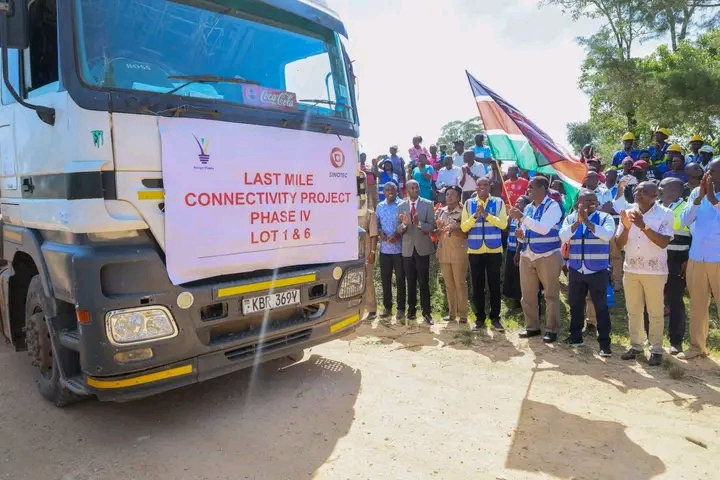
The flagging off of materials for the Kenya Power Last Mile Connectivity Programme in Lutali Village, Kakamega County, by Energy and Petroleum Cabinet Secretary Opiyo Wandayi, alongside Malava MP David Athena Ndakwa, is more than an infrastructure milestone. It is a visible reminder that access to electricity remains one of the most powerful tools Kenya can deploy to widen opportunity and bring communities that have historically stood at the margins closer to the centre of national development.
Electricity is not simply about poles, wires and transformers. It is about what happens after the switch is turned on.
A connected household gains more than light. A child can study after sunset. A small business can operate for longer hours and adopt equipment that improves productivity. A health facility can power essential equipment and preserve medicines that require reliable refrigeration. Young people can access digital services, online learning and new economic opportunities.
In that sense, every electricity connection represents a potential investment in human capital, household resilience and local economic growth.
The presence of both national and local political leadership at the Lutali launch also gives physical form to a policy promise. For citizens who have heard development pledges repeatedly, seeing materials arrive and work commence is significant. Public confidence is strengthened when government programmes move from speeches and budget documents to projects that residents can see taking shape in their neighbourhoods.
 ADVERT
But infrastructure delivery is not only about government action. It also requires cooperation between institutions and the communities that ultimately own and depend on the assets.
Wandayi’s roadside engagement with residents, including his call for unity and constructive partnership with the administration of President William Ruto, therefore touches on an important dimension of development. Large public projects are easier to implement when communities, government agencies, contractors and local leaders work toward common objectives.
Political differences are inevitable in a democracy. Development, however, should not become their casualty.
Communities need roads, electricity, water, health services and schools regardless of their political affiliations. The more development projects become detached from partisan contestation, the greater the possibility that public resources will produce tangible benefits for ordinary citizens.
For Kakamega, the potential economic implications of expanded electricity access are particularly important. Electrification can help narrow the divide between urban and rural economies by giving small enterprises in villages access to productive technology previously associated with larger towns.
A carpenter can operate modern machinery. A salon can extend its business hours. A shopkeeper can preserve perishable goods. A farmer can explore value addition. A young entrepreneur can establish a digital enterprise without having to relocate to Nairobi or another major urban centre.
This is why the Last Mile Connectivity Programme should be viewed not merely as an electricity project but as an economic inclusion programme.
Yet celebrating new connections should not obscure the harder questions that determine whether electrification delivers lasting value.
Connection is only the beginning.
For electricity to become a genuine engine of development, households must be able to afford consumption, supply must be reasonably reliable, faults must be addressed promptly and infrastructure must be maintained. The government and Kenya Power must also ensure that communities understand their responsibilities while providing effective channels through which consumers can report problems and seek assistance.
There is little value in celebrating a connection today if a household cannot afford to use the electricity tomorrow.
Transparency is equally important. Citizens deserve clear information about project timelines, costs, beneficiaries and implementation responsibilities. Such openness is not an obstacle to development; it is part of good governance. When communities know what has been promised, they are better positioned to monitor progress and demand accountability where commitments fall short.
The Lutali project also illustrates a broader truth about public leadership: political will is necessary, but it is not sufficient.
Ministries must plan effectively. Utilities must execute professionally. Contractors must meet technical standards. Oversight institutions must protect public resources. County and national authorities must coordinate rather than duplicate or obstruct one another.
Ultimately, the quality of institutions determines whether political promises become sustainable public value.
Community ownership will be just as important. Residents are not passive beneficiaries of development. They are partners. Their participation can help identify local priorities, protect infrastructure, report faults and discourage vandalism. When people believe a project belongs to them as much as it belongs to government, they are more likely to protect and sustain it.
The symbolism of electricity replacing darkness is powerful, but the real transformation lies beyond the symbolism.
It is found in the student who gets additional study hours, the entrepreneur who expands a business, the health worker who can operate essential equipment and the farmer who discovers a new avenue for value addition. It is found in families gaining greater choices and communities acquiring the tools to participate more fully in Kenya’s digital and industrial economy.
That is the real promise of Last Mile Connectivity.
The flagging off of materials in Lutali should therefore be seen as the start of a journey rather than the conclusion of one. The measure of success will not ultimately be the number of poles erected or cables strung, but the number of lives, businesses and opportunities transformed by reliable and affordable electricity.
If political commitment is matched by institutional competence, community participation, transparency and sustained investment, Kenya’s electrification programme can do far more than illuminate homes.
It can illuminate possibilities.
And in communities that have waited too long for the benefits of modern infrastructure, that may be the most important light of all.


