 ADVERT
 ADVERT
The world is heading towards an extraordinary climate event, with the United Nations warning that a rapidly intensifying El Niño could trigger unprecedented heat, droughts, floods and food insecurity across large parts of the globe.
The World Meteorological Organization (WMO) said on Thursday, September 3, that El Niño is now firmly established in the tropical Pacific and is expected to strengthen into a very strong event before reaching its peak towards the end of 2026. The organisation puts the probability of the phenomenon persisting through February 2027 at nearly 100 per cent.
UN Secretary-General António Guterres delivered an unusually stark warning, saying El Niño is “supersizing before our eyes” as the planet enters what he described as “uncharted waters”.
The warning comes as the world is already experiencing record-breaking temperatures driven by human-induced climate change. The concern is that El Niño could add another powerful layer of heat and weather disruption to an atmosphere already running unusually hot.
El Niño is a naturally occurring climate phenomenon in which changes in Pacific Ocean winds and temperatures redistribute enormous quantities of heat and moisture, altering weather patterns far beyond the Pacific.
 ADVERT
But the emerging 2026 event is attracting exceptional attention because of the extraordinary warmth already being recorded beneath and on the surface of the tropical Pacific.
Sea-surface temperatures in the central and eastern equatorial Pacific have risen dramatically above normal levels, while some subsurface ocean temperatures have been recorded more than 8°C above average.
The scale of the warming has raised comparisons with the most powerful El Niño episodes in recorded history. Some climate scientists have described the developing phenomenon as potentially “Godzilla-level”, reflecting fears that its consequences could be unusually severe.
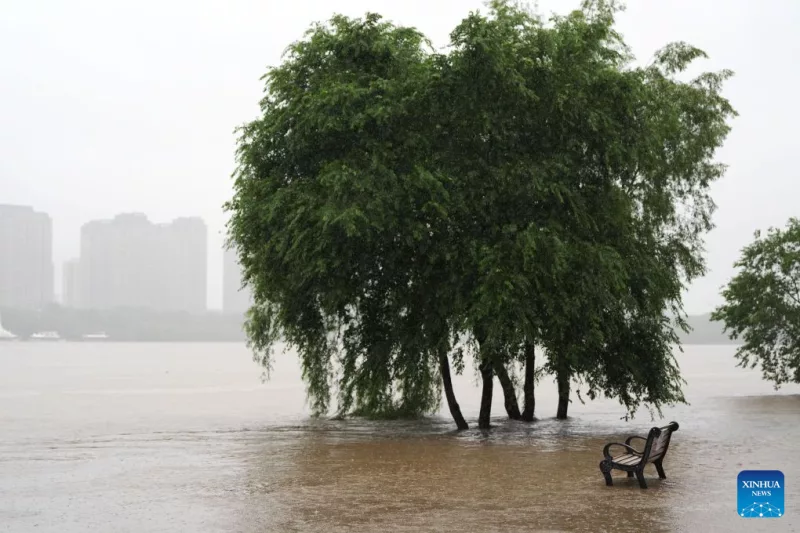
The implications could extend well beyond the Pacific. El Niño is already being associated with worsening wildfires, disrupted rainfall and growing pressure on food systems in several parts of the world. As the phenomenon intensifies, scientists expect its influence to manifest through a complex mixture of drought, flooding, extreme heat and heightened wildfire risk depending on the region.
The biggest concern is what the combination of El Niño and existing global warming could mean for temperatures in 2027.
El Niño does not itself cause long-term global warming. Rather, it temporarily redistributes heat from the ocean into the atmosphere. When that natural phenomenon occurs against a backdrop of record-high global temperatures, however, it can push planetary temperatures to new extremes.
If current forecasts hold, 2027 could become another landmark year in the climate crisis, with global temperatures potentially smashing previous records.
For Africa, the warning carries particularly serious implications. Climate shocks are already placing enormous pressure on food production, water supplies and household incomes across vulnerable communities. A powerful El Niño could intensify those pressures by producing drought in some areas while triggering destructive rainfall and flooding in others.
The World Food Programme has warned that strengthening El Niño could significantly worsen food insecurity in vulnerable countries into 2027, with tens of millions of people potentially exposed to acute hunger as agricultural production and livelihoods come under pressure.
For farmers, the implications are painfully straightforward: uncertainty over rainfall means uncertainty over planting seasons, crop yields, livestock survival, household incomes and food prices.
Kenya and the wider East African region therefore cannot afford to treat the developing El Niño as a distant Pacific Ocean phenomenon.
At the same time, experts caution against assuming that a strong El Niño will automatically produce identical weather conditions across every part of East Africa. Local impacts depend on geography, season and the interaction between El Niño and other climate systems, including the Indian Ocean Dipole.
That uncertainty makes preparedness even more important.
Kenya’s national and county governments, farmers, water managers, disaster-response agencies and humanitarian organisations will need to translate global forecasts into practical local action. Strengthening early-warning systems, protecting water supplies, supporting climate-smart agriculture, preparing for floods and droughts and ensuring vulnerable communities receive timely information could make the difference between a manageable climate shock and a humanitarian crisis.
The emerging warning also exposes a deeper reality about the climate crisis. Extreme weather is no longer an occasional disruption that governments can simply respond to after it happens. Increasingly, climate-related risks are becoming intertwined with food prices, public health, livelihoods, infrastructure and economic stability.
The WMO has described the current situation as exceptional enough to warrant intensified mobilisation among national meteorological and hydrological services.
Its message is not that every country should expect catastrophe, but that governments have a valuable window in which to prepare before the strongest impacts arrive.
The choice facing humanity, therefore, is not between El Niño and no El Niño. The climate system has already begun moving in that direction.
The real choice is whether governments, communities and institutions act early enough to reduce the damage.
As Guterres warned, the race is now between rising climate risks and humanity’s commitment to take action and protect people.
With El Niño expected to strengthen towards the end of 2026 and its influence potentially extending well into 2027, that race has already begun.



