 ADVERT
 ADVERT
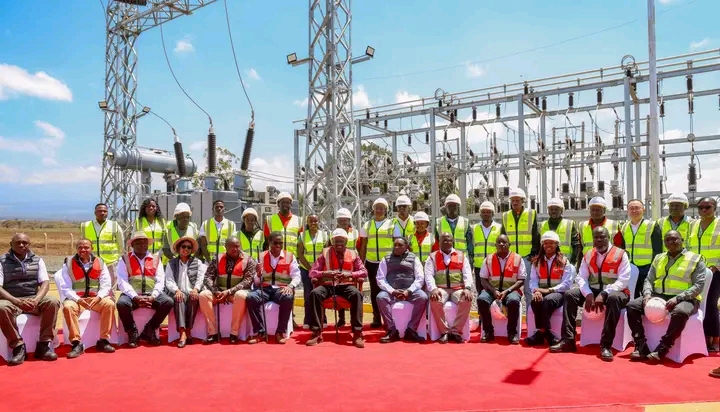
The commissioning of the KETRACO Isinya–Namanga Transmission Line Project signals more than another milestone in Kenya’s expanding electricity network. For Kajiado County, it could mark the beginning of a new phase of economic transformation—one in which reliable power becomes a catalyst for investment, industrialisation, better public services and improved livelihoods.
President William Samoei Ruto commissioned the project during his development tour of Kajiado County, alongside Cabinet Secretary for Energy and Petroleum Opiyo Wandayi, underscoring the Government’s growing emphasis on energy infrastructure as a foundation for national development.
For years, the question of electricity reliability has been inseparable from the question of Kajiado’s economic potential. A county strategically positioned next to Nairobi, linked to Tanzania and traversed by important trade and transport corridors cannot afford an electricity system that struggles to keep pace with growing demand.
The Isinya–Namanga transmission project is therefore significant because it addresses a critical piece of that development equation.
Reliable electricity is no longer a luxury. It is the backbone of modern commerce, manufacturing, agriculture, healthcare, education, technology and household welfare. Where power is unreliable, businesses lose productive hours, industries incur additional costs, health facilities face operational challenges and students lose valuable learning time.
 ADVERT
The new transmission infrastructure and Namanga Substation strengthen the electricity network serving Kajiado and surrounding areas, replacing and reinforcing an older medium-voltage arrangement that was increasingly inadequate for a rapidly changing economy.
That strengthened capacity could give businesses something equally important: confidence.
Investors planning factories, processing plants, warehouses, commercial centres and technology-based enterprises need to know that electricity will be available when production begins and remain dependable as their operations expand. Reliable power reduces uncertainty and creates an environment in which entrepreneurs can plan for growth rather than constantly plan around outages.
For small businesses, the difference can be just as profound.
A barber shop, welding enterprise, milk-cooling facility, cybercafé, restaurant, workshop or small manufacturing operation depends on electricity to generate income. Frequent interruptions can mean spoiled products, delayed orders, idle machinery and lost customers. A more dependable grid can therefore translate into more productive businesses and, ultimately, more jobs.
Kajiado’s economic geography makes the project particularly important.
The county sits at the intersection of some of Kenya’s most important economic flows. Its proximity to Nairobi gives it access to one of the country’s largest markets, while Namanga provides a critical gateway into Tanzania and the wider East African market. The Isinya–Namanga corridor is consequently more than a transport route; it is an emerging economic artery whose potential requires infrastructure capable of supporting sustained growth.
Electricity must be part of that infrastructure.
As settlements expand and commercial activity intensifies, demand for shops, warehouses, offices, schools, hospitals, housing and manufacturing facilities will inevitably rise. The transmission project provides additional capacity to support this expansion while creating room for future investments.
The connection to electricity generated from Olkaria’s geothermal fields and the Kipeto Wind Power Plant also highlights a fundamental principle of Kenya’s energy transition: generating electricity is only half the job.
Power must reach consumers.
Kenya has made significant investments in renewable energy generation, particularly geothermal and wind. But the economic value of that clean energy depends on transmission and distribution networks capable of moving electricity efficiently from generation centres to areas where demand is growing.
The Isinya–Namanga project strengthens that national architecture by improving the grid’s ability to deliver power to Kajiado and neighbouring areas.
This is where transmission infrastructure intersects directly with Kenya’s industrialisation ambitions.
Factories require dependable electricity for machinery, processing, refrigeration, information systems and production lines. When power is unstable, businesses are forced to turn to alternative sources, increasing operating costs and reducing competitiveness.
A stronger grid can help reverse that equation.
Kajiado can use improved electricity reliability to move beyond being primarily a market and transit county and deepen value addition across sectors. Agro-processing, livestock-related enterprises, cold storage, workshops, manufacturing, hospitality and digital businesses can all benefit from dependable power.
The possibilities are particularly significant around Namanga.
As a major border trading centre, Namanga supports the movement of goods, people and services between Kenya and Tanzania. Border economies require reliable electricity for logistics, banking, hospitality, telecommunications, security systems, retail and industrial activity.
A dependable power supply can make Namanga more attractive to investors seeking to establish businesses serving the cross-border market.
But the real measure of the project will not be the transmission towers, substations or kilometres of line constructed. It will be what happens after commissioning.
Will businesses expand?
Will new industries emerge?
Will more young people find employment?
Will public facilities provide better services?
Will households experience fewer disruptions?
Will investors view the Isinya–Namanga corridor differently?
Those are the questions that should define the project’s ultimate success.
Transmission capacity must also be matched by efficient distribution and last-mile connectivity. It would be a missed opportunity if improved transmission capacity exists while households, schools, health facilities and enterprises remain inadequately connected to the electricity network.
KETRACO, Kenya Power, national Government agencies and the Kajiado County Government therefore have a shared responsibility to ensure that the benefits of the project reach consumers.
The next phase should be about converting infrastructure into productivity.
County authorities should integrate improved electricity capacity into investment promotion, industrial planning, urban development and economic programmes. Areas with reliable power can be deliberately positioned for manufacturing, commercial development, storage, processing and technology enterprises.
Young people should also be positioned to benefit.
Skills development programmes in electrical services, construction, equipment maintenance, manufacturing, ICT and other power-dependent sectors can ensure that infrastructure investment generates local economic opportunities rather than simply creating physical assets.
Communities along transmission corridors must equally remain central to the development conversation.
Land acquisition, wayleaves, compensation, environmental concerns and other community issues require transparent engagement. Infrastructure projects are more sustainable when host communities understand their value and feel that their concerns are being addressed fairly.
Accountability is equally essential.
Major public infrastructure represents significant investment and should be accompanied by transparency on costs, implementation, performance and expected outcomes. Public confidence grows when citizens can see not only what has been built, but also the economic and social benefits flowing from it.
Maintenance will be just as important as construction.
A transmission line and substation can only deliver long-term value if they are properly operated, regularly maintained and protected from damage. Kenya must resist the tendency to celebrate commissioning ceremonies while paying insufficient attention to the years of technical management that determine whether infrastructure continues performing at its intended capacity.
The Isinya–Namanga project also offers a wider lesson for Kenya’s energy planning.
Generation, transmission and distribution cannot be treated as separate development silos. Building generation capacity without adequate transmission can constrain the value of available electricity. Expanding transmission without sufficient distribution can leave consumers unable to benefit fully. And expanding the grid without anticipating future demand risks creating new bottlenecks.
Kenya therefore needs an integrated energy strategy that plans electricity infrastructure alongside industrial growth, urbanisation, agriculture, digital transformation and regional trade.
Kajiado provides an ideal case study.
Its population and economic centres are changing rapidly. Its proximity to Nairobi creates enormous commercial possibilities. Its border with Tanzania gives it regional significance. Its tourism, livestock, agriculture, manufacturing and services sectors provide multiple avenues for growth.
Reliable electricity can help connect all these opportunities.
For households, dependable power means better lighting, communication, access to digital services and improved learning conditions. For health facilities, it supports equipment, refrigeration and essential services. For schools, it strengthens digital learning and administration. For businesses, it provides the foundation for productivity.
Energy, in other words, is not merely an energy-sector issue.
It is an economic issue.
It is an education issue.
It is a healthcare issue.
It is a jobs issue.
It is an industrialisation issue.
And increasingly, it is a competitiveness issue.
The commissioning of the Isinya–Namanga Transmission Line Project should therefore be viewed as the opening of a new chapter rather than the conclusion of a project.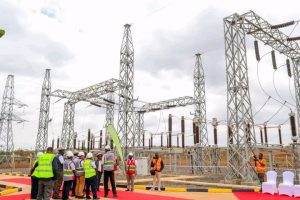
The infrastructure creates capacity. Policy must now create opportunity.
Businesses need an enabling environment. County authorities need investment-ready development zones. Young people need relevant skills. Communities need meaningful participation. And national institutions must ensure that transmission gains are matched by reliable distribution and last-mile connections.
President Ruto’s development tour has consequently placed an important spotlight on Kajiado’s infrastructure needs and economic possibilities, while CS Wandayi’s participation underscores the central role of energy in unlocking those possibilities.
The challenge now is to turn electricity into economic value.
Kajiado should not merely become a county with more reliable power. It should become a county where that power drives factories, businesses, digital enterprises, modern agriculture, better healthcare, stronger schools and thousands of new economic opportunities.
That is the real promise of the Isinya–Namanga transmission investment.
For Kenya, the lesson is equally clear: reliable power is not simply about keeping the lights on. It is about keeping the economy moving.
And for Kajiado, a stronger electricity network could provide the spark needed to transform strategic location into sustained prosperity.


