 ADVERT
 ADVERT
Anxiety is mounting across Nyanza as leaders, health experts and fishing communities warn that Lake Victoria’s vast and porous water routes could open a dangerous pathway for Ebola into Kenya if urgent containment measures are not enforced.
The growing concern stems from intense cross-border movement linking Kenya to Uganda and the Democratic Republic of Congo—regions that have previously battled Ebola outbreaks—through largely unregulated lake transport systems.
Homa Bay Senator Moses Kajwang sounded the alarm, urging the government to urgently establish Ebola screening points at all key entry routes across Lake Victoria.
“Porous water routes on the lake pose a major risk of Ebola entering Kenya,” Kajwang warned, noting that thriving trade in fish, timber and other goods must not be allowed to morph into a conduit for deadly disease transmission.
He called for closer coordination between Parliament and the Ministry of Health, urging Seme MP James Nyikal to work with Health Cabinet Secretary Aden Duale to implement clear and immediate prevention strategies.
 ADVERT
Kajwang emphasised that lakeside communities—heavily reliant on daily cross-border interaction—remain particularly exposed if surveillance systems are not strengthened.
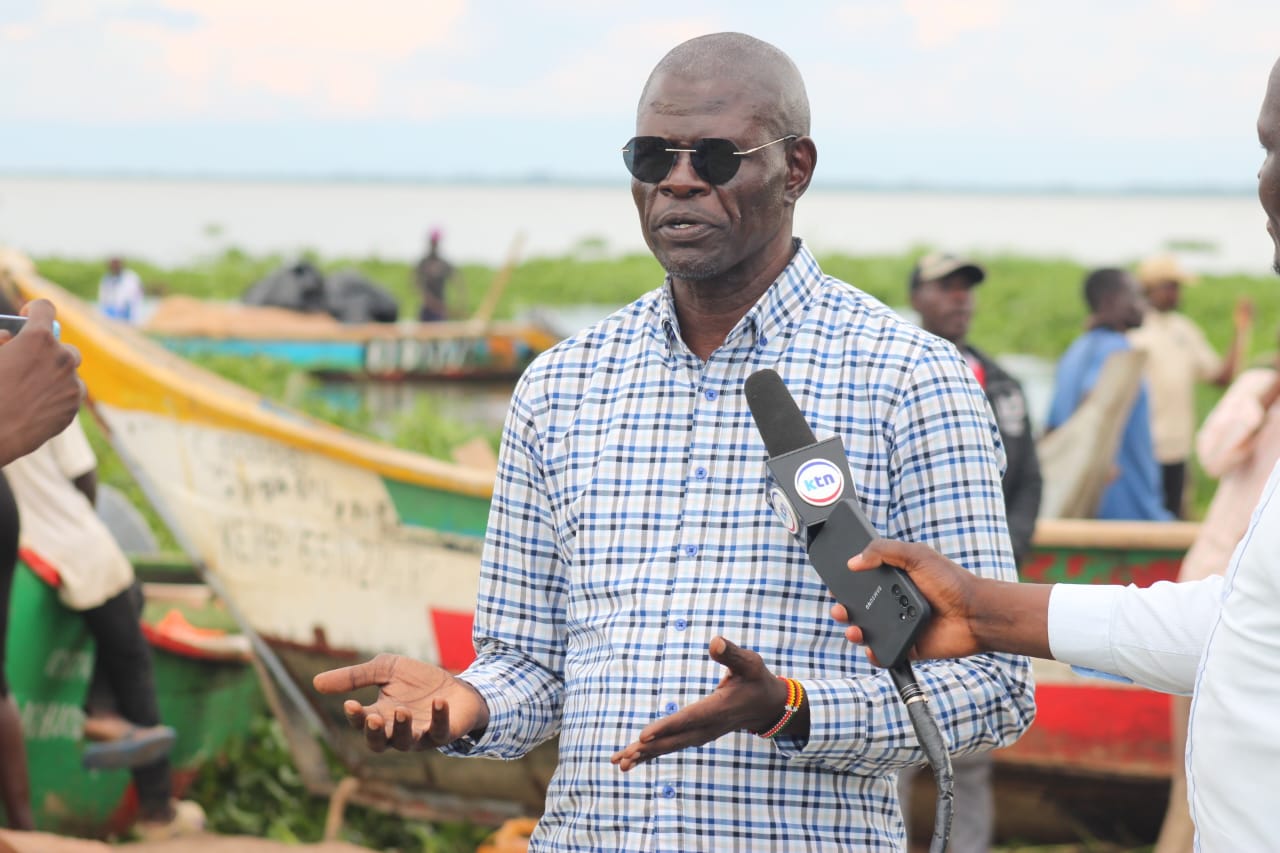
Authorities are now being urged to step up monitoring on key Lake Victoria islands, including Hama, Ringiti and Rhemba, where Kenyan fishermen interact with their Ugandan counterparts on a daily basis.
These islands have emerged as critical hotspots due to constant human traffic and informal trade networks that operate beyond structured border controls.
However, enforcing surveillance remains a daunting challenge.
Lake transport—dominated by small sail boats and motorised vessels—operates across vast open waters with minimal regulation, making it extremely difficult to monitor movement or enforce health screening protocols effectively.
Ndhiwa MP Martin Owino warned that bureaucratic inertia could prove disastrous in the face of a fast-moving epidemic, stressing that existing legal provisions already empower the government to act decisively.
“When a pandemic of this nature is approaching the country, you do not wait for public participation,” Owino said.
He cautioned that delayed action could carry heavy political and social consequences.
“People will ask—what did you do for us?” he posed.
Owino backed the immediate establishment of well-equipped quarantine and isolation centres to support contact tracing and manage suspected cases.
MP James Nyikal called for strict adherence to scientific protocols, insisting that suspected Ebola cases must be contained at their source to prevent cross-border spread.
“Science dictates that those who are sick during an epidemic should be contained where they are. We cannot allow infected individuals to be transported into our country,” Nyikal said.
He warned that preparedness must move beyond policy statements, urging the government to operationalise fully functional isolation facilities nationwide.
On the ground, fear is growing among fishing communities who face daily exposure due to weak surveillance systems at landing sites and islands.
Beach Management Unit Network Kenya national chair Tom Guda revealed that many landing beaches lack basic screening infrastructure and trained personnel.
“Our fishing communities interact daily with counterparts from Uganda, Tanzania and Congo. There is no screening in many island communities,” Guda said.
He warned that low awareness levels among fishermen further compound the risk.
“If you ask fishermen about Ebola symptoms, many do not know. We urgently need sensitisation, reporting systems and proper infrastructure,” he added.
Residents across lakeside counties say they are deeply concerned, but lack sufficient information about the disease.
James Mboya Agutu, a resident of Seka, said the community fears increased cross-border movement could expose them to infection.
“We do not want Ebola to come here. We don’t fully understand it, but we know it is dangerous,” he said.
Fisherwoman Rose Achieng Ochieng said most of her knowledge comes from radio broadcasts, calling for more targeted awareness campaigns.
“We hear it causes bleeding until all the blood comes out. We need more education,” she said.
In Karachuonyo, Nicholas Otieno Nyandega called for tighter border controls, warning that economic pressures should not overshadow public health priorities.
From Parliament to the beaches of Lake Victoria, a unified message is emerging: act now or risk a preventable health crisis.
Stakeholders are demanding urgent investment in surveillance systems, screening points, public education, and fully operational quarantine and isolation centres.
As pressure builds, leaders warn that failure to respond decisively could transform Lake Victoria—from a vital economic lifeline—into a high-risk corridor for Ebola and other infectious diseases.
The window for prevention is narrowing—and the consequences of inaction could be devastating.
Source: the Star


