 ADVERT
 ADVERT
Kenya’s 2027 presidential contest may ultimately be decided not by the size of President William Ruto’s traditional political base, but by how effectively he can reduce the losses he suffered in regions that overwhelmingly rejected him in 2022.
Nowhere is that calculation more important than Nyanza.
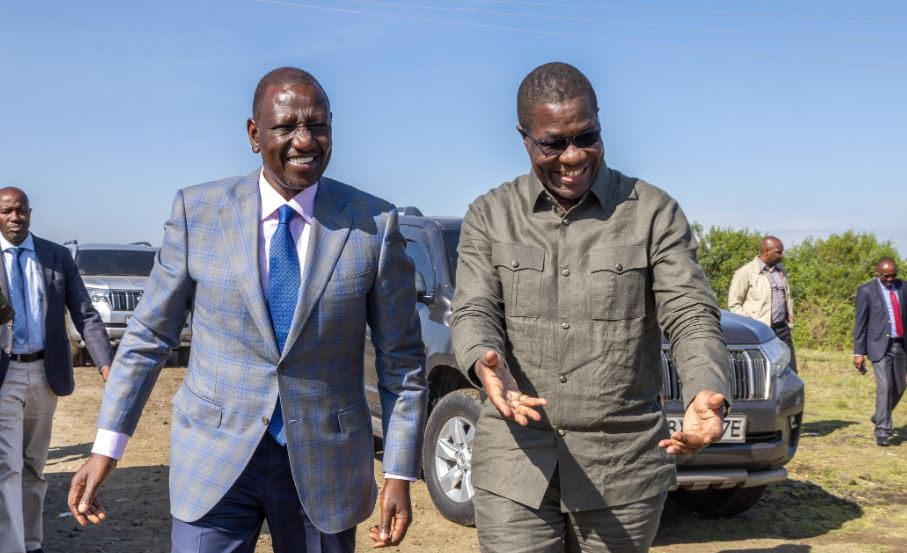
The political argument for Ruto reaching into Nyanza is compelling. The argument for reaching specifically for Energy and Petroleum Cabinet Secretary James Opiyo Wandayi is even more intriguing.
This is not a claim that Wandayi automatically owns the Luo vote. He does not. Nor is it an argument that a Luo running mate would magically deliver Nyanza to Ruto. Kenyan voters are far too sophisticated for such mechanical politics.
It is an argument about electoral mathematics, political transition and coalition architecture.
 ADVERT
And the mathematics are difficult for Ruto to ignore.
In the 2022 presidential election, Ruto won nationally with 7,176,141 votes against Raila Odinga’s 6,942,930 — a margin of only 233,211 votes. Ruto secured 50.49 per cent against Raila’s 48.85 per cent.
That single statistic should inform virtually every serious conversation about Ruto’s 2027 strategy.
The President does not need to transform every opposition county into a UDA stronghold. He needs to find additional votes while protecting the millions that carried him to State House in 2022.
And Nyanza offers precisely that opportunity.
Consider the four predominantly Luo counties of Siaya, Kisumu, Homa Bay and Migori.
Together, they had roughly 2.16 million registered voters in 2022 — almost one in every ten registered voters in the country. Siaya had 533,595, Kisumu 606,754, Homa Bay 551,071 and Migori 469,019.
Their political message in 2022 could hardly have been clearer.
Raila secured about 1.48 million votes across the four counties, while Ruto received only about 82,500. In Siaya, Raila took 371,201 votes against Ruto’s 4,307. In Kisumu, the figures were 419,141 against 10,049. In Homa Bay, Raila received 397,499 against Ruto’s 3,469. Even in Migori, where Ruto performed considerably better, Raila still won 292,451 against Ruto’s 64,645.
That is not merely a political defeat.
It is an enormous pool of potentially recoverable votes.
The strategic mistake would be to interpret those figures as proof that Nyanza can never vote for Ruto. The more useful interpretation is that Ruto had nowhere to go but up.
He could theoretically double his 2022 vote in those four counties and still remain far below Raila’s total.
But that is precisely the point.
If Ruto could move from roughly 82,500 votes to 300,000, 400,000 or even 500,000 in those counties, those additional votes would not have to come at the expense of his traditional supporters in the Rift Valley, Mount Kenya or elsewhere.
They would be incremental gains.
And in an election that could again be decided by a few hundred thousand votes, incremental gains can become decisive.
The bigger question is how such an extraordinary political realignment could happen.
This is where the post-Raila era becomes critical.
For decades, Nyanza politics revolved around Raila Odinga with a degree of political loyalty rarely seen elsewhere in Kenya. His death fundamentally changed the architecture of the region’s politics. The question is no longer simply who inherits Raila’s vote; it is whether the vote itself can continue behaving as a single political bloc.
That distinction is crucial.
The emerging competition within ODM, the Broad-Based Government arrangement and the ambitions of leaders such as Gladys Wanga, Oburu Oginga, Atandi, Mbadi and others suggest that Nyanza’s political future is no longer predetermined by one national figure.
The region is entering a period of political pluralism.
That is precisely the environment in which Ruto can make an entrance.
But he needs more than a Cabinet appointment.
He needs a political bridge.
That is where Wandayi becomes particularly interesting.
Wandayi’s political biography is unusually suited to the assignment.
He represented Ugunja for three consecutive parliamentary terms, having been elected in 2013, 2017 and 2022. He became National Assembly Minority Leader in the 13th Parliament before being appointed Cabinet Secretary for Energy and Petroleum in July 2024.
That history gives him an unusual political passport.
He is not a former opposition politician trying to explain why he joined government.
He was one of the opposition’s senior parliamentary figures.
He understands ODM’s internal culture. He understands the psychology of Nyanza voters. He understands Parliament. He understands government. And he has now spent two years operating from inside the executive rather than merely commenting on it from the opposition benches.
That makes him different from a politician whose only qualification for a running-mate position is regional identity.
The distinction matters.
Ruto does not simply need a Luo beside him.
He needs someone capable of explaining Ruto to the Luo — and explaining Nyanza to Ruto.
Wandayi potentially fits that description.
There is also a powerful political symbolism in the pairing.
A Ruto-Wandayi ticket would represent something considerably more consequential than the traditional politics of ethnic arithmetic. It would be a deliberate attempt to demonstrate that the political divide between the Ruto camp and the old Raila camp is no longer permanent.
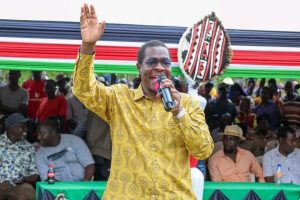
It would tell the country that a man who once occupied the highest parliamentary leadership position on the opposition side can sit alongside Ruto and seek a national mandate.
That would be a political earthquake in Nyanza.
But it would also be a gamble.
Wandayi cannot simply walk into Siaya, Kisumu, Homa Bay or Migori and announce that because he is Luo, the region should vote for Ruto.
That argument would fail.
The Luo electorate has repeatedly demonstrated that it can distinguish between ethnic identity and political choice. It has voted across party lines when circumstances demanded it. Migori’s 2022 results themselves demonstrated that Ruto could obtain a significantly larger share of the vote there than in Siaya or Homa Bay.
The real challenge for Wandayi would therefore be to build a new political proposition.
That proposition would have to be based on development, representation and access to power rather than ethnic symbolism.
And this is where his Energy docket becomes politically important.
Energy is among the most consequential economic portfolios in government. Electricity access, reliability and cost affect households, schools, hospitals, factories, farms, small businesses and digital enterprises. Petroleum prices affect virtually every sector of the economy.
Wandayi therefore has an opportunity to present himself not merely as “the Luo CS in Ruto’s government” but as a national policy player whose portfolio directly affects the economic transformation the President is trying to sell to voters.
His academic and professional background also strengthens that proposition. He trained in agricultural economics at the University of Nairobi and later obtained an MBA, while his parliamentary career included senior oversight responsibilities.
That is a more substantial résumé for a presidential running mate than the simplistic regional arithmetic sometimes used in Kenyan political conversations.
Still, Ruto would have to answer an uncomfortable question.
Why abandon Kindiki?
Deputy President Kithure Kindiki remains a formidable potential running mate. His national profile, executive experience and perceived political stability make him the obvious continuity option.
But a presidential running mate should not necessarily be selected simply because he or she is the most popular individual at a particular moment.
The more important question is: what does the running mate add to the ticket?
If Ruto’s objective is to consolidate what he already has, Kindiki makes considerable sense.
If his objective is to redraw the electoral map, a Nyanza candidate becomes much more interesting.
And that is why Wandayi deserves to be discussed alongside the more obvious names.
The 2022 numbers show just how much Ruto could gain.
Take Siaya alone.
Raila received more than 371,000 votes there while Ruto received just over 4,000. If Ruto were somehow to move from 1 per cent to 20 per cent of the valid vote in Siaya, he would gain tens of thousands of additional votes. A similar shift in Kisumu and Homa Bay, combined with further gains in Migori, could potentially produce several hundred thousand additional votes.
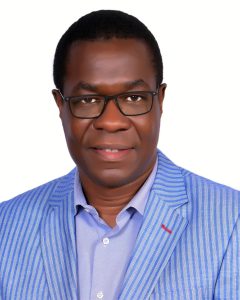
The arithmetic does not require Nyanza to become a Ruto stronghold.
It only requires the region to become competitive.
That is the crucial distinction.
Ruto does not need 90 per cent of Nyanza.
He does not even need 50 per cent.
If he could cut the enormous margins against him while retaining his traditional strongholds, the national equation would change dramatically.
And there is another statistical lesson from 2022.
Ruto exceeded the constitutional 25 per cent threshold in 39 counties, while Raila achieved it in 34. Ruto therefore demonstrated that his coalition already had impressive geographical reach.
The strategic question for 2027 is how to deepen that reach rather than merely reproduce the 2022 map.
That is why Nyanza matters.
The region has approximately two million registered voters across the four Luo-majority counties alone. It is too large to ignore and too politically significant to reduce to a symbolic appointment.
But there is a deeper reason Ruto needs Nyanza.
A president cannot convincingly claim to have built a national coalition while permanently losing an entire political region.
The Broad-Based Government was, at its core, an admission that Kenya’s political antagonisms had become too expensive to sustain indefinitely.
Bringing senior opposition figures into government was not merely about Cabinet numbers. It was an attempt to turn political confrontation into cooperation.
Wandayi is perhaps one of the clearest embodiments of that experiment.
He moved from the opposition’s top parliamentary leadership into the Cabinet of the very president whose administration he had previously scrutinized.

If Ruto were to elevate such a politician to the Deputy Presidency, the symbolism would be enormous.
It would tell Nyanza that its political future does not necessarily depend on occupying the opposition benches.
But Ruto must be careful.
Nyanza voters will not accept the proposition simply because Wandayi is Luo. They will judge whether the relationship delivers jobs, infrastructure, electricity, markets, investment and genuine political inclusion.
And Wandayi would have an equally difficult task.
He would have to convince Nyanza that entering government is not political surrender but an opportunity to bargain for development and influence from inside the room where national decisions are made.
That is a much harder argument than merely waving a party flag.
It is also a much more interesting one.
The coming election will therefore not simply be a contest between Ruto and whoever emerges as the opposition candidate.
It will be a referendum on whether Kenya’s old political alignments still possess the power they once did.
If Ruto chooses Wandayi, he would be betting that the era when Nyanza automatically voted as a single opposition bloc is ending.
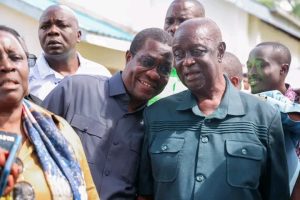
He would be betting that Raila’s absence creates political space rather than political nostalgia.
He would be betting that development, access to government and economic opportunity can compete successfully with decades of opposition tradition.
And most importantly, he would be betting that a politician who once spoke for the opposition can become the salesman for a new national coalition.
It is a risky bet.
But presidential elections are rarely won by eliminating risk. They are won by understanding which risks are worth taking.
For Ruto, retaining Kindiki may be the safer political choice.
Choosing Wandayi would be the more transformative one.
And in an election likely to be decided on margins rather than landslides, transformation may be more valuable than safety.
The hard truth is that Ruto does not need Nyanza because Nyanza alone can deliver him State House.
He needs Nyanza because every vote he can win there is a vote he does not have to find elsewhere.
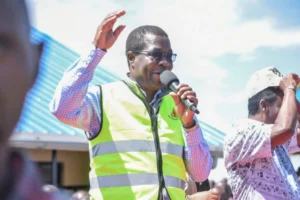
He needs Nyanza because the 2022 election demonstrated how dangerously narrow the national margin can become.
He needs Nyanza because Raila’s absence has created the first genuine opening in decades for a different national coalition.
And he needs a Nyanza politician who can speak both the language of government and the language of the opposition.
That politician could be James Opiyo Wandayi.
Whether he can actually deliver the votes is another question.
But if the President is searching for a running mate who does more than decorate the ticket with regional symbolism — a running mate who could help him change the electoral map itself — Wandayi’s name deserves considerably more attention than it is currently receiving.
Ruto may not need a running mate who merely protects yesterday’s coalition. He may need a bridge to tomorrow’s coalition. And Opiyo Wandayi may be the bridge he needs to cross into Nyanza.


