 ADVERT
 ADVERT
Kenya’s nuclear power ambitions are entering a decisive phase, and the most consequential question may no longer be whether the country can build a nuclear power plant, but whether it can finance one without surrendering too much of its economic sovereignty.
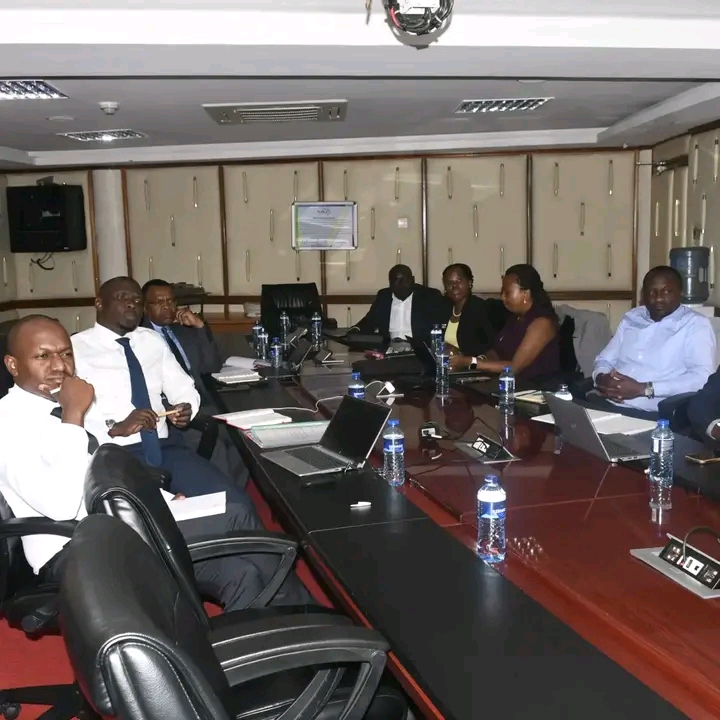
The strategic engagement between the Nuclear Power and Energy Agency (NuPEA), Kenya Electricity Generating Company (KenGen) and KCB Bank Group is therefore far more significant than an ordinary corporate meeting. It signals a critical shift in Kenya’s nuclear conversation—from technical feasibility and site selection to the harder question of financial architecture.
At the centre of that conversation is the proposed 2,000-megawatt nuclear power plant in Siaya County and how Kenya can mobilise the enormous capital required to build it. The emerging emphasis on domestic commercial banking capacity offers an important opportunity to ensure that Kenya’s first nuclear project is not built primarily on foreign sovereign loans, vendor-tied credit or expensive foreign-currency debt.
KCB’s participation is particularly noteworthy. A major Kenyan financial institution with experience in arranging large-scale energy and infrastructure transactions, the bank brings to the table the expertise required to structure a project of extraordinary scale, involving long-term debt, complex risk allocation, construction milestones, repayment covenants and multiple financing partners.
That is exactly the conversation Kenya needs to have before a single shilling is committed on terms that could bind the country for generations.
 ADVERT
Nuclear power is fundamentally different from conventional energy projects. It requires massive upfront investment, lengthy construction periods, rigorous safety and regulatory compliance and sophisticated procurement arrangements. Unlike many renewable-energy projects, a nuclear facility may take years before it begins generating revenue, yet the financing costs begin accumulating from the moment construction starts.
The money must therefore be patient, affordable and intelligently structured.
This is where domestic finance becomes strategically important.
Kenyan banks understand the country’s regulatory environment, currency dynamics, electricity market, public-sector payment structures and economic cycles in ways that external lenders may not. More importantly, domestic financial institutions can help develop financing structures denominated partly or substantially in shillings, reducing Kenya’s exposure to the exchange-rate shocks that have historically made foreign borrowing more expensive.
A nuclear plant financed overwhelmingly in dollars or euros could become significantly more costly if the shilling depreciates sharply during the project’s construction or operating life. A debt obligation that looks manageable when an agreement is signed can become substantially heavier when the currency moves against the borrower.
Domestic financing does not eliminate that risk, but it provides Kenya with an additional instrument for managing it.
The objective should not, however, be to shut international capital out. Nuclear energy is inherently global, and Kenya will need international technology providers, specialist financiers, export-credit agencies, development institutions and technical partners. The smarter strategy is to make Kenyan financial institutions the anchor of the financing architecture, enabling them to syndicate capital and bring international lenders into a structure negotiated from a position of greater national strength.
In that model, foreign capital becomes a complement to Kenyan capital rather than a substitute for it.
The institutional arrangements surrounding the nuclear programme make this financial discussion even more important. NuPEA has the mandate to coordinate Kenya’s nuclear programme, policy direction and strategic partnerships, while KenGen is positioned as the owner and operator of the proposed facility. Independent regulatory oversight remains essential through the Kenya Nuclear Regulatory Authority.
For financiers, these distinctions matter.
Any institution considering billions of shillings in long-term financing will want certainty about ownership, revenue streams, electricity tariffs, power-purchase arrangements, grid capacity and the ability of the project to generate sufficient cash flow to service its debt.
That means the financing of the nuclear plant cannot be separated from the wider reform of Kenya’s electricity sector.
A 2,000MW plant cannot simply be constructed and connected to the national grid without a credible economic justification for the electricity it will produce. Lenders will want confidence that there will be sufficient demand and that the electricity will be purchased at prices capable of sustaining operations and servicing long-term obligations.
KenGen’s balance sheet, therefore, becomes an important part of the conversation, as does the government’s willingness and capacity to provide appropriate guarantees or other forms of support.
The proposed location in Siaya County introduces another dimension that financiers cannot afford to ignore: social licence.
Public consultations around the nuclear project have demonstrated that communities have legitimate concerns about safety, environmental protection, land, compensation, employment and the distribution of economic benefits. Some engagements have reportedly become contentious, underscoring the importance of sustained and credible public participation.
These concerns may appear social rather than financial, but they are ultimately both.
Community opposition can delay construction, increase costs, trigger legal disputes and undermine investor confidence. In an industry where construction timelines and financing costs are already extraordinarily sensitive, prolonged delays can have enormous financial consequences.
For that reason, community engagement must be treated as part of the project’s risk-management framework rather than as a public-relations exercise.
The people of Siaya and neighbouring communities must see tangible and lasting benefits from hosting a facility of national importance. Jobs, technical training, local procurement, infrastructure, enterprise opportunities and community development programmes should form part of the broader economic architecture surrounding the project.
A nuclear plant cannot be financially de-risked while its social foundation remains fragile.
The wider energy transition makes the financing question even more urgent. Kenya has made remarkable progress in geothermal, wind and solar energy, but an industrialising economy requires dependable electricity at scale. Manufacturing, mining, data centres, digital infrastructure and other energy-intensive sectors need reliable power around the clock.
Nuclear energy could provide a large-scale, low-carbon source of dependable electricity capable of complementing Kenya’s renewable-energy resources and reducing vulnerability to fluctuations in hydropower generation caused by changing climatic conditions.
But nuclear power is not automatically an economic success simply because it produces electricity.
A poorly negotiated or badly financed nuclear project could saddle the country with escalating debt, cost overruns, construction delays and electricity prices that undermine the very industrialisation the project is intended to support.
The lesson is simple: Kenya must not approach nuclear financing as a race to find whoever is willing to provide the largest loan.
It must be a search for the financing structure that offers the best balance between affordability, risk, national interest and long-term economic sustainability.
That will require close coordination among NuPEA, KenGen, KCB, the National Treasury, the Central Bank of Kenya, regulators, domestic institutional investors and international financing partners. It will require transparent modelling of the project’s total lifecycle costs, realistic assessments of electricity demand, disciplined procurement and a clear allocation of risks among the government, project company, lenders, contractors and technology providers.
Above all, Kenya must resist the temptation to conceal difficult financial decisions behind the technical complexity of nuclear energy.
The public has a right to understand how the plant will be financed, who will ultimately repay the loans, what guarantees the taxpayer will provide and what safeguards will prevent cost overruns from being transferred to consumers.
The first nuclear plant should be a national development asset—not another generation-defining debt obligation.
The engagement between NuPEA, KenGen and KCB could therefore prove to be an important milestone in Kenya’s nuclear journey. It suggests that the country is beginning to think beyond reactors, turbines and construction contracts and is confronting the financial foundations upon which the entire project will stand.
Kenya should welcome international expertise and capital, but it should do so with its own financial institutions firmly at the table.
If domestic banks can mobilise substantial local capital, structure sustainable debt and attract international financing on terms that protect Kenya’s long-term interests, the country will have achieved something bigger than financing a nuclear plant. It will have strengthened its own capacity to finance strategic infrastructure.
The reactor may ultimately generate the electricity, but the financing structure will determine who carries the risks, who receives the returns and how much the Kenyan taxpayer ultimately pays.
That is why domestic finance must be at the heart of Kenya’s nuclear ambition.
The country’s first nuclear plant should not merely be built in Kenya. It should, as far as economically and prudently possible, be financed with Kenya at the centre of the deal.
That is how Kenya can turn nuclear power from an ambitious energy project into a genuinely sovereign instrument of industrial transformation.
James’ Kilonzo Bwire is a Media and Communication Practitioner


