 ADVERT

 ADVERThttps://youtu.be/Sny2O4mVqxU?feature=shared
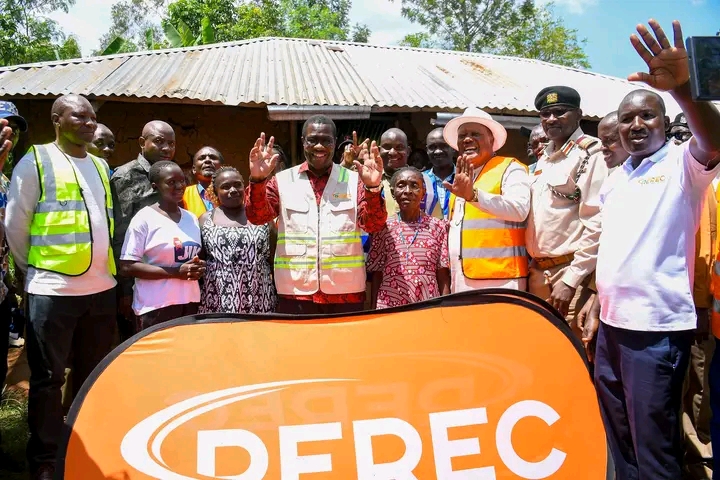
The commissioning of the Peter Habenga Okondo Mixed School Rural Electrification Project in Habenga Village Rwambwa Sub-location Budalangi Constituency Busia County is an important moment for the people of the area and a reminder of the central place that electricity occupies in rural development. The presence of Cabinet Secretary for Energy and Petroleum J. Opiyo Wandayi alongside national and county leaders demonstrated that the extension of power to rural communities is not a small administrative exercise but a matter of public policy equity and national progress. The project driven by the Rural Electrification and Renewable Energy Corporation brings electricity closer to households learners public institutions and local enterprises in an area that has long needed reliable modern energy. It should therefore be understood not merely as the switching on of power in one village but as part of a wider national effort to ensure that rural Kenyans share meaningfully in the opportunities created by development. REREC’s mandate includes implementing rural electrification projects and spearheading the country’s renewable energy drive which makes initiatives of this nature a direct expression of its statutory purpose.
Electricity is often discussed as infrastructure but in reality it is a foundation upon which many other aspects of life are built. A school with power can operate more effectively support learning beyond daylight hours use modern teaching resources and provide a safer and more comfortable environment for both learners and teachers. A health facility with electricity can preserve medicines operate essential equipment and offer services with greater confidence. A household with electricity can reduce dependence on costly and less convenient sources of lighting and cooking energy while also improving comfort security and communication. In this sense the Habenga project is not only about connecting a school to the grid; it is about expanding the practical possibilities available to a community. The Ministry of Energy and Petroleum has consistently described energy as a driver of economic transformation industrial growth and social inclusion and the commissioning in Budalangi gives that policy language a visible local meaning.
The choice of a school as the anchor for this electrification project is particularly significant. Schools are public institutions that serve many families at once and their connection to electricity often creates a pathway through which surrounding homes and businesses can also be reached. When a school has power it becomes more than a place of instruction; it becomes a community asset. Learners can study in better conditions teachers can prepare their work more effectively and school activities can extend beyond the limitations imposed by darkness. Parents and local leaders also gain confidence that public institutions in their area are being treated with the seriousness they deserve. For the people of Habenga Village the project represents recognition that children in rural Busia County deserve the same basic conditions for learning as children in better-served parts of the country.
The event also highlighted the importance of cooperation between different levels of government and public institutions. The Cabinet Secretary was received by the West Kenya Regional Manager Eng. Michael Apundo together with Busia County Commissioner Stephen Orinde County Secretary Oscar Juma Budalangi Constituency Member of Parliament Raphael Wanjala REREC representatives and local leaders. He was further accompanied by Kakamega County Deputy Governor Ayub Savula and Ugenya Constituency Member of Parliament Elisha Odhiambo. This gathering showed that rural electrification cannot succeed through the efforts of one institution alone. National government provides policy direction and resources county leadership understands local priorities members of Parliament represent community needs and REREC implements the technical work on the ground. When these actors work together projects are more likely to be completed maintained and used in ways that benefit ordinary people.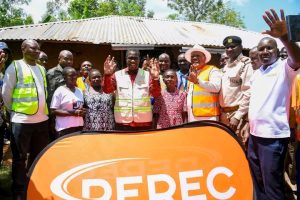
It is equally important to recognise the political and social meaning of such a commissioning. For many rural communities the arrival of electricity is a visible sign that they have not been forgotten. Development is often judged by the presence of roads water schools health facilities and power. When a community receives electricity it gains a stronger sense of belonging to the wider nation and greater confidence that public resources can reach even remote areas. The warm reception given to Wandayi in Habenga Village reflected this expectation. Residents were not simply welcoming a Cabinet Secretary; they were welcoming proof that government programmes can translate into tangible improvements in their daily lives. This is why consistency matters. A single project is valuable but communities need a sustained and predictable programme of expansion so that neighbouring villages are not left waiting indefinitely.
 ADVERT
Rural electrification also has a direct relationship with economic opportunity. Electricity enables small businesses to operate for longer hours supports activities such as welding milling refrigeration phone charging tailoring and information services and makes it easier for young people to develop skills that can generate income. It also reduces some of the burdens that fall heavily on households especially those that rely on alternative sources of energy for lighting and basic domestic needs. The government has stated its intention to make clean energy available affordable and accessible to every Kenyan household in order to advance equity and strengthen resilience. The Habenga project should therefore be seen as part of a broader effort to reduce the gap between rural and urban communities not only in access to power but also in access to the economic activities that power makes possible.
The renewable energy dimension of REREC’s work deserves particular attention. Kenya’s energy future cannot depend only on extending conventional infrastructure; it must also embrace cleaner and more sustainable sources of energy. REREC was established under the Energy Act of 2019 as the successor to the Rural Electrification Authority with an expanded responsibility to promote renewable energy alongside rural electrification. This means that projects such as the one commissioned in Budalangi should increasingly be planned with sustainability in mind. Rural communities need electricity that is reliable affordable and capable of serving them for many years. A focus on renewable energy also aligns rural development with national commitments on clean energy and climate responsibility ensuring that expansion of access does not come at an unnecessary environmental cost.
At the same time commissioning a project is only one stage in a longer process. Electricity must be maintained faults must be repaired promptly connections must be made affordable and communities must be supported to use power productively. It would be unfortunate if a project launched with such public attention were later weakened by poor maintenance delayed connections or high connection costs that exclude the very households it was intended to serve. The government and REREC should therefore treat Habenga as a beginning rather than an end. Follow-up engagement with the school local administration community leaders and households will determine whether the project delivers its full value. Public infrastructure earns trust not at the ceremony of commissioning but through reliable service in the years that follow.
The presence of Wandayi in Busia County also sends an important message about the priorities of the Ministry of Energy and Petroleum. As the Cabinet Secretary responsible for advancing energy security expanding access to affordable and reliable power and accelerating the transition to sustainable energy systems his participation in a rural commissioning signals that rural communities remain within the centre of national energy planning. This is significant because energy policy can sometimes appear distant from ordinary citizens discussed mainly in terms of generation transmission regulation and investment. Events such as the Habenga commissioning bring policy closer to the people and allow citizens to see the practical outcome of public commitments. They also create an opportunity for leaders to listen directly to residents about their needs including the demand for further connections reliable supply and support for local enterprises.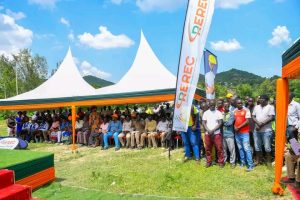
For Budalangi Constituency specifically the project carries a strong message of possibility. The area has its own development challenges but the extension of electricity to Peter Habenga Okondo Mixed School shows that progress is achievable when public institutions respond to community needs. The project should encourage residents to think beyond lighting and consider how power can support education health communication agriculture-related activities and small-scale enterprise. It should also encourage local leadership to identify other public institutions and villages that still require connection. Development becomes more meaningful when communities participate in identifying priorities and holding institutions accountable for delivery. The people of Habenga have received an important public investment and they now have a legitimate interest in ensuring that it is protected expanded and used for the benefit of all.
Ultimately the commissioning of the Peter Habenga Okondo Mixed School Rural Electrification Project is a reminder that national development is measured not only by large projects in major towns but also by the services that reach ordinary villages. Electricity may appear ordinary once it is available yet its absence limits education health security communication and enterprise. By bringing power to Habenga Village REREC and the Ministry of Energy and Petroleum have strengthened the foundation for local development and affirmed the principle that rural Kenyans deserve modern energy services. The task ahead is to sustain this commitment extend it to other underserved areas and ensure that every connection made becomes a genuine opportunity for households learners institutions and businesses. If that is done the joy witnessed in Habenga Village will not remain confined to one commissioning ceremony; it will become part of a wider and enduring story of rural transformation in Busia County and across Kenya.
Photo courtesy: Cabinet secretary for energy and Petroleum Opiyo Wandayi during LMCP.