 ADVERT

 ADVERThttps://youtu.be/Sny2O4mVqxU?feature=shared
A forensic examination of the controversial recruitment saga raises serious questions about attempts to link Siaya Senate aspirant Walter Ochieng Okelo to the scandal. While hundreds of health workers suffered, allegations against individuals must be established through documentary evidence, not political speculation.
The controversy surrounding the recruitment and subsequent dismissal of hundreds of healthcare workers in Siaya County is a matter of considerable public interest. It involves the integrity of public recruitment, accountability within county government, the rights of affected employees and, ultimately, the stewardship of public resources.
But public interest is not a licence to manufacture culpability.
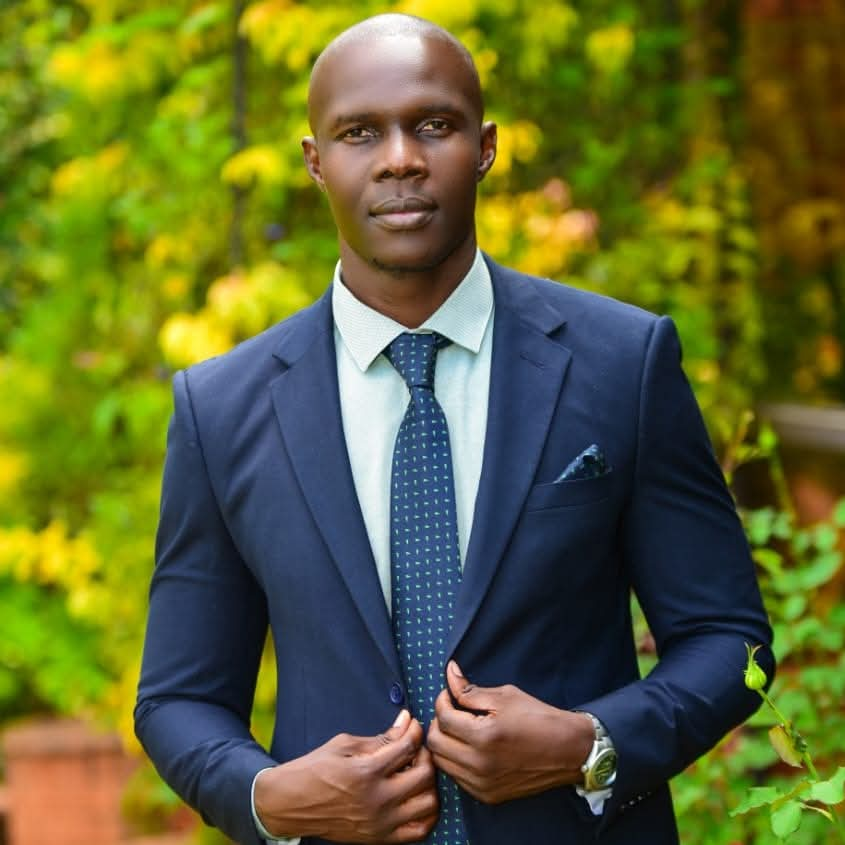
As Walter Ochieng Okelo, a declared Siaya Senate aspirant, increasingly attracts political attention, attempts to associate him with the nurses’ employment controversy deserve scrutiny. The central question is straightforward: Is there verifiable evidence establishing that Okelo masterminded, orchestrated or facilitated the irregular recruitment of healthcare workers?
Based on the publicly accessible material examined for this article, that allegation has not been established. Indeed, the available evidence so far supports a distinction between Okelo’s reported involvement in payroll verification and the separate question of who authorised, facilitated or benefited from the disputed recruitment.
 ADVERT
That distinction is fundamental to responsible investigative journalism.
The origins of the scandal: What actually happened?
The Siaya healthcare employment controversy came into public view in September 2025 when the County Government announced that 382 out of approximately 502 health workers had been struck off the payroll following allegations of irregular recruitment and forged employment documents.
The County Public Service Board, through its then chief executive officer Wilfred Ouma Nyagudi, said an audit conducted in collaboration with the Directorate of Criminal Investigations had revealed discrepancies in appointment and deployment documents.
The board reportedly established that only 120 of the 502 individuals had been recruited through the regular process.
However, the affected workers disputed the findings. They maintained that they had received appointment and deployment letters, reported to their assigned health facilities and worked for months without salaries. Some also questioned why they had allegedly undergone earlier verification exercises only to be declared irregular recruits later.
These were not minor administrative disagreements. They raised serious questions about the recruitment process, the authority of the appointing institutions, payroll management and the treatment of workers who claimed to have served the county.
The controversy prompted 259 affected healthcare workers to petition the Siaya County Assembly.
On September 17, 2025, the Assembly formally invited the affected workers to submit their employment documents for individual verification. Its General Oversight Committee was tasked with establishing the circumstances of recruitment, the authenticity of employment documents and whether any officials had committed wrongdoing.
Crucially, the Assembly’s own communication did not identify Walter Okelo as the mastermind or principal architect of the alleged recruitment fraud. It called for evidence-based investigations into the conduct of all concerned parties.
Walter Okelo: The difference between payroll verification and masterminding recruitment
One of the most important distinctions in this controversy concerns Okelo’s reported involvement in county administration.
During an engagement with Siaya intellectuals on September 3, 2026, Okelo was directly questioned about his alleged connection to the nurses’ employment controversy.
According to the account of that engagement, he explained that his involvement was principally in payroll clean-up and verification, an exercise intended to establish which employees were genuinely on the county payroll and identify irregularities.
That explanation deserves independent scrutiny, but it cannot simply be dismissed.
There is an important difference between an official tasked with examining payroll records and an individual who allegedly orchestrated fraudulent recruitment.
The first responsibility involves identifying anomalies, validating employee records and protecting public resources. The second involves organising or facilitating unlawful entry into public service.
To establish that Okelo was the mastermind, investigators would need evidence connecting him to the actual recruitment decisions or fraudulent transactions.
Such evidence could include:
* Recruitment instructions, correspondence or authorisations bearing his involvement.
* Documentary evidence linking him to the preparation or issuance of fraudulent appointment letters.
* Financial records, bank transactions or M-Pesa trails connecting him to payments allegedly demanded from jobseekers.
* Witness testimony supported by independently verifiable evidence.
* Findings by the DCI, EACC, the Public Service Commission or another competent investigative institution establishing his involvement.
The publicly accessible material reviewed for this article has not established such a connection.
Indeed, a September 2026 account of the engagement with Siaya intellectuals recorded that Okelo’s explanation distinguished his payroll verification responsibilities from the original recruitment decisions.
There is also a significant development in the County Government’s own subsequent administrative record.
A county government announcement concerning an urgent payroll resolution initiative identified Chief Officer for Governance and Administration Walter Okelo as the official working with the Chief Officer for Finance, Jack Odinga, to fast-track outstanding employment documentation, Unified Personal Numbers and Integrated Human Resource Information System onboarding.
This is relevant because it demonstrates that Okelo was assigned responsibilities in addressing payroll and employment administration. It does not, by itself, establish that he was responsible for the original recruitment irregularities. County Government of Siaya
What do the courts say about the scandal?
The judicial record also requires careful interpretation.
In Ochieng & 348 Others v Siaya County Public Service Board & 5 Others, Miscellaneous Application E068 of 2025, the Employment and Labour Relations Court at Kisumu delivered a ruling on December 15, 2025.
The 349 applicants had challenged their dismissal and sought interim orders relating to reinstatement and salary payments.
The court dismissed the miscellaneous application after upholding preliminary objections concerning jurisdiction, exhaustion of statutory dispute-resolution mechanisms and the appropriateness of the application.
Importantly, this was not a judicial determination that Walter Okelo had masterminded the recruitment scandal. He was not a respondent in that case. Nor did the ruling establish his criminal or administrative culpability.
A subsequent case, Ochieng & 293 Others v Siaya County Public Service Board & 2 Others, Petition E002 of 2026, produced another ruling on April 27, 2026.
The court declined to grant the interim relief sought by the petitioners, finding that the threshold for the orders had not been met. The underlying employment dispute remained subject to further proceedings.
Again, the case concerned the affected workers and county institutions. It did not pronounce Walter Okelo the architect of the alleged recruitment fraud.
These distinctions matter. A court declining an interlocutory application is not equivalent to determining every underlying allegation on its merits. Equally, the absence of an adverse finding against an individual should not be misrepresented as a judicial acquittal.
The responsible conclusion is that the available judicial record does not substantiate the accusation against Okelo.
Jack Kwemba’s article: When speculation is presented as investigative journalism
Perhaps the most troubling aspect of this emerging political controversy is the quality of journalism being used to advance the allegations.
Jack Kwemba is a respected media practitioner. That reputation, however, makes the shortcomings of his article particularly disappointing.
An article purporting to investigate whether a political aspirant masterminded a major public-sector employment scandal must be supported by a demonstrable chain of evidence.
It should establish who made the recruitment decisions, who authorised the appointments, who issued the disputed documents, who received any alleged payments and who benefited from the scheme.
It should also distinguish between documented facts, allegations, investigative leads and political interpretations.
Unfortunately, the article attributed to Kwemba, as described in the material under examination, appears to lean heavily on allegations, anonymous claims and speculative political forecasts rather than independently verifiable evidence.
That is not the standard expected of serious investigative journalism.
An allegation does not become a fact simply because it appears in a newspaper article. Neither does repetition transform speculation into evidence.
If there is documentary evidence implicating Okelo, it should be published and subjected to scrutiny. If there are witnesses with credible information, their accounts should be tested and corroborated. If investigative agencies have established his involvement, the findings should be made public.
But suggesting that somebody is the mastermind of an employment scandal without demonstrating the evidentiary connection risks turning journalism into political prosecution by headlines.
Kwemba deserves criticism on the strength of the work, not his personal standing. His professional reputation should have demanded a more rigorous examination of the evidence before such a serious allegation was advanced.
The fundamental question remains: where is the evidence?
Political longevity is not proof of criminal complicity
Another weakness in the argument against Okelo is the apparent tendency to interpret his long association with Siaya County Government as evidence of political manoeuvring or questionable conduct.
Okelo has served in different administrative and political capacities during the devolution era. His career has included responsibilities in county executive administration, party organisation and governance.
Such longevity naturally invites scrutiny. Public officials should account for their decisions, particularly when controversies arise within institutions they have served.
However, longevity in public service is not itself evidence of wrongdoing.
There is another equally legitimate interpretation: that he has acquired considerable institutional experience, understands the mechanics of devolved government and has accumulated administrative knowledge that could be useful in public leadership.
Whether that experience translates into effective representation is a separate question for voters.
Indeed, during the September 3, 2026 engagement with Siaya intellectuals, Okelo faced questions about his political history, administrative responsibilities and the nurses’ controversy. His willingness to participate in an open interrogation provided an opportunity for public scrutiny rather than allowing his record to remain beyond examination.
Public accountability should be encouraged. But accountability must not be confused with predetermined guilt.
Is Walter Okelo still entitled to pursue the Siaya Senate seat?
The political dimension of the controversy cannot be ignored.
Walter Okelo remains an ODM member, and there is no basis for treating unverified allegations as an automatic disqualification from pursuing elective office.
Article 38 of the Constitution of Kenya guarantees citizens political rights, including the right to participate in political activities and, without unreasonable restrictions, to stand as candidates for public office.
Article 99 provides the constitutional framework for eligibility to Parliament, including nomination by a political party or the requirements for an independent candidate.
Naturally, party nomination procedures, statutory qualifications and any lawful disqualifications must be respected. But political commentators cannot invent additional grounds for exclusion.
The ODM nomination process, should Okelo seek the party ticket, will provide another important test of his political standing.
Whether he eventually secures the nomination is a matter for the party’s democratic processes and its members.
Whether he wins the Senate seat is ultimately a matter for Siaya voters.
No political analyst, newspaper columnist or online commentator possesses the authority to predetermine that outcome.
The questions that investigative journalists should actually be asking
Rather than concentrating on speculative political predictions, serious journalism should pursue the outstanding questions surrounding the healthcare employment controversy.
* Who authorised the disputed recruitment exercise?
* Which officials were responsible for issuing and validating appointment and deployment letters?
* Were payments made to individuals promising employment, and can those transactions be traced?
* What did the DCI establish through its investigations?
* What were the findings of the County Assembly’s General Oversight Committee?
* What role did the various county departments and individual officers play in the payroll verification exercise?
* Were legitimate employees unfairly caught up in the administrative failures, and what remedies are available to them?
These are questions that could lead to genuine accountability.
They would also help protect innocent individuals while ensuring that anyone who participated in fraudulent recruitment is held responsible.
The affected healthcare workers deserve justice. Siaya taxpayers deserve answers. And public officials must be held accountable where evidence establishes wrongdoing.
None of those objectives is served by substituting political conjecture for investigative work.
Verdict: The mastermind allegation remains unsubstantiated
NOT ESTABLISHED BY AVAILABLE PUBLIC EVIDENCE
On the evidence publicly accessible and reviewed for this fact-check, the allegation that Walter Ochieng Okelo masterminded the Siaya nurses’ employment scandal remains unsubstantiated.
The available record documents a recruitment controversy, disputed employment documents, payroll verification exercises, investigations and continuing employment disputes.
It also records Okelo’s explanation that his involvement concerned payroll verification and administrative clean-up.
What it does not establish is a verified evidentiary chain connecting him to the alleged fraudulent recruitment scheme.
In that important respect, the evidence so far vindicates Okelo against the specific accusation of masterminding the scandal. This is a conclusion about the available evidence, not a declaration that every aspect of his public-service record has been independently cleared.
The distinction is important because an absence of publicly established culpability is not the same as proof that no wrongdoing occurred anywhere in the recruitment process.
The burden of establishing an allegation rests with those making it, not with the individual being accused.
And until credible evidence emerges, the public should resist attempts to turn political suspicion into an established finding of fact.
Siaya needs investigative journalism, not investigative fiction.
The county needs journalists who follow documents, interrogate institutions, establish timelines, identify decision-makers and expose wrongdoing wherever it exists.
It does not need headlines that pronounce political verdicts before the evidence has been established.
Walter Okelo should remain open to scrutiny. His record should be examined, his decisions questioned and his political ambitions subjected to public debate.
But he is equally entitled to the presumption that an allegation is not proof of guilt.
His political future will not be determined by Jack Kwemba, anonymous sources or speculative newspaper predictions. It will be determined by the applicable law, the democratic processes of his political party and, ultimately, the people of Siaya.
In journalism, the truth must be established before the verdict is delivered.