ADVERT

 ADVERThttps://youtu.be/Sny2O4mVqxU?feature=shared
Interior PS Raymond Omollo’s renewed war on tribal politics is welcome, but the real test of Usawa ni Sawa lies in equitable appointments, fair distribution of public resources and equal opportunities for every Kenyan.
Interior Principal Secretary Dr Raymond Omollo’s reaffirmation of the government’s commitment to ending tribal politics deserves commendation. At a time when ethnic calculations continue to undermine Kenya’s democratic culture, distort political competition and threaten national cohesion, his emphasis on equality, dignity and shared belonging offers an important reminder of what nationhood ought to mean.
Through the Usawa ni Sawa philosophy, Omollo is advancing a proposition that should be fundamental to Kenya’s governance: no Kenyan should be considered more deserving, more entitled or more important than another because of ethnic origin, regional identity or political affiliation.
It is an attractive proposition. More importantly, it is a constitutional imperative. But its credibility will ultimately depend not on the eloquence of public declarations, but on whether the government is prepared to practise what it preaches.
Tribalism remains one of Kenya’s most debilitating political afflictions. It has progressively reduced national politics to a contest over which community occupies State House, which ethnic bloc controls the corridors of power and which region enjoys preferential access to public resources. In the process, questions of competence, integrity, accountability and service delivery are frequently sacrificed at the altar of ethnic arithmetic.
 ADVERT
This is a dangerous distortion of citizenship. It encourages Kenyans to regard one another as competitors for political and economic privileges rather than equal stakeholders in a common national enterprise. It also perpetuates the unfortunate perception that one’s prospects in public service, business or national leadership are determined by ethnic connections rather than ability and merit.
That is precisely the mentality that Usawa ni Sawa must challenge.
The philosophy, properly understood, is much more than a catchy political slogan. It is an affirmation that equality must be the organising principle of public life. Every Kenyan, whether from Siaya, Turkana, Mandera, Kisii, Nyeri, Mombasa or Nairobi, deserves equal protection of the law, dignity and a fair opportunity to participate in the country’s economic and political development.
The Constitution is unequivocal on this question. Article 27 guarantees equality and freedom from discrimination, while Article 10 identifies inclusiveness, equality, human dignity, social justice and non-discrimination among Kenya’s national values and principles of governance. Article 232 further demands representation of Kenya’s diverse communities in public service.
These are not aspirational ornaments to be recited at public functions. They are binding standards against which government conduct must be evaluated.
The real test is equitable opportunity.
A government cannot credibly proclaim equality while public appointments, employment opportunities, procurement decisions and access to economic empowerment programmes appear to be influenced by political loyalty or ethnic considerations.
A young graduate from Ugenya should have the same opportunity to compete for a government position as one from Kiambu. An entrepreneur in Bondo should have a fair chance of securing a public contract on merit, just like a businessperson in Nairobi. Access to scholarships, healthcare, infrastructure and economic opportunities should never become political rewards distributed to communities perceived to be politically friendly.
This does not mean that every county must receive identical allocations regardless of its circumstances. Equity is not necessarily uniformity. It means that public resources must be distributed transparently, rationally and in accordance with constitutional principles, including need, population, historical marginalisation and the requirements of equitable development.
Indeed, the surest way to dismantle the perception of ethnic exclusion is to make government services visible and accessible across the country, irrespective of how particular communities voted.
Omollo’s emphasis on Nairobi belonging to all Kenyans is particularly instructive. The capital city should be a national home, not the preserve of any particular ethnic community. Equally, no Kenyan should feel like a stranger or an unwanted visitor in any part of the Republic.
But belonging must be experienced, not merely proclaimed.
When citizens walk into government offices, seek medical attention in public hospitals, apply for employment or seek assistance from security agencies, they must encounter institutions that recognise their rights and treat them with dignity. This is where the philosophy of equality acquires practical meaning.
Leadership must practise what it preaches.
Perhaps the most important constituency in the campaign against tribal politics is the political leadership itself. Kenya’s ethnic divisions are rarely sustained by ordinary citizens acting spontaneously. More often, they are exploited, manipulated and institutionalised by political elites pursuing power.
Leaders who mobilise communities through ethnic suspicion, portray political competition as an existential battle between tribes or suggest that government belongs to particular voting blocs undermine the very foundations of national cohesion.
Consequently, Omollo’s message will carry greater moral authority if it is embraced consistently by those holding public office. Government appointments must reflect competence and national diversity. Political alliances must not be disguised arrangements for ethnic entitlement. Public communication must avoid language that creates the impression that some communities are more deserving of State attention than others.
There must also be room for political disagreement. National unity should never be confused with political conformity, nor should criticism of government be interpreted as hostility towards the country.
A Kenyan does not become less patriotic by opposing the administration of the day. Indeed, the freedom to disagree with those in power is one of the defining attributes of a constitutional democracy.
Citizens must also reject the politics of ethnic convenience.
The responsibility for dismantling tribalism cannot be left to government officials. Voters must become more discerning and demand substance from political candidates.
Instead of asking which community a candidate represents, citizens should interrogate their record, integrity, development agenda and capacity to deliver. They should demand credible answers on unemployment, education, healthcare, security, agriculture and the cost of living.
Political accountability becomes impossible when voters reward ethnic loyalty regardless of performance.
Our education system, religious institutions, civil society and the media also have an important responsibility in cultivating a national consciousness that celebrates cultural diversity without turning it into a weapon of political exclusion.
The media, in particular, must resist the temptation to amplify ethnic propaganda, inflammatory rhetoric and unverified allegations designed to provoke communal hostility. Equally, journalists must remain sufficiently independent to interrogate governments that invoke national unity while falling short of the constitutional obligations of fairness and inclusion.
This distinction is important. Promoting national cohesion does not mean abandoning scrutiny of those in power. Rather, responsible journalism should hold every administration accountable to the same standards of equality, transparency and public service.
Usawa ni Sawa must become a governance standard, not a campaign slogan.
Ultimately, the credibility of Raymond Omollo’s message will be determined by what Kenyans experience beyond public meetings and official pronouncements.
Are public appointments inclusive? Are development resources allocated fairly? Can citizens from every community access economic opportunities without political connections? Are public institutions impartial? Does the government respect citizens regardless of their political choices?
These are the questions that will determine whether Usawa ni Sawa becomes a transformative national philosophy or another attractive phrase in Kenya’s crowded political vocabulary.
Kenya does not need to abandon its ethnic identities to build a united nation. Cultural diversity is part of our national heritage and should be celebrated. What the country must abandon is the dangerous assumption that ethnic identity should determine access to power, opportunity and public resources.
Omollo’s reaffirmation is therefore timely and welcome. But the government must understand that national cohesion cannot be legislated through speeches, nor can public confidence be manufactured through slogans.
It is built through fairness, demonstrated through inclusive leadership and sustained by institutions that serve every citizen without discrimination.
Usawa ni Sawa. But equality must be seen, felt and experienced by every Kenyan. That is the promise—and ultimately, the test.
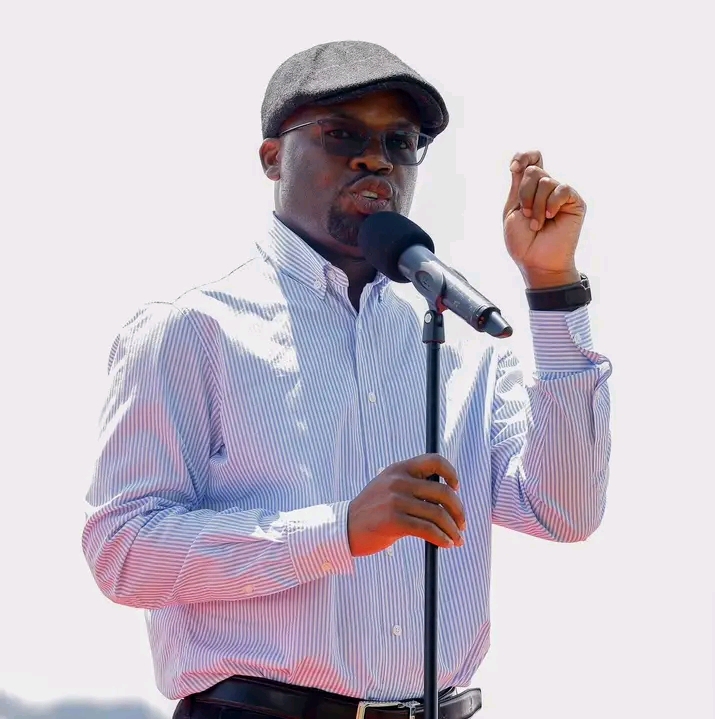
Photo: Courtesy of Interior Principal Secretary Dr Raymond Omollo.