 ADVERT
 ADVERThttps://youtu.be/Sny2O4mVqxU?feature=shared
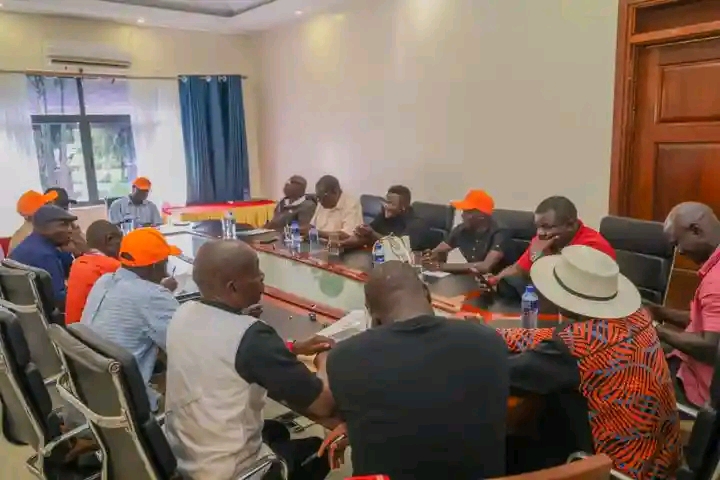
The Orange Democratic Movement remains a party whose real strength is found not merely in its leadership its history or its political structures but in the voices hopes and daily concerns of its members. The consultative meeting convened by Cabinet Secretary for Energy and Petroleum Opiyo Wandayi with ODM leaders from all six sub counties of Siaya is therefore an important reminder that political parties survive when they remain close to the people who sustain them. The meeting was not simply a gathering of leaders. It was an effort to listen understand and respond to the concerns of grassroots supporters whose loyalty and participation determine the party’s relevance. ODM’s identity as “Baba’s party” carries a deep emotional and political meaning for many members but its future cannot depend on memory alone. It must be renewed through open communication disciplined organisation inclusive leadership and a clear commitment to the aspirations of ordinary citizens. The consultative engagement in Siaya reflects a recognition that a party becomes strong when its members feel heard respected and represented.
A political party is more than a vehicle for elections. It is a platform through which citizens express their expectations seek solutions to local problems and participate in shaping the direction of their country. When party leaders engage directly with grassroots structures they create an opportunity to understand the realities that people face beyond the formal language of policy and government. In Siaya the meeting brought together leaders from all six sub counties allowing different voices to contribute to a shared conversation about the party’s direction. This matters because members do not experience politics only through national speeches or media appearances. They experience it through local leadership access to information responsiveness to their concerns and the confidence that their views can influence decisions. A party that listens carefully is better placed to build trust while a party that assumes it already knows what its supporters want risks losing touch with the very people it seeks to serve.
The emphasis on sustained engagement between party leadership and grassroots membership is particularly significant. Political organisations often become distant from their supporters after elections when attention shifts from mobilisation to governance and internal competition. Yet the period after an election is precisely when parties should strengthen their relationship with the people by explaining government programmes receiving feedback and addressing unresolved concerns. Consultative meetings such as the one held in Siaya provide a practical avenue for this kind of engagement. They allow leaders to hear directly from local representatives identify weaknesses in communication and organisation and develop strategies that respond to real needs rather than assumptions. This approach strengthens democracy within the party because it recognises that members are not passive followers but active participants whose views deserve consideration.
ODM’s organisational design gives this commitment practical meaning. The party describes itself as a democratic organisation with structures extending from the national level to the grassroots and its constitution provides for branches constituency level structures ward committees and village or unit committees. These structures are intended to connect members directly with party leadership and ensure that citizens have a voice in party governance and decision making. The strength of such a system depends on whether these structures are active accessible and genuinely responsive. A branch or ward committee that meets regularly communicates with members and reports concerns upward can become an important bridge between the people and the party. Conversely structures that exist only on paper weaken confidence and leave members feeling disconnected from decisions that affect them.
ODM’s commitment to strengthening its structures through mass party and voter registration is also central to its long term political health. A party cannot remain influential if its membership is weak disorganised or disconnected from the electoral process. Registration is not merely an administrative exercise. It is a way of giving citizens a formal place within the party and preparing them to participate meaningfully in future political decisions. When people register as members they become part of a collective effort to shape leadership promote accountability and advance shared goals. Voter registration is equally important because participation in elections gives citizens the power to choose leaders and hold them accountable. A party that invests in membership and voter registration is investing in its own future but more importantly it is investing in the democratic participation of its people.
 ADVERT
The party’s own rules reinforce the importance of active membership. ODM membership is open to adult Kenyan citizens who accept its principles policies and programmes while members are expected to take part in the life of their branches explain the party’s aims to the public and participate in discussions on policy. Members also have the right to submit proposals through party structures offer constructive criticism and take part in elections within the party. These provisions show that membership should not be reduced to holding a party card. It should involve informed participation disciplined conduct and a willingness to contribute to the party’s collective goals. When members understand their rights and responsibilities they become stronger partners in building a credible and united political movement.
The call to expand the party’s reach across Siaya County should be understood as a call for inclusion rather than mere political expansion. A party becomes stronger when it welcomes diverse voices engages young people women farmers traders professionals teachers youth groups and community leaders. Every section of society has a role to play in shaping the political direction of the county and the country. If ODM is to remain connected to its supporters it must ensure that its structures are accessible to people at every level from the village to the sub county and the county leadership. This requires deliberate organisation consistent communication and leaders who are willing to serve rather than dominate. It also requires honesty about the challenges facing communities including unemployment access to services development gaps insecurity of livelihoods and the need for accountable leadership. A party that takes these concerns seriously earns credibility among the people.
Siaya County provides an important setting for this kind of political renewal because its six sub counties and thirty wards are essential units for planning public participation resource allocation and service delivery. This means that political engagement at the local level is closely connected to the practical concerns of residents. People want leaders who understand local priorities listen to community concerns and work to improve access to opportunities and services. A consultative meeting that brings together leaders from all six sub counties can therefore help align party mobilisation with the realities of local governance. It can also encourage leaders to coordinate their efforts rather than work in isolation thereby creating a more coherent approach to representation development and political organisation.
The meeting’s reaffirmation of party unity is timely because unity is one of the most demanding tests facing any political organisation. ODM has a long history a strong national presence and a deep connection with communities that have supported it over many years. However history alone cannot guarantee unity. Unity must be actively built through respect dialogue fairness and shared purpose. Leaders must avoid divisions that weaken the party’s ability to serve its members and pursue its objectives. Internal disagreements are normal in any political organisation but they should be managed through constructive engagement rather than hostility suspicion or public confrontation. The strength of ODM lies in its ability to accommodate different opinions while remaining committed to a common vision. When leaders choose dialogue over division they protect the party’s credibility and preserve the confidence of its supporters.
Unity also requires fairness in the treatment of members and aspirants. A party that is seen as favouring particular individuals regions or groups risks losing the trust of those who feel excluded. Internal democracy should therefore be protected through transparent processes respect for party rules and equal opportunity for members to participate in leadership and decision making. ODM’s constitution and nomination rules provide a framework for party elections and candidate nomination but the value of such rules depends on their consistent application. When members believe that competition within the party is fair they are more likely to accept outcomes and remain committed to the collective goal. When they believe that decisions are manipulated or imposed resentment can grow and weaken the party from within.
The commitment to constructive engagement is especially important in the current political environment. ODM’s participation in the broad based government has created a new political reality in which cooperation between political parties is necessary for governance and national stability. The broad based arrangement initiated in March 2025 through a cooperation framework between President William Ruto and the late Raila Odinga was designed to address governance national unity devolution corruption and the rule of law. It was not intended to erase the identity of either party or to eliminate political competition. Rather it created a framework through which leaders from different political backgrounds could work together in the interest of the country. ODM leaders who support this arrangement must therefore explain it clearly to members defend its purpose honestly and ensure that the party’s interests are protected within the partnership.
The cooperation framework contains commitments that directly affect the lives of citizens. It includes implementation of the National Dialogue Committee report inclusivity in governance protection and strengthening of devolution youth empowerment integrity in leadership reduction of public waste the fight against corruption protection of peaceful assembly and respect for constitutionalism and the rule of law. These commitments are not abstract political ideals. They relate to the ability of county governments to deliver services the opportunity for young people to find meaningful work the confidence citizens have in public institutions and the protection of fundamental freedoms. ODM leaders should therefore use grassroots meetings to explain how the broad based government is pursuing these commitments and where progress remains insufficient.
Support for the broad based government should not be presented as blind loyalty to power. It should be grounded in a clear understanding that national progress requires cooperation among leaders who may have differed in the past. Kenya faces many challenges that cannot be solved through political hostility alone. Citizens need stable governance improved services economic opportunities functional institutions and leadership that prioritises the public interest. The broad based arrangement offers an opportunity for political leaders to move beyond competition and focus on delivery. However this opportunity carries responsibility. ODM leaders must remain accountable to their members ensure that the partnership produces tangible benefits for ordinary people and avoid allowing cooperation to weaken the party’s voice or dilute its values. A political partnership is meaningful only when it serves the people and strengthens democratic institutions.
The decision by Siaya leaders to rally behind President William Ruto’s re election reflects a strategic political position but it also raises an important responsibility for the party. Supporting a candidate or a government is not enough if citizens do not see improvements in their lives. Political support must be matched by visible commitment to service delivery job creation infrastructure education health agriculture energy access and local development. Leaders must engage communities regularly and explain what is being done what challenges remain and what plans exist for the future. This is how political trust is earned. When people see that their leaders are working to improve their conditions they are more likely to remain engaged and supportive. When they feel forgotten political loyalty becomes fragile. Therefore the call to support President Ruto’s re election must be accompanied by a serious commitment to responsive leadership and tangible progress.
Political support also becomes more credible when leaders maintain a direct connection with the people between elections. Communities should not only see their leaders during campaigns funerals fundraising events or moments of political competition. They should see them in ordinary engagements that address local concerns explain public programmes and provide updates on development priorities. Regular consultation gives citizens an opportunity to question leaders share information and contribute ideas. It also helps leaders identify emerging problems before they become major grievances. In this sense consultation is not a favour done to supporters. It is an essential duty of representative leadership. A party that treats consultation as a continuous responsibility builds a more informed organised and confident membership.
The phrase “responsive inclusive and united ODM” captures the kind of party that citizens deserve. A responsive party listens to its members and acts on their concerns. An inclusive party creates space for all voices regardless of age gender background or social status. A united party maintains discipline and shared purpose even when members hold different views. These qualities cannot be achieved through slogans alone. They require consistent leadership transparent communication and a culture of respect within party structures. Leaders must be accessible to members willing to explain decisions and prepared to correct mistakes when necessary. Members in turn must participate responsibly offer honest feedback and hold their leaders accountable. This mutual relationship is the foundation of a healthy political party.
Inclusion must be practical rather than symbolic. Young people should be given meaningful roles in party activities leadership training communication mobilisation and policy discussions. Women should be supported to participate fully in decision making structures and to compete fairly for leadership positions. Farmers traders workers professionals and community based organisations should be consulted on issues that affect their livelihoods and wellbeing. A party that draws strength from different experiences is better able to understand the complexity of public needs. It is also better prepared to develop policies that respond to the realities of both rural and urban communities. Inclusion is therefore not only a matter of fairness. It is a source of political wisdom and organisational resilience.
ODM’s connection to Raila Odinga remains an important source of identity and inspiration for many of its members. The reference to “Baba’s party” reflects the deep respect and loyalty that many people feel toward a leader who shaped Kenya’s political history and championed the aspirations of millions. However the party must also recognise that loyalty to a leader should inspire continuity of values not dependence on the past. The most meaningful way to honour that legacy is to build a party that remains committed to justice inclusion democracy national unity and service to the people. ODM leaders must carry forward the principles that made the party influential while adapting to the changing political realities of the country. This requires courage wisdom and a willingness to place the interests of citizens above personal ambition.
The transition within the party also makes strong grassroots organisation more important than ever. ODM continues to maintain national county constituency and ward structures while its leadership has been working to reactivate grassroots structures and strengthen coordination across the country. This effort is necessary because a party’s resilience is tested not only during periods of political certainty but also during moments of change. Members need reassurance that the party remains organised purposeful and capable of representing their interests. Clear communication from national and county leaders active ward committees and regular engagement with local communities can help maintain confidence during such a period.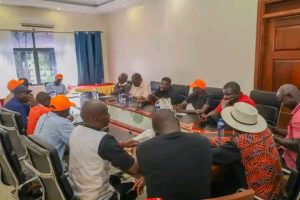
The consultative meeting in Siaya should therefore be seen as part of a wider effort to renew the relationship between ODM and its grassroots supporters. It demonstrates that party leadership recognises the importance of listening organising and engaging directly with the people. This is a positive step but it must not remain a one time event. Consultation should become a regular practice across all levels of the party. Leaders should create reliable channels through which members can raise concerns share ideas and receive feedback. Grassroots structures should be strengthened through training clear communication and active participation in party activities. When members feel that they belong to a living and responsive organisation they become ambassadors of the party’s vision in their communities.
The broader message from the Siaya engagement is that political strength is built from the ground upward. A party cannot claim to represent the people if it does not listen to them. It cannot claim to be united if its leaders are divided by personal interests. It cannot claim to be inclusive if some voices are ignored or excluded. It cannot claim to be responsive if it fails to address the concerns of ordinary citizens. ODM’s future depends on its ability to remain rooted in the people while adapting to new political circumstances. This means combining the party’s historical strength with fresh ideas renewed organisation and a clear commitment to service. It also means ensuring that every member understands the party’s direction and feels valued as part of that journey.
Ultimately the strength of ODM will be measured not only by the size of its meetings or the enthusiasm of its rallies but by the quality of its relationship with the people. A party that listens organises includes and delivers will earn lasting trust. A party that remains connected to its grassroots will be better prepared to face political challenges and contribute meaningfully to national progress. The Siaya consultative meeting offers a reminder that political renewal begins with humility dialogue and commitment to the aspirations of citizens. If ODM continues to strengthen its internal unity expand its membership support democratic participation and remain attentive to the needs of its people it will preserve its relevance and continue to play an important role in Kenya’s political future. The task now is to turn these commitments into consistent action so that the party remains not only strong in name but strong in service unity and connection with the people it represents.
Photo: Cabinet Secretary Opiyo Wandayi meeting with ODM officials.