 ADVERT

 ADVERT
As Kenya marches toward its vision of a diversified, sustainable, and secure energy future, nuclear power stands out as a promising solution to meet growing demands. However, the path toward embracing nuclear energy is both exciting and fraught with challenges, rooted largely in public perceptions, safety concerns, and the need for transparent communication. Mrs. Patricia Ndede, the Director of Communications at the Nuclear Power and Energy Agency (NuPEA), spearheads Kenya’s grassroots engagement efforts, particularly in Siaya County communities such as Nyangoye, Ugambe, Liunda, and Sirongo. Her work exemplifies the powerful role of informed dialogue in transforming skepticism into knowledge, fear into acceptance, and exclusion into meaningful participation.
Kenya’s nuclear journey is governed by a comprehensive legal and policy framework rooted in the Energy Act 2019, which established NuPEA as the responsible body for developing nuclear power, legislating energy policies, public education, site identification, and nuclear research and development. In this context, Patricia Ndede’s work is crucial to fulfilling NuPEA’s mandate to educate and empower the community, ensuring that the public has the needed information and voice to influence the direction of nuclear energy projects.
One of the greatest barriers to public acceptance of nuclear energy worldwide—and notably in Kenya—has been misinformation and fear stemming from safety concerns and lack of accessible knowledge. Mrs. Ndede confronts this challenge directly by prioritizing transparent, two-way conversations rather than one-way messaging. She moves beyond official offices, entering local communities where she nurtures dialogue, listens to concerns, and explains complex concepts in relatable terms. This grassroots approach respects and protects Kenyans’ constitutional right to information and consultation on projects that affect them, an essential element for building what is known as the “social license to operate.”
The communities of Nyangoye, Ugambe, Liunda, and Sirongo have historically experienced energy poverty and developmental setbacks, adding layers of concern about nuclear energy projects possibly disrupting their livelihoods. By bridging technical experts with citizens through inclusive forums and clear communication, Patricia Ndede helps these communities see nuclear power not as an abstract or risky foreign concept but as an opportunity for reliable, affordable, and clean energy—one that underpins economic growth, climate resilience, and improved living standards.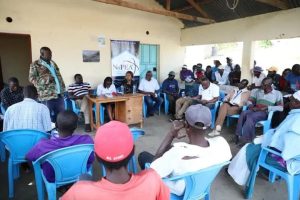
Her communications agenda also stresses that nuclear power is a low-carbon energy source aligned with Kenya’s commitments under the Paris Agreement and global sustainability goals. These conversations situate local realities within the broader framework of global environmental stewardship, helping residents understand that their participation is part of a worldwide effort toward sustainable development.
 ADVERT
Moreover, Patricia Ndede’s engagement sessions emphasize capacity building as a complementary benefit of nuclear energy development. In addition to power generation, Kenya’s nuclear program presents socio-economic opportunities through job creation, technology transfer, and entrepreneurship for local populations. Preparing communities to harness these benefits is key to fostering ownership and ensuring the nuclear sector becomes a driver of inclusive growth.
Her efforts also guard against opposition and resistance that arise when development projects are perceived as imposed or opaque. Kenya’s experience and global lessons underscore that projects lacking early, consistent, and genuine public involvement face legal challenges, protests, and delays. Through consistent engagement and open feedback channels, Mrs. Ndede mitigates these risks, smoothing the path for timely project implementation and building lasting trust.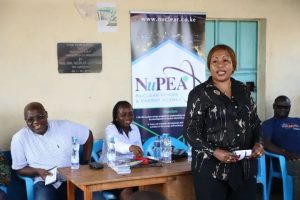
Importantly, Patricia Ndede advocates for gender-sensitive communication strategies, ensuring that women—often excluded from technical and political conversations—are included and represented in nuclear energy dialogues. This inclusive approach enriches the consultation process, guarantees diverse perspectives, and supports equitable benefits sharing.
Her career reflects strong expertise in strategic communications, with over two decades of experience managing national public communication programs, including major government initiatives. This experience blends professionalism with a deep commitment to connecting scientific projects with human stories, a balance crucial for managing the complex narrative of nuclear energy.
As Kenya progresses toward construction of its first nuclear plants and develops supporting infrastructure such as research reactors at Konza Technopolis, Patricia Ndede’s role in ongoing stakeholder engagement remains essential. The continuity of these grassroots sensitization efforts and responsiveness to evolving community concerns will underpin public confidence and support—without which even the most technically sound projects falter.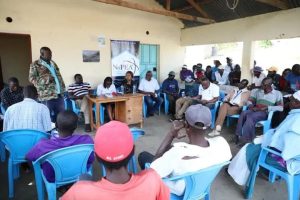
In conclusion, Kenya’s ambitious nuclear power program depends not only on technology, financing, and policy but fundamentally on the informed consent and participation of its citizens. Patricia Ndede’s leadership in community engagement offers a vital model of how effective communication can turn apprehension into acceptance, build partnerships, and empower communities through truth. Her work in Siaya County embodies the principle that energy solutions must reflect the voices and realities of the people they serve. Through such inclusive dialogue, Kenya is not only lighting its future power grid but also illuminating pathways for democratic participation, shared prosperity, and sustainable development.
James’ Kilonzo Bwire is a Media and Communication Practitioner.


