 ADVERT
 ADVERT
By Brenda Holo
The County Government of Siaya has intensified its climate action agenda, unveiling a robust multi-stakeholder strategy aimed at strengthening climate governance, boosting public participation, and building resilient communities across the region.
At the heart of this renewed momentum is a strategic partnership with civil society organizations under the Devolution and Climate Change Adaptation (DaCCA) consortium — a collaboration that is rapidly reshaping how climate policy is designed, understood, and implemented at the grassroots.
The DaCCA programme, comprising SUSWATCH, CREP and AGRISS, is anchored on three key pillars: policy advocacy and development, agroecology awareness, and the promotion of climate adaptation best practices.
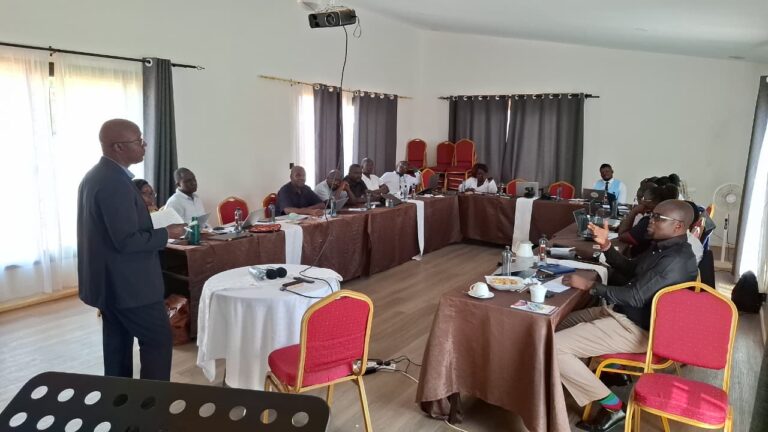
During a high-level plenary bringing together senior county officials, technical experts, and civil society actors, stakeholders took stock of significant gains already made. These include increased civic engagement in the FY 2026/2027 budget process, expanded public awareness through radio programmes, and the establishment of community-led structures to coordinate climate action initiatives.
 ADVERT
Community empowerment has also taken centre stage, with residents trained in Climate Action Adaptation Planning (CAAP), equipping them with the tools to actively participate in decision-making and influence development priorities.
In a major policy shift, Siaya County has initiated a comprehensive review of its Climate Change Policy (2020), Climate Change Act (2021), and draft regulations. The process, to be undertaken in partnership with Jaramogi Oginga Odinga University of Science and Technology (JOOUST), is set to begin in July 2026.
The review is expected to align existing frameworks with emerging climate realities, community priorities, and evolving global standards. The DaCCA consortium has pledged technical and logistical support, signaling a strong public-civil society alignment.
While notable strides have been made — including improved public participation in the Fiscal Strategy Paper and plans to appoint climate focal persons across departments — stakeholders acknowledged persistent gaps.
Key challenges identified include low public awareness of climate policies, limited inclusion of vulnerable groups, and barriers in accessing and interpreting complex budget documents.
Participants called for intensified civic education, simplified and translated budget materials — particularly into Dholuo — and more inclusive engagement frameworks to ensure no community is left behind.
A standout success story emerged from Jera Sub-location in North Ugenya Ward, where the Nyingwe Community Development Group, supported by DaCCA, developed a proposal for a solar-powered water pumping system alongside a potential weir construction project.
The initiative, now under consideration for funding through the Financing Locally-Led Climate Action (FLLoCA) Programme in the 2026/27 financial year, promises to significantly improve access to irrigation and domestic water — a critical step in climate resilience for local farmers.
Looking forward, stakeholders committed to deepening collaboration through joint policy reviews, development of citizen-friendly budget documents, and pilot civic education programmes in targeted wards.
As climate risks intensify, Siaya’s model of inclusive governance, policy reform, and grassroots-driven solutions is emerging as a blueprint for counties seeking to translate climate commitments into tangible local impact.
With political will, community ownership, and strategic partnerships aligning, Siaya is positioning itself at the forefront of devolved climate leadership in Kenya.


