 ADVERT
 ADVERT
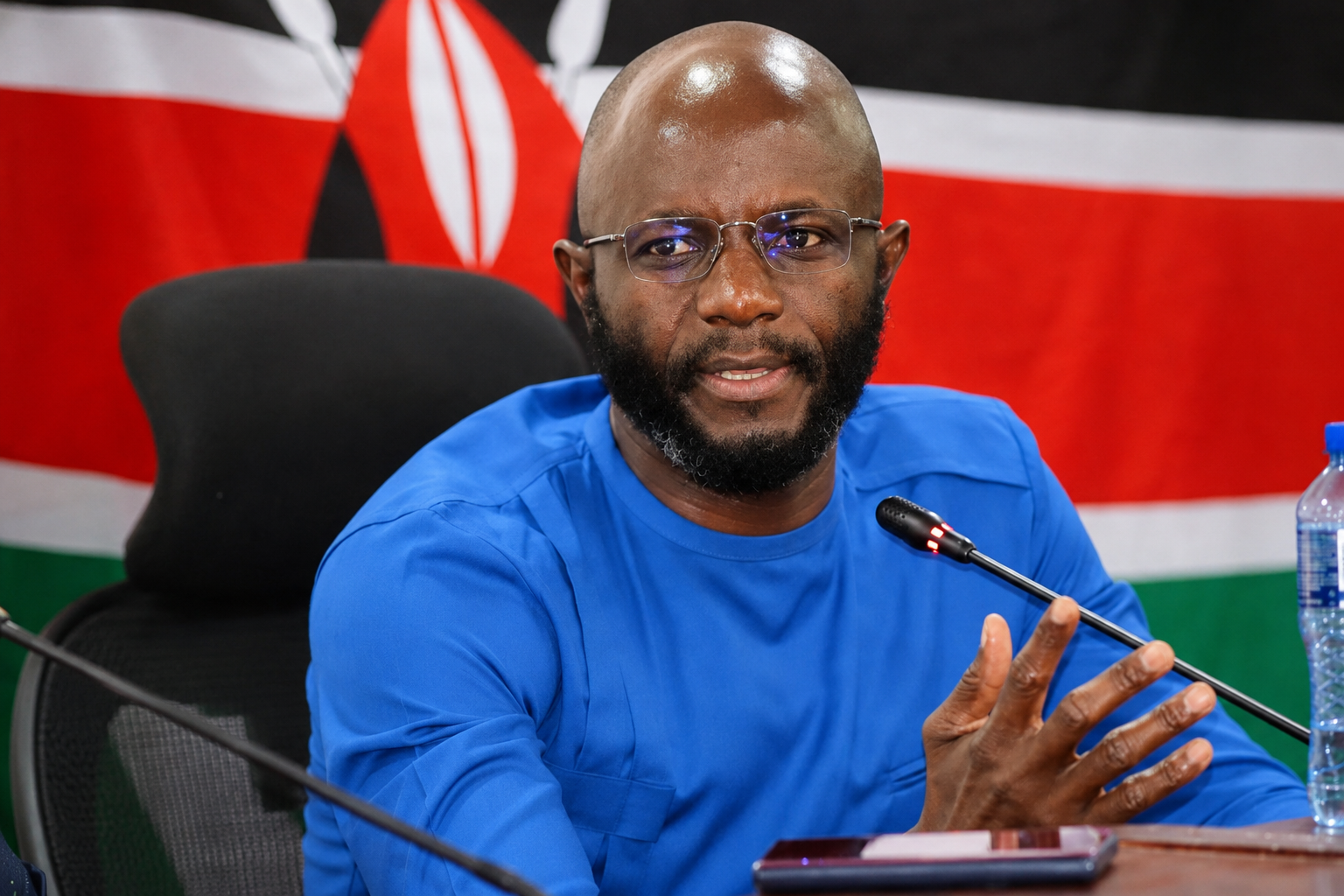
There was a time when Samuel Onunga Atandi could do little wrong in the eyes of Alego-Usonga voters.
Young, articulate, financially endowed and projecting himself as part of a new generation of reform-minded leaders, Atandi broke what many had begun calling the “one-term curse.” After the 2010 Constitution, no Member of Parliament in Alego-Usonga had managed to secure consecutive terms until Atandi defied the trend and won re-election in 2022.
That victory cemented his place among the county’s most influential politicians. His political stock rose even higher when he emerged as one of the closest allies of Siaya Governor James Orengo in the early days of the county administration. Their relationship appeared so warm that political insiders openly spoke of coordinated decision-making between the Governor and the MP, extending even to discussions around the appointment of County Executive Committee Members (CECMs).
For a while, the arrangement projected unity and stability within the ODM political establishment in Siaya.
Then the cracks began to show.
 ADVERT
The Magoha Funeral That Changed Everything
One of the defining public moments came during the funeral of the late Education Cabinet Secretary, Prof. George Magoha.
While eulogising Magoha as a man of integrity who resisted corruption, Gem MP Elisha Odhiambo made remarks that immediately triggered political speculation.
Without naming him directly, Elisha referred to “a certain MP from Alego-Usonga” whom he accused of interfering in county procurement processes, even alluding to dealings involving a Chinese investor.
Although no evidence has been publicly produced proving the allegations, the remarks carried unusual political weight because of who made them.
Until then, Elisha and Atandi had been widely viewed as close political allies. Their friendship had been so visible that videos of the two dancing together during their first parliamentary term had circulated widely on social media.
The public criticism therefore surprised many observers.
Whether the fallout stemmed from political disagreements, personal differences or other unresolved issues remains unclear.
What became evident, however, was that Atandi had lost one of his closest political allies.
The deterioration of Atandi’s relationship with Governor James Orengo soon became impossible to ignore.
At a funeral in Hawinga, Atandi publicly reconciled with former Deputy Governor William Oduol Denge—his in-law—and declared Oduol fit to lead Siaya County.
The symbolism was unmistakable.
Oduol had become Orengo’s fiercest political rival after their dramatic fallout in county government.
By embracing Oduol publicly, Atandi signalled that the once celebrated alliance between him and the Governor had effectively collapsed.
The Untold Role in Orengo’s Victory
Ironically, several political insiders argue that Atandi played a far more important role in Orengo’s 2022 victory than is commonly acknowledged.
One narrative repeatedly shared within Siaya political circles is that Atandi was instrumental in persuading William Oduol to accept the deputy governor position alongside Orengo.
At the time, former Governor Nicholas Gumbo was mounting a formidable challenge, and many believed Orengo required a running mate capable of broadening his electoral appeal.
The family connection may have helped.
Atandi’s elder brother is married to William Oduol’s sister, giving the two politicians a close familial relationship.
Although this account remains part of political recollections rather than officially documented campaign history, supporters of Atandi argue that his behind-the-scenes role deserves greater recognition.
After falling out with Orengo, Atandi appeared to gravitate towards Energy Cabinet Secretary James Opiyo Wandayi.
Political observers say this alliance also brought him closer to ODM Deputy Party Leader Dr. Oburu Oginga, one of the party’s most influential figures.
When the Broad-Based Government arrangement reshaped parliamentary leadership, Atandi eventually became Chairperson of the National Assembly Budget and Appropriations Committee—a powerful position overseeing government expenditure.
Within ODM circles, some interpreted the appointment as recognition of Atandi’s growing influence nationally.
Others viewed it as part of shifting internal power balances within the party.
Those interpretations remain matters of political analysis rather than established fact.
Power often changes politicians.
Critics who once celebrated Atandi’s accessibility now argue that the MP has increasingly become detached from the grassroots.
His public statements, they say, have grown more combative while his political style has become more confrontational.
Supporters counter that leadership inevitably requires difficult decisions and that national responsibilities naturally reduce constant grassroots engagement.
The debate reflects a broader question confronting many second-term legislators: how to balance national prominence with local expectations.
The Mobilisation Question
Perhaps the sharpest criticism facing Atandi concerns his ability to organise mass political movements.
Several recent episodes have fuelled perceptions that his influence on the ground may not be as formidable as his national profile suggests.
Calls for demonstrations over the stalled Jaramogi Oginga Odinga University Siaya Campus project failed to generate significant public participation.
Earlier efforts targeting William Oduol similarly attracted modest crowds, with critics arguing that the turnout fell well below expectations.
More recently, Atandi was linked by political opponents to attempts at youth mobilisation around protests in Kisumu. Such claims remain politically contested, and no official findings have established wrongdoing. Nonetheless, the episode intensified debate over whether his political machinery matches his growing national stature.
Whether these incidents reflect organisational weaknesses or shifting political moods remains open to interpretation.
One of the more politically damaging accusations levelled against Atandi concerns his changing relationship with young people.
During difficult political moments—particularly after the disputed ODM nominations preceding the 2022 General Election—many youth openly rallied behind him.
They defended his candidature, campaigned vigorously and portrayed him as a victim of political injustice.
Today, some of those same supporters feel abandoned.
Recent remarks attributed to the MP warning against youths trailing his expanding entourage have attracted criticism from sections of the public, who argue that leaders should remain accessible to those who helped build their political careers.
His supporters, however, maintain that security concerns surrounding public officials cannot be ignored.
Politics in Alego-Usonga has never been judged solely by speeches.
Voters increasingly demand measurable development.
While Atandi has overseen improvements in educational infrastructure—including classroom renovations, fencing projects and other constituency initiatives—critics argue these interventions have not translated into transformative programmes.
Among the expectations frequently raised during campaigns were expanded bursaries, school feeding initiatives and broader access to affordable education.
Whether sufficient progress has been made remains a matter of political debate, but expectations have undeniably risen during his second term.
Samuel Onunga Atandi remains one of the most influential politicians in Siaya County and within ODM’s emerging generation of leaders.
He occupies one of Parliament’s most consequential financial oversight positions and retains significant political networks at both county and national levels.
Yet politics is ultimately judged at the ballot box.
The goodwill that carried him through two elections cannot be assumed to last indefinitely. Constituents increasingly expect tangible results, humility in leadership and sustained engagement with the grassroots.
In politics, every vote is earned individually. Yesterday’s popularity offers no guarantee of tomorrow’s mandate.
For Atandi, the challenge ahead may not be acquiring greater power in Nairobi. It may be rebuilding the trust and enthusiasm that first propelled him from an ambitious newcomer into one of Siaya’s most prominent political figures.



