 ADVERT
 ADVERT
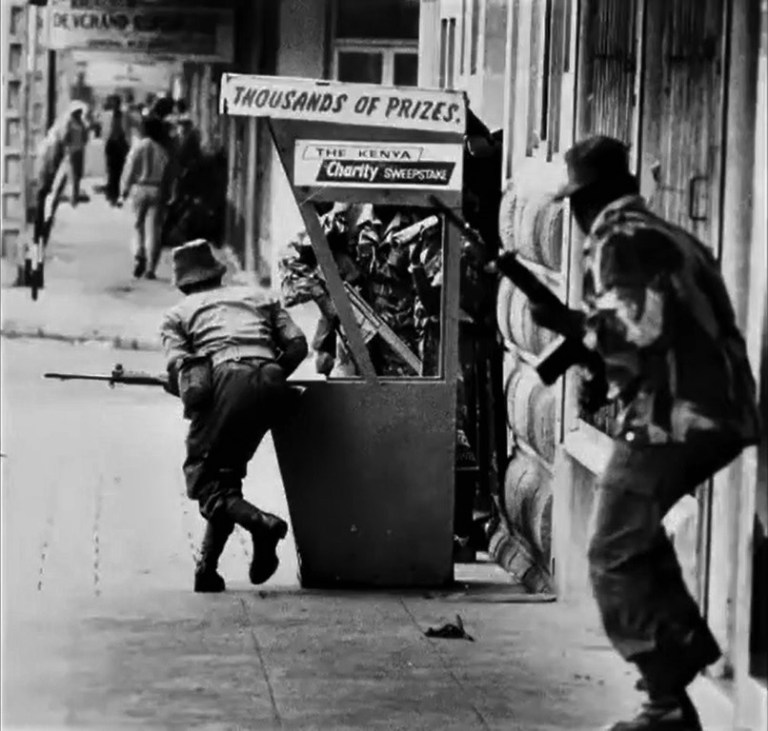
On the morning of August 1, 1982, Kenyans awoke to an announcement that shook the nation to its core. State radio declared that President Daniel Toroitich arap Moi had been overthrown and that a military council led by Hezekiah Rabala Ochuka had taken power.
Within hours, however, the rebellion had collapsed. By sunset, loyalist troops had regained control of Nairobi, hundreds lay dead, and Kenya had entered one of the darkest chapters in its post-independence history.
For decades, official accounts portrayed Ochuka as the mastermind behind the failed coup. Yet a closer examination of historical records, military structures, court proceedings, and testimonies from participants suggests a far more complex story—one in which Ochuka may have been less the architect than the visible face of a conspiracy whose roots stretched deep into Kenya’s political and military establishment.
A Private Soldier at the Centre of a National Crisis
One of the enduring puzzles surrounding the 1982 coup is how a relatively junior serviceman came to be identified as its supreme commander.
 ADVERT
Although popularly referred to as a senior figure in the rebellion, Ochuka was, in reality, a Senior Private in the Kenya Air Force. Historical accounts indicate he had served in relatively junior roles, including duties associated with the Air Force canteen. Within the rigid hierarchy of the armed forces, he possessed neither the command authority nor institutional influence normally associated with planning and coordinating a nationwide military takeover.
Military coups typically require the cooperation of senior officers controlling logistics, communications, armour, aviation and infantry formations across multiple bases. It remains difficult to explain how a junior airman, acting alone, could orchestrate such an operation without wider support.
The Shadow of the Njonjo Era
The attempted coup unfolded against intense political tensions.
Following the constitutional amendment making Kenya a de jure one-party state under Section 2A, divisions within the ruling establishment deepened. Senior politicians, civil servants and military officers increasingly disagreed over the country’s political direction.
One incident frequently cited by historians occurred in 1981, when Andrew Muthemba, a cousin of then Attorney General Charles Mugane Njonjo, was reportedly arrested in Nairobi’s Parklands area after allegedly being found with a cache of sophisticated firearms.
The case generated significant public speculation. Although Muthemba was charged, the eventual outcome of the proceedings has remained the subject of historical debate and conflicting accounts. No conclusive public evidence has established the ultimate disposition of the case.
The episode nevertheless fuelled suspicions that powerful political interests were already involved in covert security manoeuvres before the coup attempt.
The Secret Meetings
Various historical accounts and memoirs have alleged that discussions about removing Moi from power extended well beyond junior Air Force personnel.
According to these accounts, clandestine meetings were held at a house in Nairobi’s Umoja Estate, where disgruntled military officers allegedly debated plans for a coup. These claims remain contested and have not been conclusively verified through official investigations.
The reported disagreement centred not on whether to overthrow the government but when.
Some senior officers allegedly favoured striking during a forthcoming national ceremony where President Moi would be inspecting a military parade, believing the President would be at his most vulnerable.
Others reportedly became frustrated by what they viewed as endless postponements.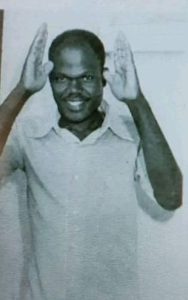
Why the Coup Collapsed
If those accounts are accurate, the decision by Ochuka and fellow rebels to move ahead on August 1 fundamentally altered the operation.
Without coordinated participation from key military installations—including Nanyuki, Gilgil and Kahawa—the rebellion quickly became fragmented.
Eastleigh Air Base managed to seize the national broadcaster, allowing Ochuka to compel broadcaster Leonard Mambo Mbotela to announce that the government had fallen.
But controlling a radio station was not the same as controlling a country.
Many military units never joined the uprising.
Others actively resisted it.
The lack of unified command meant that loyalist forces rapidly regained momentum.
While the rebels controlled Eastleigh Air Base and briefly occupied the Voice of Kenya studios in Nairobi, events unfolding nearly 200 kilometres away at Laikipia Air Base in Nanyuki would ultimately determine the fate of the coup.
According to Nation’s reconstruction of the events, rebel airmen at Nanyuki attempted to compel experienced Kenya Air Force pilots to launch air strikes against strategic government targets in Nairobi, including State House and General Service Unit positions. 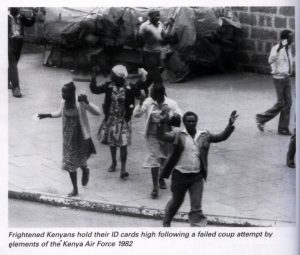
The plan depended on gaining control of Kenya’s most potent military asset—the American-built F-5 Tiger fighter jets stationed at Nanyuki.
Instead, the plot began to unravel.
Rather than joining the mutiny, several loyal pilots quietly sabotaged the operation. Under duress, they taxied the aircraft into the air but deliberately jettisoned their bombs harmlessly over remote terrain near Mount Kenya instead of bombing Nairobi before safely returning to base. Their split-second decisions denied the rebels the overwhelming air superiority they desperately needed.
At virtually the same time, senior commanders elsewhere were moving decisively.
Major General Mahamoud Mohamed, commanding the Army from Lanet, coordinated loyal infantry units drawn from Kahawa, Gilgil and other formations to converge on Nairobi.
While rebel soldiers were still celebrating their early success, government troops methodically retook strategic installations one after another, including the Voice of Kenya studios, effectively silencing the coup’s propaganda machine.
The contrast in command structures was striking.
The loyalists operated through an established military chain of command, coordinating infantry, armour, communications and air assets. The rebels, by contrast, controlled isolated pockets of the Air Force but failed to secure sustained support from the Army, the General Service Unit or most senior commanders. As international observers noted at the time, the mutineers had captured the radio station but lacked the heavy weapons, armour and nationwide military backing required to hold power. 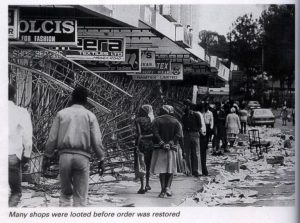
By mid-morning, the outcome had become inevitable.
Without the fighter jets from Nanyuki, without coordinated support from Kahawa and Gilgil, and with loyal commanders rapidly re-establishing control, the rebellion fragmented into isolated pockets of resistance. What had begun as a dramatic attempt to overthrow President Moi had become a disjointed mutiny whose principal actors were already searching for an escape route.
The Battle Within the Military
As fighting intensified, divisions emerged even among soldiers opposed to Moi.
Several historical analyses suggest competing interests existed within sections of the military regarding who should ultimately inherit political power should the coup succeed. These interpretations remain debated among historians and are not established findings of official inquiries.
Loyalist forces, led by senior commanders including Mahamoud Mohamed, moved decisively to suppress the rebellion and restore the constitutional government.
By the afternoon of August 1, the attempted coup had effectively failed.
The Dramatic Escape
Among those fleeing were Ochuka and Pancras Oteyo Okumu.
The pair commandeered a Buffalo military transport aircraft from Eastleigh Air Base and flew out of Kenya, eventually reaching Tanzania.
For a brief moment, they escaped justice.
Their flight, however, merely delayed the inevitable.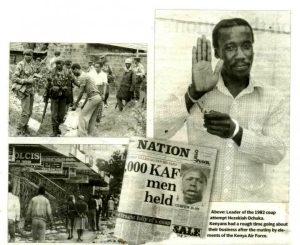
Following diplomatic processes, both men were returned to Kenya to face court-martial on charges of treason.
From Court-Martial to the Gallows
Military courts convicted both Ochuka and Okumu of treason.
Their appeals failed.
On 9 July 1987, nearly five years after the attempted coup, both men were executed by hanging at Kamiti Maximum Security Prison.
Their executions marked the end of one of Kenya’s most dramatic political sagas.
They also occupy a unique place in Kenyan legal history.
Ochuka and Okumu remain the last individuals executed by the Kenyan state. Although Kenyan courts have continued to impose death sentences, no execution has been carried out since July 1987.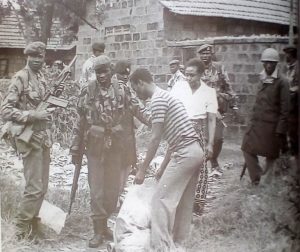
An Unfinished Historical Debate
More than four decades later, the events of August 1, 1982 continue to generate debate among historians, former military officers and political observers.
What is firmly established is that the coup attempt involved elements of the Kenya Air Force, briefly seized the national broadcaster, was defeated by loyalist forces, and culminated in extensive prosecutions and the executions of Hezekiah Ochuka and Pancras Oteyo Okumu.
What remains disputed are broader claims about the extent of planning by senior military officers, the involvement of political elites, and whether Ochuka was the principal architect or the most visible participant in a larger conspiracy. Those claims have appeared in memoirs, journalistic investigations and oral histories but have not been conclusively established by official investigations or court findings.
Even today, the failed coup remains a defining moment in Kenya’s history—a reminder of how political tensions, military divisions and competing ambitions nearly altered the course of the nation in a single day.



