 ADVERT
 ADVERT
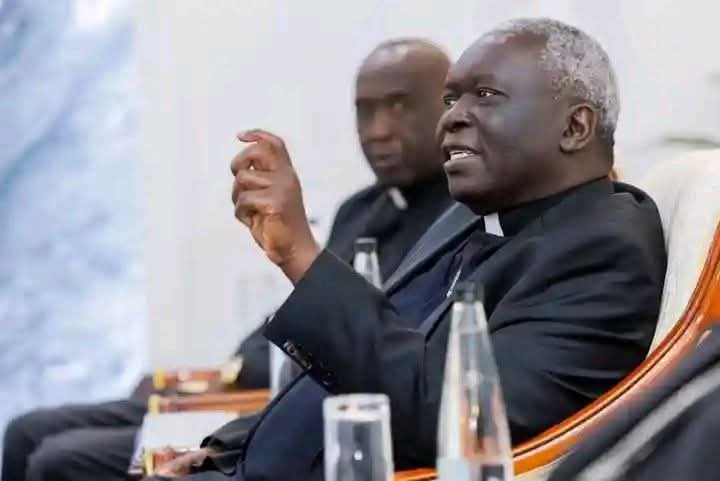
President William Ruto meets four Archbishops under the Kenya Conference of Catholic Bishops:
-His Grace Philip Anyolo — Nairobi.
– Most Rev. Maurice Muhatia — Kisumu.
– Archbishop Anthony Muheria — Nyeri.
– Coadjutor Archbishop Dominic Kimengich — Mombasa.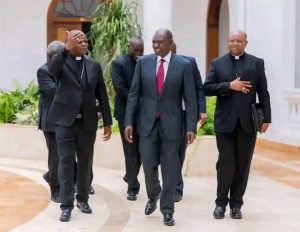
The meeting presents an important moment for dialogue between Kenya’s political leadership and the Catholic Church. But it also raises a deeper and more uncomfortable question about the role of the Church in public life: is the Church speaking with the same prophetic courage, independence and moral authority associated with some of the great religious leaders of Kenya’s past?
Do we have among today’s Church leaders the character and conviction of the late Eminence Cardinal Maurice Michael Otunga, Archbishop Ndingi Mwana’a Nzeki, or, from the Anglican tradition, Bishops Henry Okullu and Alexander Muge?
Or, beneath the appearance of a formal and respectable meeting, could there be a deeper contradiction between the Church’s spiritual calling and the political realities surrounding such engagements?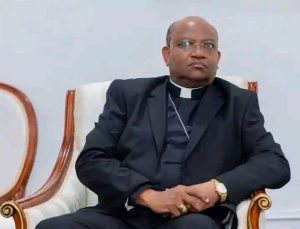
 ADVERT
That is why I will always have a special love and respect for Cardinal Otunga, Archbishop Ndingi Mwana’a Nzeki, Bishop Henry Okullu, Bishop Alexander Muge and Cardinal John Njue. To me, their names represent a tradition of Church leadership that understood that religious authority must never become a servant of political convenience.
Their legacy reminds us that the Church should not be afraid to speak truthfully, courageously and prophetically, regardless of who occupies State House or which political party is in power.
THE QUESTION OF VOCATION, SERVICE AND CONTEMPLATION:
At the heart of this debate is also the meaning of religious vocation itself.
At one time, the Very Rev. Fr. John Marengoni MCCJ, the founder of the Congregation of the Apostles of Jesus (AJ), the Contemplative Fathers (CEC), and the Evangelizers Sisters of Mary, among other religious initiatives, posed a fundamental question to Religious Congregations, Orders and Secular Orders within the Catholic priestly and Brotherhood-based life in his documentaries: Is a vocation fundamentally a sign of service, or is it a contemplative calling?
The Church’s answer was that it is contemplative.
If that is so, then the Church must remain faithful to its spiritual calling. It must not deceive President Ruto, take political sides, or allow itself to become an instrument of political interests.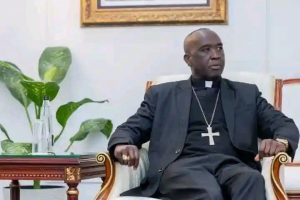
The Church must speak with honesty, prudence and courage while maintaining its prophetic independence.
THE CHURCH MUST SPEAK TRUTH TO RUTO:
A meeting between political leaders and Church leaders is not, by itself, wrong. Dialogue between the State and the Church can be valuable and necessary for the good of society.
But such dialogue must be grounded in truth, justice, human dignity, service and the common good—not political convenience.
The Church has a sacred responsibility to speak truth to power, but it must also speak truth to the people.
Its mission is not to please presidents, opposition leaders or any political faction. Its mission is to serve God and humanity, defend the dignity of every person, and remain a moral voice for justice, peace, accountability and reconciliation.
If President Ruto is doing something right, the Church should acknowledge it. If he is doing something wrong, the Church should have the courage to tell him so. That is not hostility; it is the responsibility of a prophetic Church.
Likewise, if the opposition is wrong, the Church should say so. If the government is wrong, the Church should say so. Truth cannot change according to political alliances.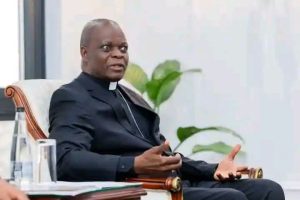
REMEMBERING THE PROPHETIC VOICE OF THE PAST:
The legacy of Cardinal Otunga, Archbishop Ndingi, Bishop Okullu and Bishop Muge reminds us that religious leadership is ultimately about conscience, truth, courage and service.
The Church must therefore remain contemplative in spirit, courageous in truth and impartial in its dealings with political authority.
Kenya does not need a Church that merely sits at the table of political power. Kenya needs a Church that can sit at that table and still retain the courage to say NO when justice demands it.
The Catholic bishops should therefore tell President Ruto the truth—not what is politically convenient, not what is comfortable to hear, and not what will protect relationships with those in power, but what conscience, faith and the common good require.
THE CHURCH MUST NEVER LOSE ITS PROPHETIC VOICE:
Written by A Catholic Ex-Seminarian Alphonso Bernard Otieno


