 ADVERT
 ADVERT
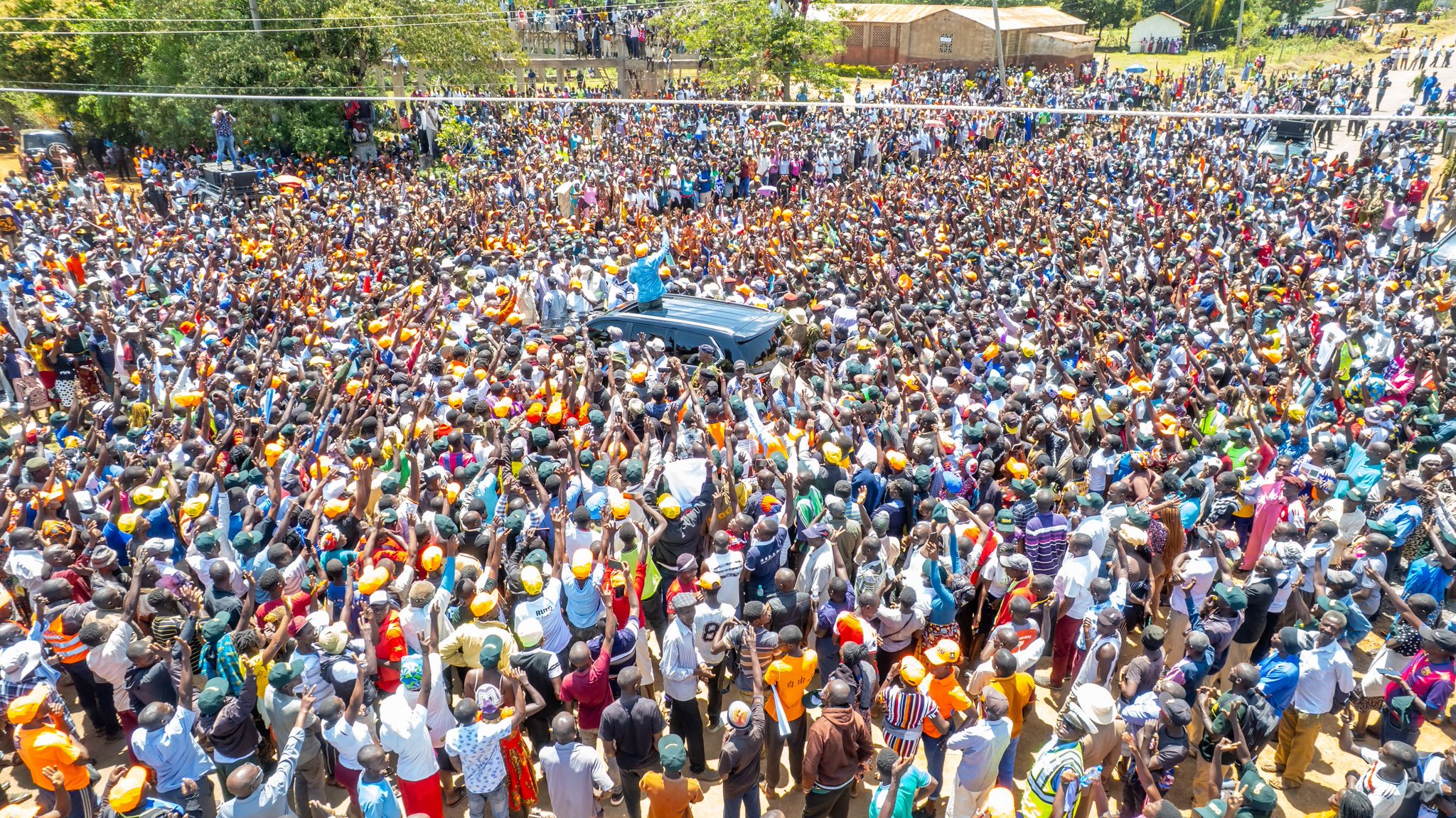
President William Ruto’s development tour of Siaya on Tuesday offered something more revealing than the official speeches, project inspections and carefully choreographed political optics. Beneath the public spectacle was a more consequential contest: the struggle to define Siaya’s political future ahead of the 2027 General Election.
And, if anything, the tour demonstrated that Siaya politicians have not yet mastered the increasingly sophisticated art of reading their own political environment.
Some leaders appeared before the President with the enthusiasm of excited choirboys, seemingly more interested in being seen beside power than in understanding what the occasion meant for their own political positioning. Yet the most consequential politics was arguably taking place away from the microphone.
The loudest lesson came from Rarieda, where County Assembly Speaker George Okode found himself struggling to address an unreceptive crowd. His attempt to rally residents behind Rarieda MP Otiende Amollo was met with heckling, eventually forcing him to curtail his remarks. Okode subsequently attributed the hostility to his political rivalry with former Rarieda MP Nicholas Gumbo, with both figures positioning themselves for the Siaya governorship.
That explanation may contain an element of truth. But politically, it misses the larger lesson.
 ADVERT
A politician cannot blame every hostile crowd on an opponent. Sometimes the crowd is telling you something about your own political standing.
Crowd psychology is notoriously difficult, particularly in Kenyan politics, where public gatherings can contain competing interests, organised supporters, genuine enthusiasts and people who have come simply to witness political theatre. The ability to distinguish between these constituencies—and to anticipate how they may react—is part of the political craft.
That is where Okode appeared exposed.
His difficulty was not necessarily that he lacked supporters. It was that he seemed unable to establish command of the moment once the audience turned against him. Modern political communication cannot be conducted exclusively through WhatsApp groups, carefully selected meetings and sympathetic audiences. It requires professionals who understand the political mood on the ground.
Okode may therefore need more than political mobilisation. He needs a serious communications and public-relations operation capable of conducting political intelligence, managing hostile environments and advising him on when to speak, what to say and, sometimes, when to say nothing.
The politics behind the microphone
Curiously, however, the most interesting political development of the day may have been the prominence given to MDG party leader David Ochieng.
At several stopovers—including Bondo, Rarieda, Siaya town and Ugenya—Ochieng appeared to command a significant share of the speaking space. That should not be dismissed as ceremonial protocol.
In politics, the distribution of microphones is itself a message.
Ochieng has been steadily constructing an identity beyond the traditional political architecture of Siaya. His ability to occupy political space during a presidential tour in a county historically associated with ODM was therefore significant.
The real question is not merely why he was allowed to speak, but what political calculations made his prominence acceptable to the various actors surrounding the President.
That is where the deeper Siaya story begins.
The county’s politics is increasingly being shaped by alliances, counter-alliances, quiet negotiations and strategic positioning ahead of 2027. The public speeches are often merely the visible surface of a much larger political chessboard.
Wandayi and the danger of underestimating veterans
The Ugenya episode involving Energy and Petroleum Cabinet Secretary James Opiyo Wandayi offered another illustration of the difference between political experience and political theatre.
Wandayi has previously made remarks suggesting that the Siaya governorship could go to Rarieda. Whether those remarks were intended as political positioning, regional balancing or merely an observation at the time, they inevitably created sensitivities in other parts of the county.
If attempts were made to turn the Ugenya crowd against him, Wandayi appeared better prepared for the political terrain than some of his colleagues.
That is the difference between a veteran politician and a politician merely occupying political space.
Wandayi has spent decades navigating the internal mechanics of Luo and national politics. He understands that political hostility is rarely spontaneous in its entirety—and that a crowd can change mood quickly. More importantly, experienced politicians understand that political contests are often won before the public confrontation begins.
One should therefore be cautious about assuming that what happened on the podium represented the whole political contest.
It almost certainly did not.
Orengo’s quiet political masterstroke
Then there was Governor James Orengo.
Unlike some of his colleagues, Orengo appeared remarkably subdued. He walked alongside President Ruto, producing the kind of images that politicians understand can sometimes communicate more than speeches.
The optics were useful.
Orengo has increasingly become a punching bag for sections of ODM politics in Siaya, particularly as succession politics gathers momentum. His critics have questioned his political alliances, his administration and his intentions regarding a second term.
Yet standing beside the President presented a different image: the sitting governor as the constitutional host engaging the Head of State.
It was a politically intelligent moment.
Orengo did not need to compete for the microphone. The photograph did much of the work.
It also offered him a degree of insulation from the political umbrage that might otherwise have accompanied his interaction with the President. In politics, sometimes silence is not weakness; it is tactical economy.
The old political hands still understand the game
The day’s events ultimately demonstrated an uncomfortable truth for Siaya’s emerging political class.
The old political hands still understand the game.
They know that politics is not simply about who speaks longest, who receives the loudest applause or who posts the most impressive photographs on social media. It is about networks, timing, intelligence, alliances, perception and the ability to anticipate what happens next.
The younger or newer contenders for Siaya’s governorship would do well to understand this.
The 2027 race will not be won on WhatsApp.
It will not be won through carefully manufactured social-media popularity.
And it certainly will not be won by standing beside a visiting President and looking sufficiently enthusiastic.
It will be won by whoever develops the most sophisticated understanding of Siaya’s political constituencies—and converts that understanding into a credible coalition.
The lesson for Siaya’s politicians
President Ruto’s visit therefore provided a useful political X-ray.
It exposed leaders who were comfortable in controlled political environments and those who could improvise when circumstances changed. It revealed the importance of networks and political intelligence. It demonstrated the continuing influence of established political actors while simultaneously giving emerging figures such as David Ochieng an opportunity to expand their visibility.
Most importantly, it reminded everyone that the politics of Siaya is much more complicated than the speeches delivered from presidential podiums suggest.
The real drama was not necessarily what the public heard.
It was what politicians were negotiating, calculating and positioning for before, during and after the President’s convoy moved on.
For George Okode, the message should be particularly clear: politics cannot be managed from WhatsApp groups. If he seriously intends to compete for the governorship, he needs professionals who understand Siaya beyond social-media echo chambers—people capable of reading crowds, mapping constituencies, anticipating hostility and translating political intelligence into strategy.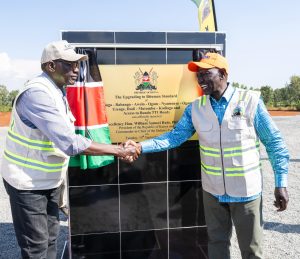
For everyone else, Tuesday offered an equally important warning.
In Siaya politics, never confuse proximity to power with possession of power.
The cameras may have captured the politicians on the podium.
The real political game was being played somewhere else.


