 ADVERT
 ADVERT
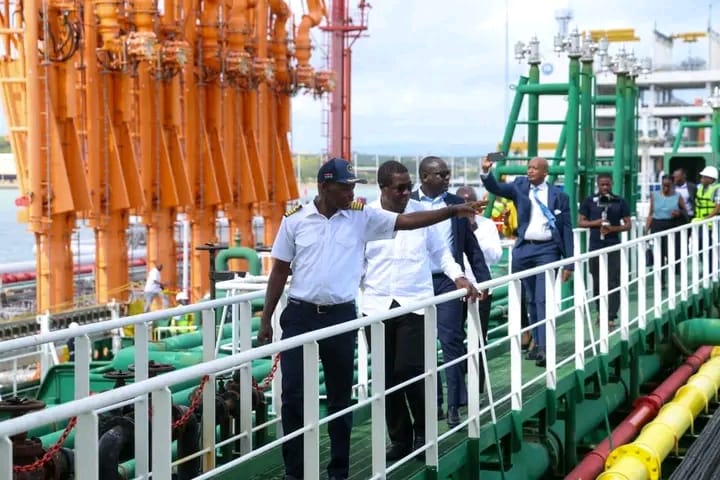
The arrival of MT Sea Wolf carrying Rwanda’s first 40,000-tonne bulk consignment of refined petroleum products through Mombasa is more than a fuel delivery. It is a test of whether Kenya can turn strategic infrastructure into sustained regional economic power.
The docking of MT Sea Wolf at the Kenya Pipeline Company’s Kipevu Oil Terminal 2 (KOT2) on Tuesday has opened a new chapter in Kenya-Rwanda energy cooperation, activating a structured route through which Rwanda will import bulk refined petroleum products via the Northern Corridor.
The 40,000-tonne maiden cargo, destined for Rwanda National Energy Company (RNEC), follows a framework agreed by Kenya and Rwanda in June 2026. Under the arrangement, Rwanda independently sources its petroleum products while relying on Kenya’s port, pipeline and storage infrastructure to move them inland.
That makes the arrival significant well beyond the petroleum sector.
It places Mombasa, the Northern Corridor and Kenya’s energy infrastructure at the centre of a regional supply chain connecting the Indian Ocean to one of East Africa’s fastest-integrating economies.
 ADVERT
For Kenya, the opportunity is clear: convert geographical advantage and infrastructure investment into a durable regional logistics and energy business.
For Rwanda, the arrangement offers another structured supply route and greater flexibility in securing petroleum products essential to transport, agriculture, manufacturing, construction and commerce.
The June agreements—comprising a Memorandum of Understanding, a Tripartite Agreement and a Transport and Storage Agreement—established the legal and operational framework for the new arrangement. Rwanda will use Kenya’s petroleum infrastructure for transportation and storage, with Kenya Pipeline Company playing a central operational role.
The significance of the deal becomes even clearer when viewed against the wider Northern Corridor.
The corridor connects the Port of Mombasa with land-linked economies including Rwanda, Uganda, Burundi, South Sudan and eastern Democratic Republic of Congo. Its importance lies precisely in converting Kenya’s access to the Indian Ocean into an economic gateway for countries that do not have direct access to the sea.
Mombasa’s regional moment
For years, Mombasa has been described as a gateway to East Africa. The Rwanda petroleum deal gives that description a more concrete meaning.
A port does not become a regional hub simply because ships dock there. Its real value is determined by what happens after cargo leaves the vessel: how efficiently it is discharged, stored, transported, documented, regulated and delivered to its final market.
That puts Kenya’s institutions under a new level of scrutiny.
The Kenya Ports Authority must provide efficient marine and cargo-handling services. KPC must ensure reliable transportation and storage. The Energy and Petroleum Regulatory Authority must maintain regulatory oversight, product quality and safety standards. Customs, security, standards agencies, transport operators and border authorities must ensure that the entire chain functions with minimum friction.
Regional logistics is only as strong as its weakest link.
A delay at the port can become a delay on the highway. A documentation problem can become a border bottleneck. An infrastructure failure can increase costs hundreds of kilometres away. Conversely, an efficient system can make Kenya the preferred logistical bridge between the coast and inland markets.
This is where the Rwanda arrangement becomes strategically important.
Kenya has already invested heavily in the infrastructure required to serve regional petroleum markets. KPC’s 2026 information memorandum identifies Mombasa as the principal entry point for domestic petroleum products and a substantial share of transit imports serving Uganda, South Sudan, Rwanda, eastern DRC and Burundi. It projects transit imports through Mombasa rising from about 4.1 million cubic metres to 5 million cubic metres between FY2024/25 and FY2029/30.
The new Rwanda arrangement therefore fits into an existing regional commercial architecture rather than creating an entirely new one.
From 42,000 cubic metres to a much bigger market
The scale of the opportunity is particularly striking.
Kenya and Rwanda’s new framework is expected to increase Rwanda’s petroleum imports through the Northern Corridor substantially. Figures released around the June agreement indicated a potential rise from approximately 42,000 cubic metres handled in 2025 to more than 500,000 cubic metres annually under the new arrangement.
That is not simply additional fuel passing through Mombasa.
It means additional demand for storage, pipeline transportation, trucking, insurance, finance, logistics management, maintenance, security and other services.
It also creates an incentive to examine the entire Northern Corridor as one economic ecosystem.
The strategic question for Kenya is therefore no longer whether Mombasa can receive Rwanda’s fuel.
It is whether Kenya can build a sufficiently efficient regional logistics system to make Mombasa the natural commercial gateway for a growing inland market.
The infrastructure must work as one system
The temptation with major infrastructure projects is to celebrate the physical asset—the port, pipeline, terminal or highway—as the achievement.
But infrastructure only creates economic value when the systems surrounding it function properly.
KOT2 can receive vessels efficiently, but that efficiency must translate into timely evacuation. Pipelines can move petroleum safely, but inland storage and distribution must keep pace. Roads can carry cargo, but border procedures must prevent unnecessary delays.
The next phase must therefore be about integration.
Kenya needs continued investment in maintenance, digital cargo tracking, storage capacity, safety systems, pipeline reliability and border efficiency. It must also reduce unnecessary administrative duplication and ensure that the cost of moving goods through the Northern Corridor remains competitive.
This is particularly important because regional trade is never guaranteed.
Rwanda and other land-linked economies have choices. Their supply chains are influenced by cost, reliability, security, transit time and predictability. Kenya’s infrastructure advantage can only translate into sustained business if the entire service chain performs consistently.
Beyond petroleum: the economics of connectivity
The Rwanda fuel arrangement also demonstrates why regional infrastructure should not be viewed narrowly as a collection of government projects.
A petroleum shipment creates business opportunities far beyond the terminal.
Transporters move the product. Banks finance transactions. Insurers manage risks. Engineers maintain infrastructure. Technology companies provide tracking and data systems. Warehouses support distribution. Mechanics service vehicles. Security firms protect cargo. Professional firms provide legal, accounting and compliance services.
This is where regional trade can translate into domestic economic opportunity.
Counties along the Northern Corridor should be positioned to capture part of that value through local enterprise development, skills training and service provision. Young professionals can find opportunities in supply-chain management, engineering, information technology, environmental management, safety and logistics.
Regional cargo should therefore not be regarded merely as something passing through Kenya.
It should become an economic multiplier within Kenya.
A diplomatic agreement with commercial consequences
The deal also illustrates the growing importance of economic diplomacy in East Africa.
Kenya and Rwanda’s June agreement was not simply a political declaration. It established specific institutional relationships involving the governments of the two countries, RNEC and KPC.
That matters because regional integration becomes meaningful when governments create practical systems that businesses and citizens can actually use.
Rwanda’s dependence on efficient access to regional and international markets makes the Northern Corridor strategically important to Kigali. Rwanda has previously emphasised the importance of predictable, cost-effective access to Mombasa, while Kenya has promoted the port as a gateway to the wider region.
The fuel arrangement gives that relationship a tangible economic dimension.
It can also create a foundation for wider cooperation in electricity, renewable energy, transport, industrial development and trade facilitation.
The next challenge: delivering consistently
The inaugural cargo will generate headlines, but its real significance will be determined by what happens after the headlines disappear.
Can future shipments be handled with the same efficiency?
Can Kenya maintain competitive costs?
Can KPC provide dependable pipeline and storage services?
Can regulatory agencies safeguard quality and safety without creating unnecessary delays?
Can border and transport systems cope with increased volumes?
And can Kenya convert increased regional traffic into opportunities for local businesses and employment?
Those are the questions that will determine whether this becomes a successful long-term regional supply chain or simply another infrastructure milestone.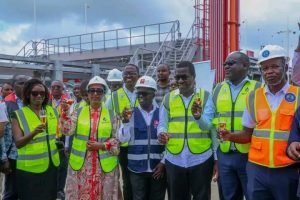
Kenya should therefore resist complacency.
Regional markets are competitive. Infrastructure must be maintained. Technology must continuously improve. Procedures must evolve. Capacity must be expanded before congestion becomes a problem.
The objective should be to make the Northern Corridor so predictable that businesses can plan around it with confidence.
Petroleum today, cleaner energy tomorrow
There is another dimension that should not be overlooked.
Petroleum remains critical to East Africa’s current transport and industrial economy, but regional governments are simultaneously under pressure to expand renewable energy, electricity infrastructure and cleaner technologies.
Kenya’s regional energy ambitions should therefore not stop at petroleum.
The country can leverage its existing logistical and technical capabilities to become a broader regional energy centre—linking petroleum logistics with electricity trade, renewable energy investment, engineering expertise, energy technology and clean-energy innovation.
The infrastructure being strengthened today should ultimately be capable of supporting tomorrow’s changing energy economy.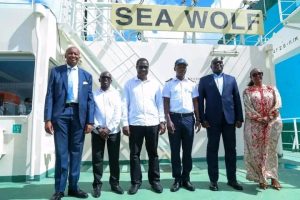
A new test of Kenya’s regional leadership
The arrival of MT Sea Wolf is therefore best understood as a beginning rather than an endpoint.
It demonstrates that Kenya’s port, pipeline and storage infrastructure can serve markets beyond its borders and that regional governments are prepared to use practical economic cooperation to strengthen energy security.
The wider opportunity is considerably larger.
Kenya can use Mombasa and the Northern Corridor to deepen its role as an energy and logistics gateway for East and Central Africa. Rwanda, meanwhile, gains another structured mechanism for securing petroleum supplies and strengthening the resilience of its economy.
The immediate task is to make the system work—and keep it working.
That means professional institutions, transparent processes, competitive costs, reliable infrastructure, effective regulation and serious investment in capacity.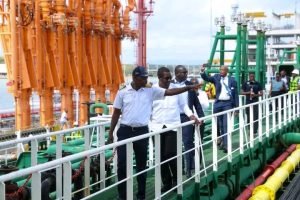
The strategic prize is not merely more fuel passing through Mombasa.
It is a regional economy in which Kenya’s infrastructure becomes a platform for trade, Rwanda’s businesses gain reliable access to essential energy, and communities along the corridor capture a greater share of the economic value created by regional commerce.
Mombasa has received the vessel.
Now Kenya must deliver the efficiency, reliability and institutional discipline that will determine whether this new energy corridor becomes a lasting engine of regional prosperity.


