 ADVERT
 ADVERT
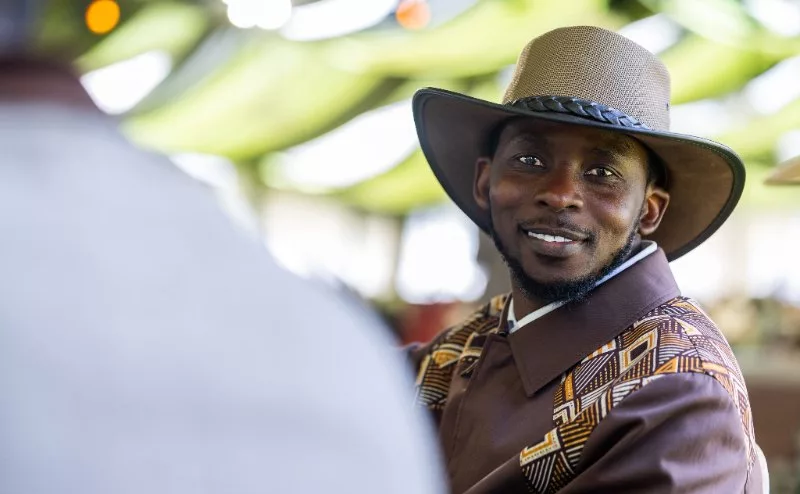
Charlene Ruto’s Tanzanian fiancé has an impressive trail of entrepreneurship, youth advocacy and international recognition. But beyond the glamour of the Koito ceremony, important questions remain about his businesses, wealth, influence and the man behind the headlines.
The music has stopped. The traditional dances are over. The guests have departed from Intonna Heritage Farm in Kilgoris.
But as the glamour surrounding Charlene Ruto’s high-profile Koito ceremony begins to fade, one question is likely to remain on the lips of many Kenyans and Tanzanians:
Who exactly is Isaya Yunge?
The question is not merely idle curiosity.
 ADVERT
Yunge has suddenly become connected to one of East Africa’s most politically powerful families after his traditional engagement to Charlene Ruto, daughter of President William Ruto.
That new proximity to power inevitably puts his professional history, business interests, wealth and influence under a much brighter public spotlight.
And there is already a fascinating story to tell.
Contrary to the impression that Yunge is simply a businessman who appeared on Kenya’s radar because of his relationship with Charlene, his professional journey began long before the Koito ceremony.
He has spent years building a profile around technology, education, youth empowerment and social entrepreneurship.
Yet, equally intriguing is what remains unclear.
A childhood far removed from privilege
Yunge’s story begins in Mwanza, Tanzania, where he was born and raised.
His biography, documented by Ashoka when it selected him as a Fellow, describes a childhood marked by hardship, family separation and periods spent in foster homes.
He reportedly did not begin formal education until he was seven and, at one point, lived on the streets of Mwanza.
Rather than allowing those circumstances to define him, Yunge became involved in initiatives supporting vulnerable children.
As a teenager, he persuaded Radio Free Africa to create a programme through which street children could discuss their experiences.
The initiative attracted the attention of UNICEF and eventually helped propel him into international youth advocacy.
At 17, Yunge was selected as a UNICEF African Youth Ambassador and attended the 2007 G8-related youth summit in Germany.
That was almost two decades before his name became associated with the Ruto family.
It is therefore important to establish one point from the outset:
Yunge did not become prominent because he met Charlene Ruto.
His public record predates the relationship by many years.
The idea that became SomaApp
The defining chapter in Yunge’s entrepreneurial journey appears to have begun during his university years.
He noticed that African students were missing opportunities to study abroad because information about scholarships was fragmented, difficult to find and often inaccessible to students from disadvantaged backgrounds.
His response was SomaApp.
The platform was designed to connect students with scholarship opportunities and, importantly, help them identify opportunities for which they had a realistic chance of qualifying.
According to Ashoka, Yunge created SomaApp in 2016 and developed an automated system capable of matching students with relevant scholarship opportunities.
The organisation says that by the end of 2018, some 15,000 students had used the platform and that students had secured approximately $850,000 worth of scholarships, short courses and conference opportunities.
Those figures belong to the period covered by Ashoka’s profile and should not automatically be interpreted as current performance.
But they demonstrate that SomaApp was not merely an idea written on a piece of paper.
It had users, a business model and measurable social impact.
From social entrepreneur to internationally recognised innovator
Yunge’s work attracted international recognition.
In 2018, he was among the Tanzanians who received the prestigious Queen’s Young Leaders Award, recognition associated with his work using technology to expand educational opportunities.
The same period saw another significant milestone.
Yunge was named among Forbes Africa’s 30 Under 30 in the technology category, where he was identified as the founder of SomaApps Technologies.
That distinction is important in understanding the man who now stands beside Charlene Ruto.
He was already being recognised as an emerging African technology entrepreneur at a time when his connection to Kenya’s political establishment was not part of his public identity.
His story therefore cannot fairly be reduced to that of a man who married into prominence.
He had accumulated prominence of his own.
The entrepreneur behind the entrepreneur
Yunge’s business interests subsequently appear to have expanded beyond educational technology.
He has been associated with GOODSAM Technologies, which has been described as working on affordable technology products and digital solutions.
He has also been identified as a co-founder of Smart Kaya, a venture focused on smart-home technology and artificial-intelligence-enabled devices.
This represents an interesting evolution.
The young man who initially sought to help African students find scholarships was increasingly moving into hardware, artificial intelligence and consumer technology.
That trajectory is consistent with the profile of an entrepreneur attempting to build technology products for African markets rather than simply importing existing ideas.
But it also brings us to the first major unanswered question.
So, how wealthy is Isaya Yunge?
This is where the public conversation needs considerably more discipline.
There is a tendency whenever a prominent personality becomes engaged to a member of a political family to attach enormous wealth estimates to the individual.
But recognition by Forbes is not proof of billionaire status.
Neither is receiving an international award.
Nor does founding a technology company automatically tell us how much money its founder has in the bank.
Yunge’s public record establishes that he has founded and led technology ventures.
It establishes that he has received major international recognition.
It does not, on the evidence currently available, establish the precise value of his personal assets, the current valuation of his companies, their annual revenues or the size of his equity holdings.
Those distinctions matter.
The difference between being an accomplished entrepreneur and being a wealthy entrepreneur is enormous.
The two are often casually conflated.
What happened to SomaApp?
This is another question deserving closer scrutiny.
SomaApp was once presented as a promising platform with thousands of users and significant social impact.
But what is its current operational status?
How many active users does it have today?
What is its current revenue?
Is it still Yunge’s principal business?
Has it been transformed, sold, merged or superseded by other ventures?
And if the business model has changed, what does the new structure look like?
These are legitimate business questions—not allegations.
A serious profile of a high-profile entrepreneur should answer them.
And what exactly is GOODSAM?
The same scrutiny applies to GOODSAM Technologies.
Public profiles identify Yunge as its founder and chief executive and describe the company as working on technology products and building Africa’s digital future.
But the public record does not provide a comprehensive picture of the company’s present financial position, ownership structure, assets, revenues or valuation.
That gap becomes more significant now that its chief executive is entering the family orbit of a sitting Kenyan president.
Again, this does not imply wrongdoing.
It simply means that proximity to political power makes transparency more important, not less.
The Charlene factor changes everything
Before the Koito, Yunge could largely operate within the world of technology, entrepreneurship and youth development.
That privacy has now disappeared.
Charlene Ruto is not an ordinary public figure.
She is the daughter of Kenya’s sitting President.
Her relationship with Yunge has consequently transformed his public profile almost overnight.
The August 8 Koito ceremony at Intonna Heritage Farm in Kilgoris brought together the Ruto family, Yunge’s family, friends and a number of prominent political and public figures.
Images of the couple dressed in coordinated traditional attire quickly circulated across Kenya and Tanzania.
For many Kenyans, however, the photographs raised a more fundamental question:
Who is the man standing next to the President’s daughter?
The answer is more nuanced than the social-media rumours.
A man with credentials—but also unanswered questions
The evidence available paints Yunge as a genuine technology entrepreneur with a long history of youth advocacy.
He has been recognised by UNICEF-related youth initiatives.
He was a Queen’s Young Leaders Award recipient.
He was included in Forbes Africa’s 30 Under 30.
He became an Ashoka Fellow.
He founded SomaApp and has subsequently been associated with other technology ventures.
That is a formidable résumé.
But journalism must resist the temptation to turn a résumé into mythology.
Awards establish recognition.
They do not establish net worth.
Company titles establish leadership.
They do not necessarily establish ownership.
Past success establishes achievement.
It does not automatically establish present financial strength.
And this is precisely where the Yunge story becomes interesting.
The unanswered questions
As his relationship with Charlene moves towards marriage, several questions deserve straightforward answers.
What companies does Yunge currently own or control?
What percentage of those companies does he own?
What are their current revenues and valuations?
What is the present status of SomaApp?
What is the scale of GOODSAM Technologies?
What other investments does he have in Tanzania, Kenya or elsewhere?
Has his business footprint changed since his relationship with Charlene became public?
And will his new proximity to Kenya’s first family create new commercial opportunities?
None of these questions should be interpreted as an accusation.
They are the natural questions that arise when private enterprise intersects with political power.
The bigger East African story
There is also a broader dimension to the Yunge-Charlene relationship.
The couple brings together two countries whose political, economic and cultural ties are already deep.
Kenya and Tanzania are the two economic heavyweights of East Africa, with extensive trade, investment, tourism and diplomatic relations.
A marriage linking the family of Kenya’s President to a Tanzanian technology entrepreneur is therefore inevitably going to attract interest beyond the romance itself.
But it would be unfair to suggest that Yunge’s nationality or relationship with Charlene automatically creates a political or commercial arrangement.
There is currently no evidence establishing such a connection.
The responsible position is to distinguish what is known from what remains unknown.
Beyond the Koito photographs
The most compelling part of Isaya Yunge’s story may therefore have little to do with the Koito ceremony.
It lies in the extraordinary journey from a difficult childhood in Mwanza to international youth advocacy, technology entrepreneurship and global recognition.
It lies in a young man who reportedly encountered poverty early in life but subsequently tried to use technology to open educational opportunities for other young Africans.
And now, almost two decades after appearing on an international youth stage, he finds himself preparing to join one of Kenya’s most prominent political families.
That is a remarkable journey.
But it is also a journey that now deserves deeper scrutiny.
Not because Yunge is accused of anything.
Not because marrying Charlene Ruto makes him automatically suspect.
But because public prominence brings public questions.
The first family of Kenya attracts scrutiny by virtue of its position.
Anyone entering that family’s inner circle will inevitably attract some of the same attention.
For Yunge, the challenge will be to demonstrate that the impressive story contained in his biographies matches the businesses, assets and entrepreneurial achievements that exist today.
The verdict is not yet in
So, who is Isaya Yunge?
The evidence suggests he is far more than “Charlene Ruto’s Tanzanian fiancé.”
He is a technology entrepreneur whose journey began in youth advocacy, whose educational technology venture earned international recognition, and whose career has subsequently expanded into broader digital and technology ventures.
But there is still much the public does not know.
And that is where the story should now move.
The next investigation should not be about what Yunge wore at the Koito, who attended the ceremony or how glamorous the occasion was.
It should examine the business empire behind the man.
Company records.
Ownership structures.
Investments.
Corporate partnerships.
Revenue.
Assets.
Current ventures.
And, above all, the relationship—if any—between his growing personal proximity to political power and his commercial interests.
Because the Koito may have united two families.
For the journalists watching East Africa’s corridors of power, it may have opened an entirely new file.
The ceremony is over. The photographs will fade. But the questions about Yunge have only just begun.



