 ADVERT
 ADVERT
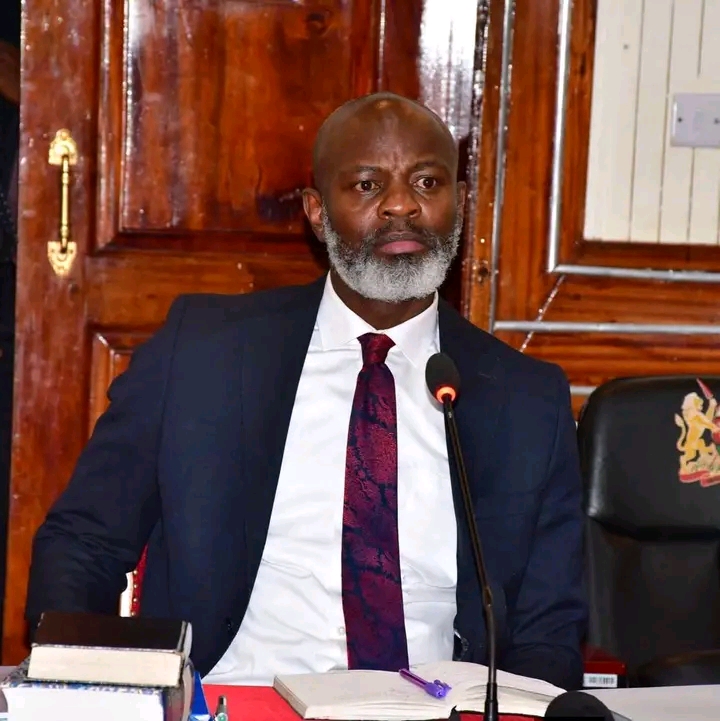
George Nyingiro may not be an angel. But neither is the Siaya County Assembly. Before it buries his nomination, the House owes the public a far more convincing explanation than politics, personalities and a questionable record of oversight.
There is something profoundly uncomfortable about the latest standoff between Governor James Aggrey Bob Orengo and the Siaya County Assembly over George Odhiambo Nyingiro.
Nyingiro is hardly an untouchable saint. His tenure in the Finance and Economic Planning docket has attracted legitimate questions, including a 10-point censure motion in 2025 over alleged delays in statutory remittances, financial management concerns, the Finance Bill and revenue automation. He was subsequently rejected by the Assembly when Governor Orengo nominated him for the substantive Finance and Economic Planning position.
The Assembly’s decision cannot simply be dismissed.
But neither should it be accepted unquestioningly.
 ADVERT
The real question is not whether Nyingiro is perfect. He isn’t.
The real question is whether the institution rejecting him has demonstrated sufficient consistency, independence and moral authority to convince the people of Siaya that this particular decision is principally about competence, integrity and public interest — and not something else.
That is where the story becomes considerably more complicated.
The rejection is real — but so are the unanswered questions
On April 29, 2026, the Siaya County Assembly rejected Nyingiro’s nomination as CECM for Finance and Economic Planning while approving six of Governor Orengo’s other eight nominees. The Assembly’s official record says the nominees were subjected to vetting in accordance with the Constitution, the County Governments Act and the Assembly’s Standing Orders.
Reports on the proceedings indicate that Nyingiro scored 76 per cent and was ranked fourth by the selection panel. His previous 18-month stint as acting Finance CECM became a central feature of his interrogation.
Among the concerns reportedly raised were allegations that he hoarded contractors’ files, selectively authorised payments and failed to remit some statutory deductions. Nyingiro defended his record, arguing that the Finance Department’s performance had improved, including an increase in payments from about Sh2.1 billion to Sh2.4 billion in the 2024/25 financial year.
There is therefore a legitimate case for scrutiny.
Indeed, public finance is not a department where a county should lower the bar.
But scrutiny must also be demonstrably fair.
And that is where the Assembly’s own history begins to complicate the moral argument.
The Assembly’s credibility problem
A legislature cannot demand unquestioning public confidence in its oversight decisions when its own record produces reasonable questions about consistency.
The most striking example is the 2023 impeachment of Deputy Governor William Oduol.
The Siaya Assembly moved with extraordinary unanimity. Forty-two MCAs voted to impeach Oduol after a special committee concluded that allegations involving gross violation of the Constitution, abuse of office, misuse of public resources and gross misconduct had been substantiated.
But then came the Senate.
On June 26, 2023, the Senate declined to remove Oduol from office, with 27 of 43 senators voting against his removal.
That does not automatically mean the Assembly was wrong. An impeachment is a political-constitutional process involving different institutional thresholds and determinations.
But it does mean the episode should permanently remind Siaya residents that an Assembly resolution is not synonymous with an objective finding of guilt.
The Assembly itself subsequently acknowledged that the Senate’s decision had not exculpated Oduol and resolved to pursue other avenues, including a constitutional petition.
That history matters when the same institution now presents itself as the final arbiter of suitability and integrity.
And what about Governor Orengo?
The contrast becomes even more intriguing when one considers the Assembly’s fluctuating relationship with Governor Orengo.
At different moments, there have been threats, rumours and political agitation around an attempt to impeach the governor.
Yet the Assembly has repeatedly stepped back from actually taking that ultimate constitutional step.
In April 2026, MCAs publicly insisted there was no impeachment motion against Orengo, saying their principal grievance was frustration over delayed development projects.
A month later, however, reports emerged of renewed impeachment agitation following controversial remarks attributed to the governor.
The pattern is instructive.
When dealing with the governor, the Assembly has demonstrated caution, hesitation and political pragmatism.
When dealing with the deputy governor, it once demonstrated overwhelming unanimity.
And now, when dealing with a finance nominee, it has demonstrated considerable determination.
That is not necessarily evidence of corruption.
But it is certainly evidence that the Assembly’s decisions cannot be evaluated outside the political context in which they are made.
So why Nyingiro?
This is the question that deserves serious public discussion.
Why is Nyingiro’s return to Finance provoking such resistance?
Why Finance?
And why Nyingiro?
The Finance docket is not an ordinary county department. It is the nerve centre through which budgets, expenditure controls, revenue, cash flow, pending bills, financial reporting and the movement of public resources pass.
Whoever occupies that office inevitably becomes one of the most powerful administrative actors in county government.
That makes the Finance CECM a political as well as a technocratic appointment.
And that is precisely why the public should resist simplistic explanations.
One possibility is the Assembly’s stated position: that Nyingiro’s record contains enough weaknesses to make him unsuitable.
That argument deserves to be tested against evidence.
Another possibility is that Nyingiro is being judged partly for the failures of an entire financial system over which he may not have exercised absolute control.
That too deserves examination.
And then there is the uncomfortable question nobody wants to ask openly:
Could Nyingiro’s strictness in financial controls have made him unpopular with political actors who prefer easier access to the county purse?
That question must not be converted into an accusation.
There is currently no credible public evidence establishing that MCAs are demanding personal financial access from Nyingiro or that his rejection is retaliation for blocking such access.
But the question is legitimate enough to investigate.
In fact, the Assembly itself should welcome the investigation because the easiest way to kill such speculation is transparency.
Publish the detailed vetting report.
Publish the score sheets.
Publish the specific evidence supporting every adverse finding.
Explain precisely which qualifications Nyingiro allegedly lacked.
Explain how those deficiencies were weighed against his actual performance.
And explain why the same standards are not applied selectively across the executive.
Nyingiro’s own record deserves interrogation
There is another side to this story that should not be ignored.
Nyingiro’s defenders point to a career that predates his Finance assignment.
Public records identify him as a founder and chief executive associated with Geomatrix Consulting/Forensic Audit, while his earlier service in the Orengo administration included the Roads and Public Works docket.
In 2024, he was publicly identified as Siaya’s CECM for Roads and accompanied Governor Orengo to engagements with Kenya Airways.
In 2023, he was among officials involved in an internal payroll audit after concerns over irregular promotions and payroll practices emerged in the county government.
When he later appeared before the Assembly over the Finance censure motion, he produced figures showing that Sh550 million had been paid to contractors and suppliers in the financial year ending 2025 and disputed several allegations against his department.
None of this proves that Nyingiro is an exceptional financial manager.
But it does demonstrate that the public record is more complicated than the label of an incompetent or unsuitable nominee.
Perhaps Nyingiro is a victim of circumstance
This possibility should not be dismissed.
County finance is a collective ecosystem.
The CECM does not personally control every shilling. There are accounting officers, chief officers, procurement officials, the Controller of Budget, the County Assembly, departmental heads and other statutory institutions involved in the financial chain.
When money is delayed, a bill is unpaid or a statutory deduction is not remitted, the obvious temptation is to identify one official and make him the face of the problem.
But governance rarely works that neatly.
Nyingiro’s defence during the censure proceedings was that some delays were attributable to systemic problems, including delays in exchequer releases and automated systems rejecting irregular entries.
Those explanations should either be verified or disproved.
That is what serious oversight looks like.
Why does Orengo want him?
This is perhaps the most important question.
Governor Orengo has clearly demonstrated confidence in Nyingiro.
The governor first used him in Roads and Public Works. Nyingiro later became Acting CECM for Finance and Economic Planning and was subsequently nominated for the substantive position.
That repeated reliance suggests that Orengo sees something in Nyingiro — whether technical competence, institutional knowledge, loyalty, financial discipline or simply the ability to execute the governor’s economic programme.
There is nothing inherently improper about a governor wanting a trusted official in a sensitive department.
Governors need people they can work with.
But public administration is not a private company.
Orengo’s preference must therefore survive independent scrutiny.
If Nyingiro is genuinely the best person for the Finance docket, the governor should be able to explain why.
If another candidate is demonstrably more qualified, then the governor should explain why that person was not nominated.
The people of Siaya deserve that conversation.
The bigger danger is an Assembly that becomes the problem
The constitutional architecture of devolution was never designed to create two competing political kingdoms.
The executive is supposed to govern.
The Assembly is supposed to legislate, represent and exercise oversight.
Neither should capture the other.
That is why recent concerns about the Assembly’s independence should not be dismissed.
In April, youth leader Nick Ongoro publicly accused the executive and Assembly of having been too close for years, arguing that such closeness had weakened oversight. His central message was simple: the Assembly must reclaim its independence and make vetting objective and integrity-driven.
That criticism deserves attention.
But independence cuts both ways.
An Assembly cannot become independent merely by opposing the governor.
Opposition is not oversight.
A legislature can reject every nominee and still fail in its constitutional duty.
Equally, it can approve every nominee and fail.
Real oversight means asking uncomfortable questions, examining evidence, following due process and reaching decisions that can withstand public scrutiny even when the political winds change.
The cookie-jar question
Siaya residents have heard enough stories about politics and public money to understand the metaphor.
The county purse is the cookie jar.
The public wants to know who has access to it, who controls the keys, who checks the accounts and who benefits when the lid is opened.
If Nyingiro is genuinely determined to keep his fingers off the political cookie jar — and to keep everybody else’s fingers off it too — that would make him a potentially valuable Finance CECM.
If, on the other hand, he is merely protecting one faction while facilitating another, then he deserves to be exposed.
But those conclusions must come from evidence.
Not whispers.
Not political mobilisation.
Not Assembly theatrics.
And certainly not social-media speculation.
The Assembly should not be allowed to hide behind procedure
There is an easy refuge for politicians: procedure.
“We followed the law.”
Perhaps.
But legality is the floor of good governance, not the ceiling.
The Assembly’s own website says the April vetting was intended to assess suitability, competence and integrity.
Very well.
Then let Siaya see the evidence.
If Nyingiro failed on competence, show the public where.
If he failed on integrity, identify the established facts.
If his previous censure disqualifies him, explain why the censure itself — rather than a judicial or independent determination — should be treated as conclusive.
If his performance was inadequate, publish the measurable indicators.
And if there were financial management failures under his watch, establish precisely what he personally controlled, what he inherited and what he was unable to control.
That is how an Assembly earns moral authority.
Siaya deserves better than a political tug-of-war
The biggest casualty of the Nyingiro controversy could easily become the Finance Department itself.
Siaya cannot afford an extended vacancy or paralysis in its financial management machinery.
The county has pending development priorities, revenue challenges, budget implementation questions and the perennial problem of ensuring that public money reaches actual projects and services.
The Finance CECM must therefore be competent, independent, disciplined and accountable.
If that person is George Nyingiro, so be it.
If it is someone else, so be it.
But the decision must be made on evidence.
The Assembly must also remember that its own record is part of the public equation.
A legislature that once unanimously impeached a deputy governor only for the Senate to reject his removal cannot casually assume that its own judgment is beyond question.
An Assembly that has repeatedly flirted with the question of removing a governor without decisively proceeding cannot expect every subsequent act of political courage to be automatically interpreted as principled oversight.
And an Assembly accused by members of the public of having been too close to the executive cannot afford opaque decision-making when rejecting one of the governor’s most important nominees.
The verdict should be evidence, not allegiance
George Nyingiro should neither be sanctified nor crucified.
He should be subjected to the same unforgiving standard that every custodian of public money deserves.
But so should the people deciding his fate.
The Assembly is not a church altar from which moral judgments descend.
MCAs are politicians exercising constitutional authority.
They too must answer questions.
Why Nyingiro?
Why now?
Why Finance?
Why reject him while approving six of the governor’s other nominees?
What precisely did he do that makes him unfit?
And, perhaps most importantly:
Is the Assembly rejecting George Nyingiro because he is genuinely unsuitable for the Finance docket — or because his presence in that docket threatens interests that the public has yet to see?
Those questions should not be feared.
They should be answered.
Because if Nyingiro is guilty, Siaya deserves the evidence.
If he is incompetent, Siaya deserves the proof.
If he is being protected by Governor Orengo, Siaya deserves to know why.
And if he is being punished for standing between political interests and the county purse, Siaya deserves to know that too.
Until those questions are answered convincingly, the rejection of George Nyingiro will remain less a triumph of accountability than another chapter in the county’s long-running struggle to distinguish genuine oversight from political theatre.



