 ADVERT

 ADVERT
Siaya County has intensified preparations for the anticipated October-November-December (OND) 2026 rains, with Governor James Orengo directing county departments and national government agencies to strengthen early-warning systems and coordinate measures to minimise the impact of possible flooding and other climate-related hazards.
Orengo chaired a multi-agency disaster management meeting that reviewed the county’s preparedness for enhanced rainfall and agreed on priority interventions designed to ensure a prompt and coordinated response should flooding occur.
The meeting set in motion the finalisation of the county’s early-warning information and the presentation of the 2026 El Niño multi-hazard contingency plan, alongside measures targeting areas considered vulnerable to flooding, road washouts and overflowing water channels.
Chief Officer Kelvin Ajuul said the county and national government had mapped out several areas requiring urgent preventive interventions, including drainage works, road maintenance, culvert installation and rehabilitation of critical infrastructure.
Among the proposed interventions are drainage clearing and unclogging through public works, construction and improvement of dykes in Alego Usonga, additional box culverts in Rarieda and West Asembo, and installation of culverts and rehabilitation of selected roads in East Asembo.
 ADVERT
At Usenge Beach, officials identified lake backflow near the fish landing site as a potential risk, with proposed interventions including raised livelihood infrastructure along vulnerable sections of the lakeshore.
The national government has already completed the Dhogoye Bridge in Usenge, while the meeting noted that proposals were also being developed to raise piers and other vulnerable infrastructure above anticipated water levels.
Orengo directed county departments to ensure that preparedness measures go beyond emergency response and focus on protecting lives, livelihoods and essential public services.

The governor particularly stressed the need to protect schoolchildren as the rains coincide with the examination period.
“We have to ensure the safety of our school-going children. We must create awareness for everyone who is likely to be affected,” Orengo said, calling for contingency measures that would safeguard schools without disrupting the examination programme.
The county is also planning targeted public awareness campaigns in communities facing heightened flood risks. Officials were urged to ensure that early-warning information reaches residents in a form that enables them to take practical action before flooding occurs.
Aram Market emerged as one of the areas requiring specific intervention, with the governor calling for an actionable plan to prevent floodwater from damaging the market, traders and their commodities. The expected tarmacking of Aram Road, through national government support, is also expected to complement efforts to improve access and drainage in the area.
The county is equally concerned about the safety of artisanal miners in Kogelo, Rarieda, as well as parts of Bondo and Gem. Officials were asked to intensify information-sharing with miners and communities on the dangers posed by excessive rainfall, flooding and water saturation.
The Water, Environment and Irrigation Department, under CEC Prof Jacqueline Oduol, has placed Sibo Water on high alert and prepared additional water pipes for deployment should water channels overflow or infrastructure come under pressure from excessive runoff.
Finance and Economic Planning CEC Dan Okoth told the meeting that the county would allocate substantial resources towards mitigating the effects of the rains, although some interventions could require a supplementary budget.
Orengo subsequently directed departments to explore additional financing options and work closely with national government agencies and development partners to bridge any funding gaps.
Acting County Secretary Dr Elizabeth Adongo informed the meeting that the Kenya Red Cross had pledged humanitarian support, including AquaTaps, bottled water and blankets, as part of contingency preparations.
The disaster preparedness framework brings together multiple agencies, including Kenya Power, the National Environment Management Authority (NEMA), national government education officials and various county departments.
Also present were County Secretary Elizabeth Adongo, CEC Finance and Economic Planning Dan Okoth, Public Works officials, CEC Water, Environment and Irrigation Prof Jacqueline Oduol, CEC Governance and Administration Rading Omollo, CEC Trade Christine Oyuu, CEC Agriculture and Blue Economy Willis Ochieng, Chief Officer Health Dr Omondi Owino, Chief Officer Public Works Kelvin Ajuul, Chief of Staff Cyrus Oguna and technical officers from several county departments.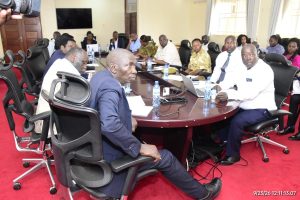
The meeting underscored the need for preparedness to begin before the rains intensify rather than waiting for disasters to occur.
Orengo directed all relevant departments and agencies to maintain close coordination with the national government and pursue additional resources for mitigation, emergency response and recovery.
For Siaya, the message from the disaster management meeting was clear: early warning, infrastructure preparedness and coordinated action will be critical in protecting lives, schools, businesses, roads and livelihoods during the 2026 OND rainfall season.


