 ADVERT
 ADVERT
Siaya County is stepping up efforts to strengthen the fishing sector and unlock the economic potential of Lake Victoria, with the county government placing fisher folk cooperatives at the centre of its blue economy strategy.
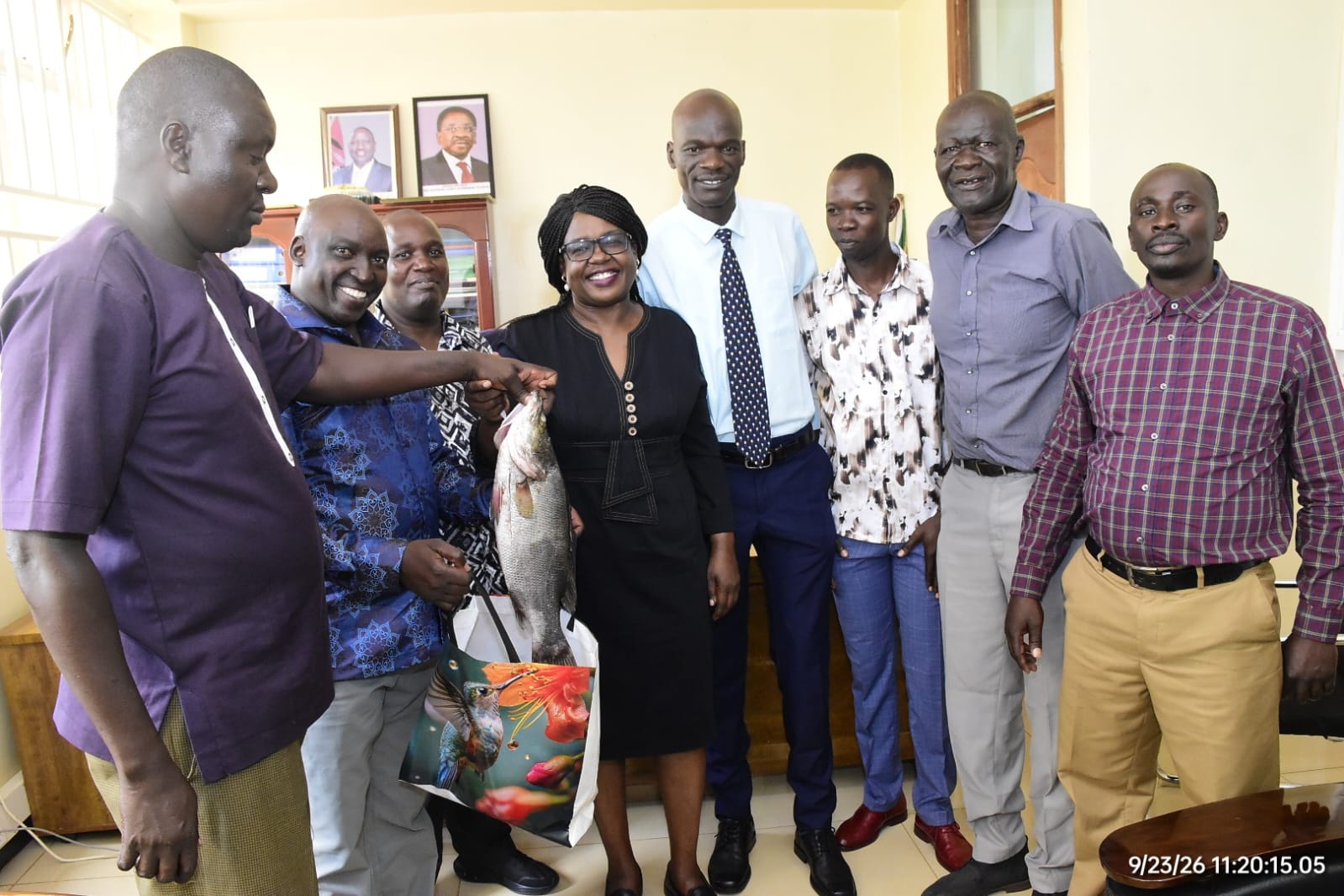
Acting County Secretary Dr Elizabeth Adongo has held a consultative meeting with members of the Beach Management Unit (BMU) from Usenge, West Yimbo Ward, as the county explores new partnerships aimed at strengthening the Usenge fisher folk SACCO and expanding opportunities across the fishing value chain.

The engagement focused on strengthening cooperative capacity, promoting value addition and improving market access for fisher folk, with the broader objective of ensuring that communities living along Lake Victoria secure greater economic returns from the resources around them.
The discussions also examined ways of creating sustainable economic opportunities in Usenge while connecting local enterprises to wider markets in Siaya and across Kenya.
The fisher folk delegation was led by SACCO chairman Julius Odemba and Erick Odemba, among other representatives, who welcomed the county government’s continued engagement with fishing communities.
 ADVERT
The delegation commended the Nyale administration under Governor James Orengo for interventions aimed at improving the operating environment for fisher folk, including support for patrol boats to help curb illegal activities on the lake and collaboration with the national government in the development of the Usenge pier.
The investments are significant for a sector that provides livelihoods for thousands of people directly and indirectly through fishing, fish trading, transportation, boat services, processing and related businesses.
For Siaya, however, the emerging blue economy agenda goes beyond increasing the volume of fish caught. The bigger economic opportunity lies in developing an integrated value chain in which fish can be safely landed, processed, stored, transported and marketed at better prices.
Stronger cooperatives such as the Usenge fisher folk SACCO could therefore provide a platform for members to access markets, financial services, equipment, training and collective bargaining opportunities.
Value addition is particularly important because it can help local communities retain a greater share of the economic value generated from Lake Victoria instead of selling raw fish with limited returns.
The county administration has also pointed to strategic partnerships and infrastructure investments as important components of its efforts to improve fish production, strengthen trade and enhance food security through increased availability of fish for both commercial markets and local consumption.
The Usenge engagement comes at a time when counties around Lake Victoria are increasingly looking towards the blue economy as a pathway for job creation, enterprise development and poverty reduction.
For Siaya, the challenge will be to translate infrastructure and policy interventions into tangible improvements in household incomes among fisher folk and other players in the fishing economy.
That will require sustained investment in cooperative governance, cold-chain infrastructure, fish processing, affordable financing, modern fishing equipment, market linkages and enforcement against destructive and illegal fishing practices.
The county government’s engagement with the Usenge BMU signals an attempt to bring fisher folk directly into that economic conversation.
If successfully implemented, the strategy could position Usenge not merely as a fishing centre but as an important blue economy hub capable of supporting businesses and livelihoods well beyond the shores of Lake Victoria.
The ultimate test, however, will be whether the investments and partnerships translate into higher incomes, more jobs, stronger local enterprises and a larger share of the lake’s economic value remaining within Siaya.
For the county, strengthening the fisher folk is therefore not simply about supporting a traditional livelihood. It is about turning Lake Victoria’s natural resources into a sustainable engine of local economic growth.


